
The 63% Gas Saving: How We Did It and What Others Can Learn
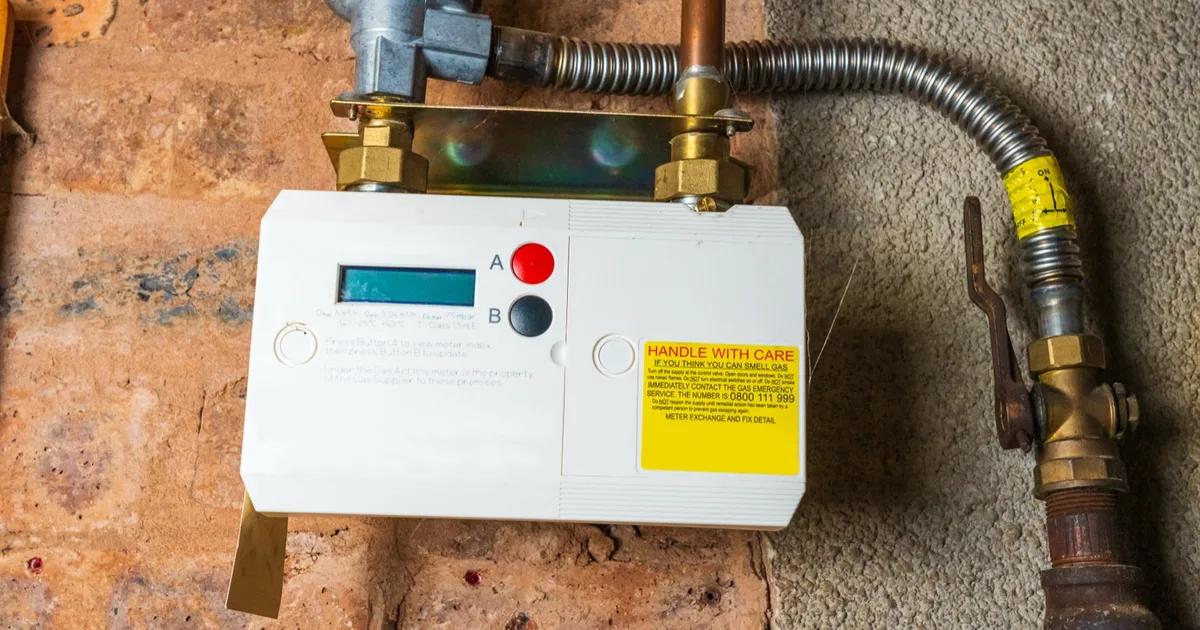
The Client Was Paying £148,000 Per Year for Gas. We Delivered a New Contract at £54,000. The 63% Reduction Came From Four Specific Decisions, Not One.
The 63% gas saving is the largest single-contract cost reduction Telnergy has delivered in over 20 years of operation. We reference it on our website and in our conversations with prospective clients not as a headline figure to imply typical results — it is not typical — but because it illustrates the full range of what disciplined procurement can achieve when multiple factors align.
Understanding how we achieved it is more useful than the number itself. Because the four decisions that produced it apply, in varying degrees, to the majority of UK businesses that have never had their gas contract properly reviewed.
The Client Situation
The client was a mid-sized manufacturing business in the south of England with significant gas consumption for process heat. When they came to us, they were on a contract that had been in place — with renewals — for several years with the same supplier. They had not conducted a competitive tender in the period they had been with that supplier. The renewal process each time had been largely passive: a renewal offer arrived, the business accepted it or made a minimal counter-offer, and the contract continued.
Their annual gas consumption was approximately 2.4 million kWh. Annual gas spend at the time of our engagement: £148,000 — implying an effective blended rate (unit rate plus standing charges) of approximately 6.2p/kWh at a time when the competitive market was offering comparable consumption volumes at materially lower rates.
The saving opportunity was visible before we even went to market. The benchmark against current market pricing told us there was a significant gap. The question was how large the gap would prove to be in a competitive tender, and whether there were structural elements of the contract — beyond the unit rate — that could further reduce the cost.
Decision 1: Going to the Full Market, Not Just the Incumbent
The incumbent supplier’s renewal offer, presented six weeks before contract expiry, was a reduction of approximately 8% from the expiring rate. On a £148,000 contract, 8% represented a saving of £11,840. The client’s finance director considered accepting it.
We tendered the full market — 14 suppliers approached, 9 returned competitive quotes. The spread between the highest and lowest quote was 31 percentage points on the unit rate. The incumbent’s renewal offer was not in the top half of quotes received.
The lesson is straightforward: an incumbent supplier’s renewal offer reflects their assessment of what a non-shopping client will accept, not what the competitive market will provide. The incumbent in this case knew the client’s consumption profile, knew they weren’t actively shopping, and priced accordingly. Competitive pressure — the knowledge that the client was talking to 13 other suppliers — produces a categorically different outcome.
Decision 2: Contract Timing Against the Forward Market
We received the initial set of competitive quotes in a window where wholesale gas forward prices were at a relative seasonal low — European storage was filling well following a mild winter, Norwegian supply was running consistently, and global LNG supply was adequate. The forward curve for the contract period was lower than it had been three months earlier.
We executed the contract during this window rather than waiting for the incumbent’s deadline. The client’s contract didn’t expire for eight weeks, which gave us the luxury of timing execution against market conditions rather than administrative deadline.
The market timing component — the saving from executing in a relatively low forward price window versus the rates that would have been available at the contract expiry date — contributed approximately 4 percentage points of the total saving. Not the largest component, but real and specifically a function of having adequate lead time to exercise timing discretion.
Decision 3: Contract Length Matched to Market Outlook
At the time of contracting, the forward curve showed a modest downward slope — prices for delivery 12 months forward were slightly lower than prices for delivery 6 months forward. This contango structure (near-term prices higher than forward prices) suggested that a longer contract fixed at the current forward rate would benefit from locking in prices before an anticipated near-term peak.
We recommended a 24-month contract rather than the 12-month default. The 24-month forward rate was marginally higher than the 12-month rate (suppliers typically apply a small premium for longer terms to reflect the additional hedging risk they carry). But the assessment that the near-term price was likely to be higher than the 24-month average meant the longer contract offered better expected value.
This is not market speculation — it is the application of forward curve analysis to contract length decisions. It is something that requires market context and is difficult to do without an adviser who is watching the relevant data regularly.
Decision 4: Standing Charge and Non-Commodity Restructuring
The fourth component was unglamorous but financially significant: a review of the standing charge and non-commodity elements of the existing contract revealed that the client was paying for contracted supply capacity above their actual peak consumption requirement. The contracted capacity — the maximum daily quantity (MDQ) of gas the supplier was committed to making available — had been set at a level consistent with the client’s historic peak consumption, which included a production process that had since been modified to reduce peak gas demand.
Reducing the MDQ to reflect actual current peak requirements reduced the standing charge component of the contract. The absolute saving from this element was approximately £8,000 per year — modest relative to the unit rate saving, but achievable at zero cost and zero operational impact.
The Composite Result
The four decisions together — competitive tendering against the full market, timing execution against a favourable forward window, selecting a 24-month term aligned to the forward curve outlook, and right-sizing contracted capacity — delivered the combined saving of 63%: from £148,000 to £54,000 annually.
No single element produced 63%. The competitive tender alone would have delivered 35–40%. Adding market timing contributed another 4%. The contract length decision added approximately 5–8% in expected value terms. The standing charge restructuring added a further 5%. The compounding of four well-executed decisions produced an outcome that none of them would have achieved independently.
What Most Businesses Can Replicate
The 63% saving is exceptional because it combined optimal conditions across all four dimensions simultaneously. Most businesses won’t see 63%. But the first component — going to the full competitive market with adequate lead time — reliably delivers 20–35% saving versus an incumbent renewal offer for businesses that have never done it. That alone, on a £50,000 gas contract, is £10,000–£17,500 per year. On a £150,000 contract, it is £30,000–£52,500.
The remaining three components — market timing, contract length analysis, and standing charge review — are available to every business. They don’t require exceptional circumstances. They require an adviser who is actually doing the work rather than presenting a single quote and calling it competitive procurement.
Talk to Telnergy About Your Gas Contract
We don’t promise 63%. We promise the full market, the market context, and the attention to contract detail that produced it. For any UK business spending more than £20,000 per year on gas, a competitive review is the first step.
📱 WhatsApp Business: 07360 272168
📧 Email: hello@telnergy.com
📞 Direct line: 01202 028888
Telnergy Limited • Independent Energy Consultants since 2002 • Ofgem-Aligned Consultancy • Christchurch, Dorset
Telnergy Limited is an independent commercial energy consultancy established in 2002, based in Christchurch, Dorset. Ofgem-aligned consultancy · ADR Ref E3561 · CRN 04576876.