
Half-Hourly Metering: When It Costs You More and When It Saves You Money
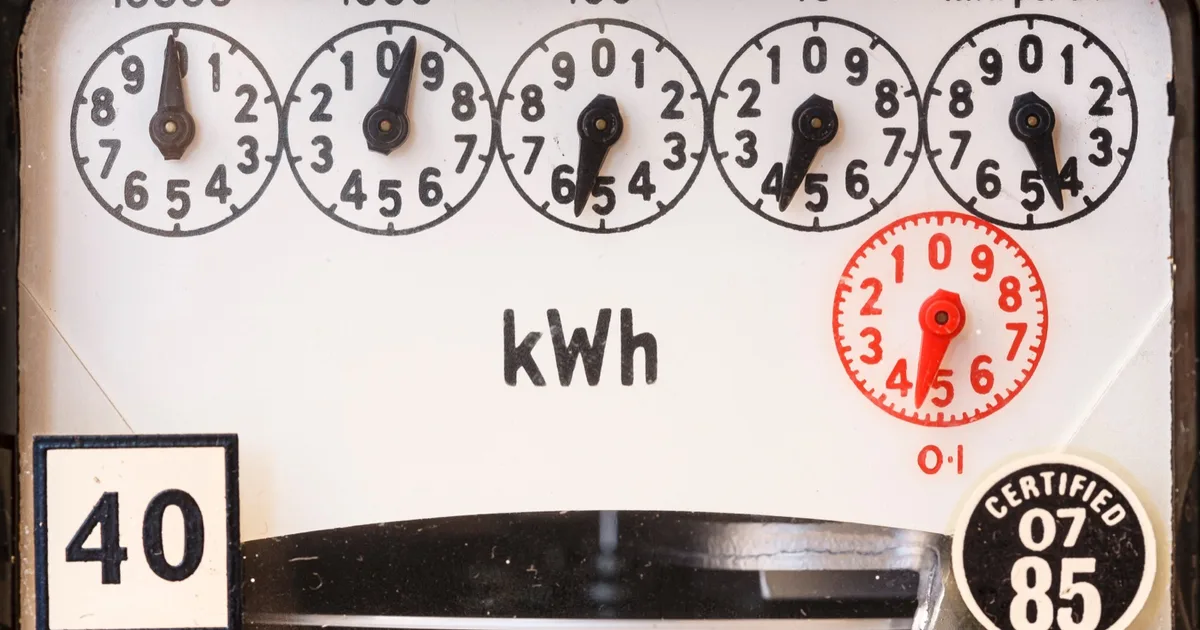
Half-Hourly Metering Is Mandatory Above 100 kW. Below That, It’s a Choice — and the Economics Go Both Ways.
If your electricity supply has a maximum demand above 100 kW (kilowatts), you are legally required to have a half-hourly (HH) meter. This is not optional and has been mandatory since the mid-1990s for Profile Class 0 supplies. For businesses below this threshold, HH metering is available but not mandatory — and whether to move to HH settlement is a decision with genuine cost implications in both directions.
The confusion most business owners have about HH metering comes from conflating two different questions: the question of whether you have an HH meter (a physical device question) and the question of whether you’re settled on a half-hourly basis (a billing and contract question). Understanding the distinction — and its implications for your electricity costs — is worth the 10 minutes it takes to read this.
What Half-Hourly Metering Actually Is
A half-hourly meter records your electricity consumption in 30-minute intervals and transmits that data to your supplier and the balancing settlement system. This is in contrast to a standard credit meter or an Advanced Meter (previously called AMR), which records total consumption over longer periods.
The half-hourly data does several things simultaneously:
- It allows your supplier to settle your consumption against actual market prices for each half-hour settlement period, rather than using an estimated profile.
- It makes your consumption pattern visible — you and your supplier can see exactly when you’re using energy, in 30-minute blocks, across every day of the year.
- It creates the data infrastructure for time-of-use pricing, Triad avoidance, demand-side response, and other sophisticated energy management approaches.
- It eliminates estimated billing — your invoice reflects actual consumption, not a profile-estimated figure.
For mandatory HH customers (above 100 kW), this settlement approach is fixed. For sub-100 kW customers, the question is whether the visibility and potential savings from HH settlement outweigh the metering and data costs.
When HH Metering Costs You More
The case against half-hourly metering for smaller businesses comes down to three factors: cost, complexity, and consumption profile.
Metering and data costs: HH meters require Data Collection, Data Aggregation, and Meter Operation services (DC, DA, MO) that standard meters don’t. These services add a cost to your bill — typically £100–£400 per year depending on the service provider and the complexity of your site. For a small business spending £8,000–£15,000 per year on electricity, this cost represents a meaningful overhead with no inherent saving attached to it.
Contract complexity: HH-settled contracts are more complex than standard profile contracts. Suppliers typically offer fewer standardised products for HH customers, and the contract comparison process requires more detailed analysis. For business owners managing their own energy contracts without a broker, this complexity is a genuine burden.
Flat consumption profile: If your business consumes electricity at a relatively flat and predictable rate — a typical office, for example, with consistent 9–5 weekday consumption — the detailed half-hourly data doesn’t give you much opportunity to optimise. You’re already consuming in a predictable pattern; knowing the 30-minute breakdown doesn’t change the behaviour, and the HH costs aren’t offset by any optimisation saving.
When HH Metering Saves You Money
The case for half-hourly metering strengthens significantly when any of three conditions apply:
You have significant peak demand and could manage it. For businesses with operations that create consumption spikes — production starts, large motor startups, refrigeration compressors cycling on — HH data shows you exactly when those peaks occur. This creates the ability to manage maximum demand, reducing your Distribution Use of System charges (which are partly based on your peak demand) and potentially reducing your capacity requirements.
You have consumption flexibility. If you can shift load — running energy-intensive processes at off-peak times, scheduling EV charging overnight, pre-cooling or pre-heating a building outside peak hours — HH data is the tool that tells you how much you’re saving and when to act. Without HH data, load-shifting is guesswork. With it, it’s measurable.
Your consumption is above approximately £40,000–£50,000 per year. At this level, the data and analysis tools available through HH metering — combined with competent advice on how to use them — generate savings that typically dwarf the metering cost. Triad avoidance alone, for a business with 200–500 kW of flexible demand, can save £5,000–£20,000 per year from what is essentially a behavioural and awareness intervention.
The Smart Meter Confusion
Smart meters installed by energy suppliers in small business premises are not the same as half-hourly meters in the sense described above. Smart meters (SMETS2 generation) can record half-hourly data and transmit it to suppliers, but small business smart meter installations are typically settled on a non-half-hourly basis unless the customer actively elects HH settlement.
This means your business may have a smart meter that records HH data without that data being used for billing or optimisation. The data exists but isn’t being acted on. Moving to HH settlement on a smart-metered site is an administrative step rather than a physical installation — your meter is already capable — but it requires a contract and settlement change.
If you have a smart meter and have been told “you’re already half-hourly,” check whether you’re actually being settled on an HH basis. Ask your supplier what Profile Class your supply is registered under. Profile Class 5 or 6 means you’re non-half-hourly. Profile Class 0 means you’re half-hourly. The distinction matters for cost and for the advice you should be receiving.
Mandatory HH Customers: Managing the Cost You Already Carry
For businesses already on mandatory HH metering, the question is not whether to have it but how to get value from it. The most common failure we see is businesses paying for HH settlement without actively using the data it generates.
Your HH data is accessible through your supplier, your data collector, or through energy management software. Reviewing it — even on a quarterly basis — reveals consumption patterns that can inform:
- Triad avoidance windows (if your demand is above 500 kW)
- DUoS red band exposure and load-shifting opportunity
- Maximum demand review and potential contracted capacity reduction
- Identification of equipment consuming energy outside operating hours
- Baseline for measuring the impact of efficiency interventions
If you have an HH meter and have never reviewed the data it produces, you have a tool you’re paying for but not using.
Telnergy’s Approach to Metering
When we onboard a new client, we review their metering and settlement status as a standard part of the initial assessment. We identify whether a move to or from HH settlement is in the client’s commercial interest, and we manage any migration required. For HH clients, we include consumption data analysis in our ongoing service — not as a premium add-on, but as part of ensuring the contract structure we recommend matches the consumption profile we can now see.
📱 WhatsApp Business: 07360 272168
📧 Email: hello@telnergy.com
📞 Direct line: 01202 028888
Telnergy Limited • Independent Energy Consultants since 2002 • Ofgem-Aligned Consultancy • Christchurch, Dorset
Telnergy Limited is an independent commercial energy consultancy established in 2002, based in Christchurch, Dorset. Ofgem-aligned consultancy · ADR Ref E3561 · CRN 04576876.