
Energy Bill Validation: How to Spot Errors Before You Pay
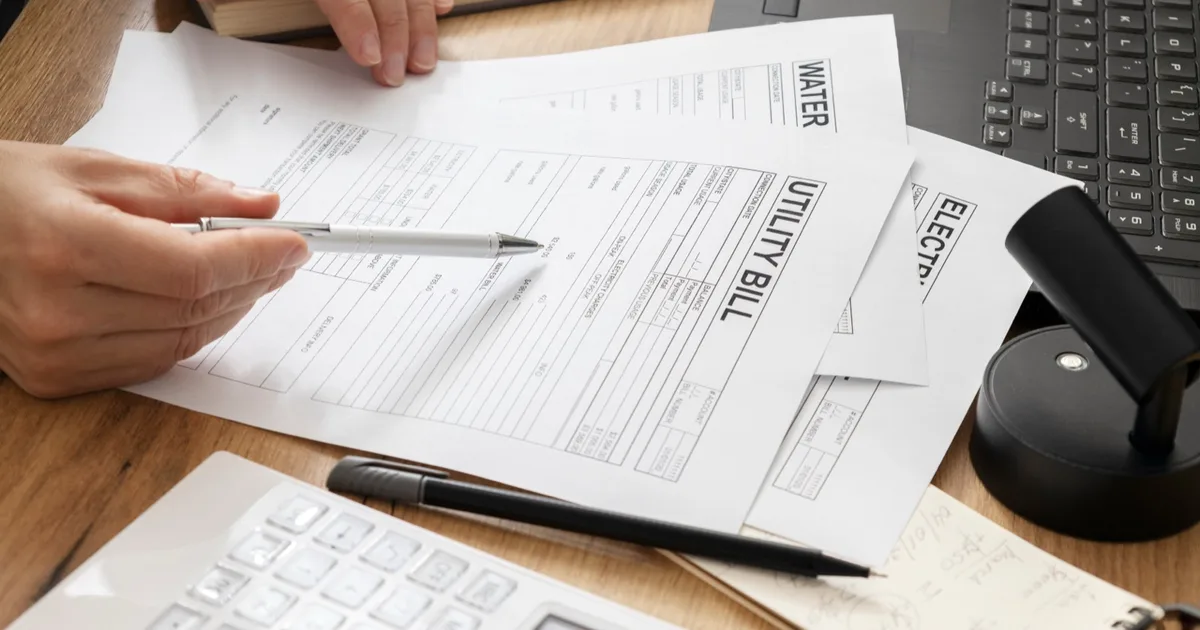
Energy Bill Validation Is the Process of Checking Your Bill Against Your Contract Before You Pay. It Costs Nothing and Regularly Finds Errors Worth Hundreds or Thousands of Pounds.
Most UK businesses pay their energy bills without checking them. The direct debit goes out, the standing order is paid, or the invoice is approved without anyone comparing the charges on the bill to the rates in the contract. This is understandable, energy bills are dense documents with multiple line items, and the verification process isn’t obvious unless you know what you’re looking for.
The consequence is that billing errors, and they are common, go undetected and compound over months or years. Energy bill validation is the process of systematically checking each element of your energy invoice against your contracted terms, your actual consumption, and the applicable tax rates. Done monthly, it takes 10–15 minutes. Done annually or not at all, it can represent a significant accumulated overpayment.
Why Energy Billing Errors Are More Common Than You’d Expect
Business energy billing involves multiple data feeds, automated calculation systems, and handoffs between industry databases. Errors can originate at any point in this chain:
Estimated meter reads: When actual meter reads aren’t available, because a smart meter has a communications fault, a manual reader couldn’t access the meter, or the supplier’s read cycle doesn’t align with your billing period, the supplier estimates your consumption using a profile based on historical usage. Estimates can diverge significantly from actual consumption, particularly if your business operations have changed. An over-estimate charges you for energy you didn’t use; an under-estimate creates a debt that eventually arrives as a large true-up bill.
Unit rate errors after contract change: When a new contract begins, whether a renewal with the same supplier or a switch to a new supplier, the new unit rate should be applied from the contract start date. Suppliers occasionally continue billing at the old rate for one or more billing cycles after the new contract should have taken effect. The difference is recoverable, but only if someone is checking.
VAT at the wrong rate: Business energy is subject to 20% VAT as the standard rate, but certain qualifying businesses, residential care homes, charities, businesses meeting small-consumption thresholds, should be billed at 5%. A care home being billed at 20% VAT when 5% applies is overpaying by 15% of its entire energy spend. This error is recoverable for up to four years.
Climate Change Levy (CCL) at the wrong rate: CCL is a per-unit tax on business energy consumption. Businesses with Climate Change Agreements qualify for an 80% reduction. Exempt businesses (certain qualifying uses) should pay zero CCL. Errors in CCL rate application are among the most common, and most valuable, billing errors on business energy accounts.
Standing charge errors: The daily standing charge on your bill should match your contract. Errors arise after contract changes, supplier switches, or system updates. A standing charge 5p/day above the contracted rate costs over £18 per year per supply, small for a single site, material across a multi-site portfolio.
Incorrect supply point data: In multi-tenancy buildings or on sites with multiple meters, consumption can occasionally be attributed to the wrong meter point. This is uncommon but does occur and can result in significant billing misalignment.
The Energy Bill Validation Checklist
The following checks, performed on each energy invoice, cover the most common and most valuable error categories:
1. Confirm the supply point identifiers. Check that the MPAN (electricity) or MPRN (gas) on the bill matches the supply point at your premises. On multi-site accounts, confirm each bill corresponds to the correct address.
2. Check whether consumption is actual or estimated. Look for “A” (actual) or “E” (estimated) next to the meter read figures. If estimated, submit an actual meter read immediately to reset the billing cycle to reality. If you have a smart meter and readings are still estimated, report the fault to your supplier.
3. Verify the unit rate matches your contract. Pull your energy contract (or ask your broker for a copy) and confirm the unit rate on the bill matches the contracted rate. On fixed contracts, this rate should not change during the term.
4. Verify the standing charge matches your contract. Check the daily standing charge on the bill against the contract. Any discrepancy should be queried with the supplier immediately.
5. Check the VAT rate. Is VAT applied at 20% or 5%? If your premises qualifies for the reduced rate and you’re being charged at 20%, raise a formal query and request backdated correction. Four years of recoverable overpayment is available.
6. Check the Climate Change Levy rate. Is CCL applied at the standard rate, 20% reduced rate, or zero? If you hold a Climate Change Agreement or qualify for exemption and CCL is applied at the standard rate, request a correction. Backdated CCL recovery is available.
7. Check your account balance. Is there a credit or debit balance carried forward? Suppliers are not required to proactively refund credit balances on business accounts. If a credit has accumulated, from over-estimated consumption, for example, request a refund. It is your money.
8. Check for any unrecognised charges. Any charge on the bill that doesn’t correspond to a known line item in your contract should be queried before payment. Administration charges, late payment fees, and adjustment items should all be identifiable against contract terms.
What to Do When You Find an Error
When a billing error is identified, the process is:
- Contact your supplier in writing (email is sufficient) citing the specific error, the bill reference, and the correct figure based on your contract.
- Request a credit note or corrected invoice within a defined timeframe, 14 working days is reasonable.
- If the error involves VAT or CCL, provide the relevant evidence (qualifying use declaration, CCA certificate, or exemption documentation) with the query.
- If the supplier fails to resolve the error within a reasonable period, escalate through their formal complaints process and, if necessary, to the Dispute Resolution Ombudsman.
Telnergy’s Bill Review Service
We include bill validation in our standard client service. For new clients, the initial bill review frequently identifies recoverable overcharges, VAT errors, CCL misapplication, standing charge discrepancies, that generate immediate cash returns before any contract saving is even factored in.
📱 WhatsApp Business: 07360 272168
📧 Email: hello@telnergy.com
📞 Direct line: 01202 028888
Telnergy Limited • Independent Energy Consultants since 2002 • Ofgem-Aligned Consultancy • Christchurch, Dorset
Telnergy Limited is an independent commercial energy consultancy established in 2002, based in Christchurch, Dorset. Ofgem-aligned consultancy · ADR Ref E3561 · CRN 04576876.