
The Capacity Market Explained: Why You’re Paying for Power Plants That Don’t Run
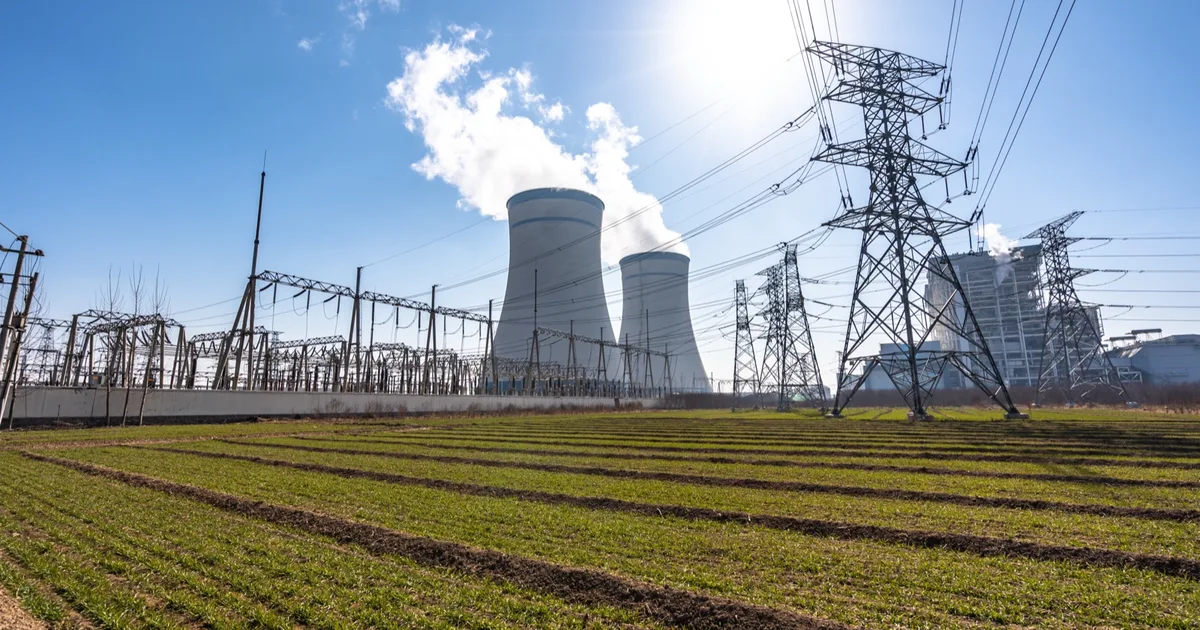
You’re paying around £10–15 per MWh to keep standby power plants available. Most business owners don’t know it.
Buried in your business electricity bill is a charge that pays for power stations that might never run. It’s called the Capacity Market levy, and it’s one of the least understood — and least discussed — components of UK business energy costs. For a medium-sized manufacturing business or retail chain spending £100,000 a year on electricity, this charge represents several thousand pounds annually.
Understanding it won’t make it disappear. But it will help you understand why your electricity costs include a permanent risk premium — and why that premium is likely to increase rather than decrease as the UK’s energy mix continues to decarbonise.
Why the Capacity Market exists
The Capacity Market was introduced by the UK government in 2014 to solve a specific problem: as coal and nuclear power stations retired, the UK needed a mechanism to ensure sufficient generation capacity remained available to meet peak demand — even on the coldest winter evenings when electricity demand is highest and renewable generation may be low.
The mechanism works through competitive auctions run by National Grid ESO. Power generators, storage operators, and demand-side response providers bid to make capacity available. Those that win a Capacity Market agreement receive a guaranteed payment — per kilowatt of capacity — for a specified number of years. In return, they commit to being available when called upon during system stress events. The key word is “available.” Not “running.” Not “generating.” Available. You are paying, through your electricity bill, to keep power plants ready to generate — even if the grid never actually calls on them.
What gets paid through the Capacity Market
The Capacity Market covers gas peakers (open-cycle gas turbines that can ramp up quickly), combined cycle gas turbines (CCGTs), nuclear plant, battery storage (an increasingly significant category), diesel generation (subject to emissions limits), and demand-side response businesses that agree to reduce consumption when called upon. In the T-4 auctions, clearing prices in recent years have ranged from approximately £18/kW/year to over £60/kW/year. The cost is recovered from electricity consumers through the Capacity Market Supplier Charge, passed through to business customers either as a visible line item or absorbed into the unit rate depending on contract structure.
Why the charge is growing
The Capacity Market levy is increasing over time for a structural reason: as the UK builds more renewable generation, the proportion of the electricity system that relies on intermittent sources — wind and solar — grows. Intermittent sources cannot guarantee output at any given moment. The system needs reliable backup capacity available precisely because the primary generation cannot be dispatched on demand. More renewables means more intermittency means more backup capacity requirement means higher Capacity Market levy. This is the cost of integrating variable renewables at scale — and it falls on electricity consumers baked into every business electricity contract for the foreseeable future.
How this appears on your bill
As a separate line item on pass-through contracts: labelled as “Capacity Market Supplier Charge,” “CM levy,” or similar, expressed per MWh consumed.
Absorbed into the unit rate on all-inclusive fixed contracts: the supplier has already priced it in. You don’t see it as a separate charge, but you’re paying it — the supplier carries the risk that the levy changes during your contract term. For short contracts (12 months) this distinction matters less. For longer contracts (24–36 months), it matters considerably.
The SME implications
Don’t assume your electricity bills will fall as renewables grow — the infrastructure cost of integrating renewables is a permanent addition to network costs. Understand what you’re signing with a pass-through contract: if the Capacity Market levy increases during your term, you absorb the increase. Demand-side response is also an opportunity: if your business has flexible consumption — processes that can be shifted in time, HVAC that can be curtailed, EV charging that can be paused — you may be able to participate in DSR schemes that generate income within the broader capacity framework.
When Telnergy reviews a business energy contract, we look at the full cost stack — including non-commodity charges like the Capacity Market levy, TNUoS, DUoS, the Renewables Obligation, and Contract for Difference costs. For a business spending over £50,000 per year on electricity, the non-commodity charges can represent 40–55% of the total bill. Optimising only the wholesale component while ignoring the rest leaves significant money on the table.
📱 WhatsApp: 07360 272168 | 📧 hello@telnergy.com | 📞 01202 028888 Telnergy Limited · Independent commercial energy consultancy since 2002 · Ofgem-aligned consultancy · ADR Ref E3561 · CRN 04576876 · Christchurch, Dorset
Telnergy Limited is an independent commercial energy consultancy established in 2002, based in Christchurch, Dorset. Ofgem-aligned consultancy · ADR Ref E3561 · CRN 04576876.