
Care Home Energy Procurement: VAT, CCL, and the Exemptions Most Miss
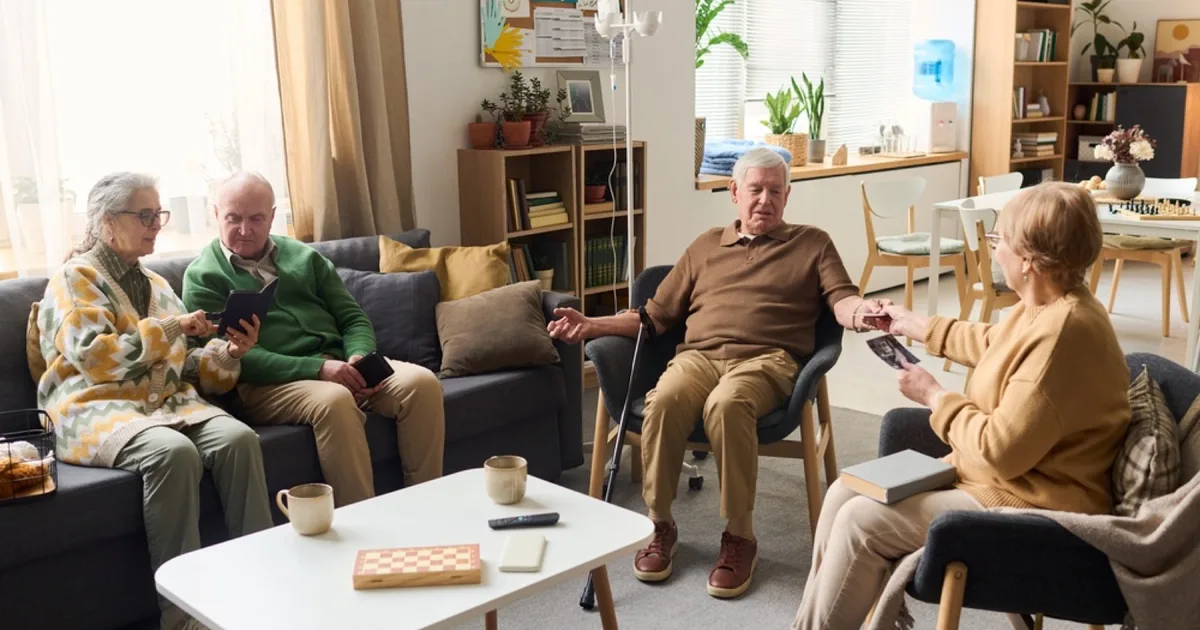
Care Homes Are Eligible for Significant VAT and Climate Change Levy Reductions on Their Energy. The Majority Are Not Claiming Them.
Residential care homes, nursing homes, and supported living facilities are among the most consistently mistreated business energy customers in the UK market. Not through any deliberate targeting, but because the combination of their ownership structure (typically small limited companies or family-run businesses), their regulatory environment (CQC registration and compliance consuming significant management attention), and their energy cost complexity (VAT exemptions, CCL reliefs, and specific consumption profiles) creates an environment where energy procurement is routinely under-managed.
For a care home spending £40,000–£80,000 per year on energy — which is typical for a 40–60-bed residential facility — the combination of unclaimed VAT relief, incorrect CCL, and uncompetitive contract rates can represent an overpayment of £10,000–£20,000 per year. On care home operating margins that are already under pressure from staffing costs, regulatory requirements, and local authority fee rates, this is a material sum.
VAT: The 5% Rate Most Care Homes Should Be On
The VAT Act 1994 provides for a reduced 5% VAT rate on energy supplies to dwellings and buildings used for a relevant residential purpose. A residential care home — where residents live as their primary and permanent residence — qualifies as a dwelling for VAT purposes.
This means that energy consumed in a qualifying residential care home should attract 5% VAT, not the standard 20%. The test is whether the building constitutes a “dwelling” for VAT purposes — which turns on residency permanence and the nature of the care provided — but for the vast majority of residential and nursing care homes providing permanent residential care, 5% VAT applies to all energy consumed in the residential areas.
The practical picture is more complex because many care homes have mixed-use elements: administrative offices, day care facilities, respite beds, and ancillary services that may not qualify as residential use. Where mixed use occurs, a proportion of the energy supply can be at 5% VAT and the remainder at 20%. The allocation methodology needs to be agreed with the supplier and, ideally, documented for VAT audit purposes.
Despite this clear entitlement, a significant proportion of UK residential care homes are either being billed at 20% VAT across the board, or have never had their VAT position formally assessed. The supplier will not automatically apply the reduced rate — the customer (or their adviser) must make the application and provide the necessary declaration of qualifying use.
The financial recovery opportunity is substantial. A care home spending £60,000 per year on energy, incorrectly paying 20% VAT instead of 5%:
- Overpaying VAT by £9,000 per year (15% of £60,000)
- Over a four-year backdated reclaim period: £36,000 in recoverable VAT
This is a one-off administrative exercise with a substantial cash return. Any care home operator who hasn’t confirmed their VAT rate in writing with their energy supplier should treat this as an urgent action item.
Climate Change Levy: The Qualifying Use Exemption
Climate Change Levy (CCL) applies to business energy consumption as a tax per kWh. However, CCL does not apply to energy used in dwellings — for the same VAT Act rationale that makes residential care homes eligible for 5% VAT.
Energy consumed in the residential areas of a qualifying care home should be exempt from CCL entirely. Administrative and commercial areas within the same building may attract CCL at the standard rate, requiring the same allocation methodology as for VAT.
At current CCL rates of 0.775p/kWh for electricity and 0.672p/kWh for gas, the annual CCL saving for a 40-bed care home consuming 150,000 kWh of electricity and 200,000 kWh of gas per year in qualifying residential areas is approximately:
- Electricity CCL saving: 150,000 × 0.00775 = £1,162 per year
- Gas CCL saving: 200,000 × 0.00672 = £1,344 per year
- Total CCL saving: £2,506 per year
Backdated CCL recovery for up to four years of incorrect charging is available through the supplier. Combined with the VAT recovery, a care home that has been incorrectly charged for four years could recover £10,000–£40,000 in overpaid taxes, depending on energy spend and the proportion of qualifying residential use.
The Care Home Energy Profile: Specific Operational Characteristics
Beyond the tax position, care home energy procurement requires understanding a consumption profile that differs from other commercial premises in important ways:
24/7 operation: Unlike offices, retail units, or most manufacturing businesses, care homes never close. Residents require heated, lit, ventilated premises with hot water available around the clock, every day of the year. There is no off-peak period when consumption can be reduced to standby levels. This creates a high baseload that represents the minimum consumption regardless of time of day or season.
High hot water demand: Bathing, personal care, catering, and laundry create a continuous hot water demand that is more intensive per square metre than most commercial premises. A 40-bed care home will typically consume 80,000–120,000 kWh of gas per year solely for hot water heating, independent of space heating requirements.
Catering gas: Care homes with on-site catering (which includes virtually all residential and nursing facilities) run commercial kitchen operations for three meals a day, seven days a week, 365 days a year. Unlike a restaurant or pub kitchen that closes between services, care home catering has near-continuous operation requirements — breakfast preparation, lunch service, afternoon snacks, dinner service, and supper provision across a full day.
Laundry: Residential care homes generate intensive laundry volumes — bed linen, towels, residents’ clothing, incontinence protection, and staff uniforms. On-site laundry operations running 8–14 hours per day add meaningfully to both electricity and gas consumption. Gas-heated commercial washing machines reduce electricity load relative to electrically-heated equivalents but increase gas consumption.
The Typical Care Home Energy Bill
A 40-bed residential care home in the UK will typically consume:
- Electricity: 120,000–180,000 kWh per year (lighting, HVAC fans, catering equipment, laundry, care equipment)
- Gas: 200,000–350,000 kWh per year (space heating, hot water, catering)
At current contracted rates, total annual energy spend: £35,000–£65,000. For nursing homes with higher dependency residents and greater clinical equipment requirements, consumption and cost sit at the higher end of this range.
Contract Procurement for Care Homes
The care home sector is characterised by small operator ownership (many operators run single or two-site businesses) and limited in-house procurement expertise. Energy procurement decisions are typically made by the owner-manager or the registered manager — individuals whose time is overwhelmingly consumed by CQC compliance, staffing, and care delivery. Energy is a background overhead that gets addressed reactively rather than strategically.
The practical consequences are predictable: auto-renewals that go unnoticed, contracts that roll over at uncompetitive rates, and tax reliefs that are never claimed because no one has raised them.
The solution is straightforward: a broker who understands the care home sector, handles the VAT and CCL assessment as a standard part of the engagement, and manages the renewal calendar so nothing rolls automatically. This is not a premium service — it’s the baseline of what competent energy advice should deliver for a care home operator.
Telnergy’s Care Home Energy Service
We work with residential care homes, nursing homes, and supported living operators on energy procurement that includes VAT rate verification, CCL exemption assessment, backdated reclaim facilitation, and competitive contract tendering. For operators who have never had this conversation with an energy adviser, the initial review is often the most financially productive hour they’ve invested in energy management.
📱 WhatsApp Business: 07360 272168
📧 Email: hello@telnergy.com
📞 Direct line: 01202 028888
Telnergy Limited • Independent Energy Consultants since 2002 • Ofgem-Aligned Consultancy • Christchurch, Dorset
Telnergy Limited is an independent commercial energy consultancy established in 2002, based in Christchurch, Dorset. Ofgem-aligned consultancy · ADR Ref E3561 · CRN 04576876.