
Cold Chain Energy: What Food Retailers Pay to Keep the Lights On
Refrigeration Never Sleeps. For UK Food Retailers, That Single Fact Drives 40–60% of Their Electricity Bill.
Cold chain energy is the most consistently underestimated overhead in food retail. Whether you’re running a convenience store with open-fronted chilled cabinets, a butcher with display refrigeration, a food wholesaler with a multi-temperature warehouse, or a delicatessen with ambient, chilled, and frozen sections — your refrigeration runs continuously, regardless of whether you’re trading, regardless of what the weather is doing, and regardless of what time of day or night it is.
The Energy Saving Trust estimates that refrigeration accounts for 40–60% of total electricity consumption in food retail premises. For a convenience store spending £20,000 per year on electricity, that means £8,000–£12,000 is attributable to refrigeration alone. For a larger food wholesale operation spending £80,000 per year, the refrigeration component could be £32,000–£48,000 annually.
Understanding the cold chain energy picture — what’s consuming, what’s inefficient, and how contract structure affects what you pay — is directly relevant to profitability in a sector with thin operating margins.
The Refrigeration Load: What’s Actually Running
Food retail refrigeration typically comprises several distinct asset types, each with different consumption profiles:
Open multideck chilled cabinets: The open-fronted chilled display units found in most convenience stores and supermarkets are among the highest-consumption items in food retail. Their design — open-fronted to allow easy customer access — means they’re constantly fighting ambient store temperature to maintain their target temperature range (typically 2–5°C for dairy and prepared foods). A single 1.5-metre open multideck unit can consume 3,000–5,000 kWh per year. A convenience store with six such units is consuming 18,000–30,000 kWh on those cabinets alone.
Closed-door refrigerated cabinets: Better insulated than open multidecks, these consume 30–50% less electricity for equivalent capacity. The trade-off is accessibility and impulse purchase rates — closed-door units typically show lower sales velocity for impulse categories. The energy saving is real; the commercial consideration must be weighed against it.
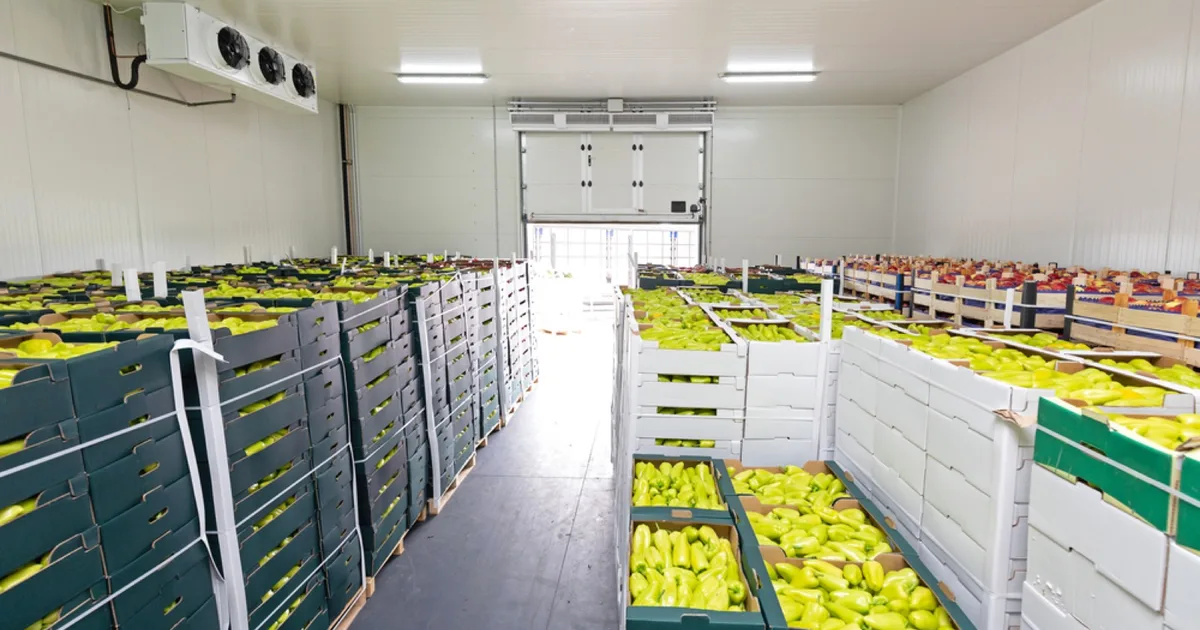
Walk-in cold rooms: Larger food retailers and wholesalers typically have walk-in cold rooms or blast chillers for high-volume or temperature-sensitive stock. A commercial cold room system maintaining 2–4°C will consume 15,000–40,000 kWh per year depending on size, insulation quality, door frequency, and ambient loading. Blast chillers add further significant consumption during rapid chilling cycles.
Frozen storage: Frozen display cases and storage freezers maintain −18°C to −22°C — temperatures that require significantly more compressor work than chilled storage. Frozen equipment typically consumes 1.5–2x the electricity per cubic metre of equivalent chilled capacity. For food retailers with significant frozen ranges, frozen equipment is often the largest single electricity consumer on the premises.
Why Cold Chain Energy Costs Are Rising
Food retailers face three structural pressures on cold chain energy costs that are independent of energy market prices:
Equipment age: Much of the refrigeration equipment operating in UK food retail was installed 10–20 years ago. Refrigeration technology has advanced significantly — modern variable-speed compressors, inverter drives, and improved insulation standards deliver 30–50% better energy efficiency than equivalent 2005–2010 vintage equipment. Old equipment maintaining the same temperature target simply uses more electricity to do it.
F-gas transition: The phase-down of hydrofluorocarbon (HFC) refrigerants under the UK F-gas regulations is forcing equipment replacements and refrigerant substitutions. Transitioning to lower-GWP (Global Warming Potential) refrigerants — CO₂ systems, HFO refrigerants, hydrocarbon systems — involves upfront capital cost and sometimes energy consumption recalibration as the new refrigerants operate at different pressures and efficiencies.
Store refurbishment cycles: As food retailers refurbish premises, they’re often replacing open-fronted cabinets with closed-door equivalents to meet energy efficiency expectations. This improves energy performance but creates a capital investment wave that many smaller independents have deferred.
Energy Contract Structure for Cold Chain Retailers
The cold chain energy profile has specific characteristics that affect contract decisions:
High baseload: Refrigeration creates a continuous baseload that barely varies between peak and off-peak hours. Unlike a factory or an office, a food retailer’s electricity consumption at 3am is not dramatically different from their consumption at 3pm — the fridges are running either way. This flat consumption profile affects the value of time-of-use tariffs, which assume you can shift load to low-price periods. You can’t shift refrigeration load significantly.
Night setback opportunities: Modern refrigeration controllers can implement night setback programmes — raising the set-point temperature slightly during closed hours to reduce compressor cycling while maintaining safe food temperatures. A 1–2°C setback during a 10-hour overnight closure can reduce refrigeration electricity consumption by 8–15% at those times. This is a free saving available through controller adjustment, not capital investment.
Demand management: Food retailers with large refrigeration loads benefit from understanding their maximum demand profile — the peak kW load recorded on their supply. High maximum demand drives distribution network charges (DUoS) that are calculated partly on peak demand measurements. Staggered compressor startup sequences, particularly after a power interruption, can prevent simultaneous startup spikes that inflate maximum demand readings.
The Wholesaler and Cold Store Perspective
Food wholesalers and dedicated cold storage operators face the cold chain energy challenge at a different scale. A 5,000-square-metre ambient and chilled warehouse with refrigerated loading bays can consume 800,000–1,500,000 kWh of electricity per year — at that scale, energy is genuinely a tier-one cost management issue, not a background overhead.
At this consumption level, half-hourly metering is mandatory (above 100 kW), and the full suite of energy management tools — Triad avoidance, demand-side response, flexible procurement, onsite solar — becomes economically viable. A cold store operator spending £250,000 per year on electricity is a business where energy strategy needs active management, not passive auto-renewal.
Telnergy’s Cold Chain Energy Experience
We work with food retailers across convenience, specialist food retail, and wholesale distribution. The procurement approach we take for cold chain clients accounts for the continuous baseload profile, the maximum demand characteristics, and the specific refrigerant transition costs that affect equipment investment timing.
If you’re a food retailer who has never had your refrigeration energy profile reviewed in the context of your energy contract, that’s a conversation with a direct saving attached to it.
📱 WhatsApp Business: 07360 272168
📧 Email: hello@telnergy.com
📞 Direct line: 01202 028888
Telnergy Limited • Independent Energy Consultants since 2002 • Ofgem-Aligned Consultancy • Christchurch, Dorset
Telnergy Limited is an independent commercial energy consultancy established in 2002, based in Christchurch, Dorset. Ofgem-aligned consultancy · ADR Ref E3561 · CRN 04576876.