
Demand-Side Response: Can Your Business Get Paid to Use Less Energy?
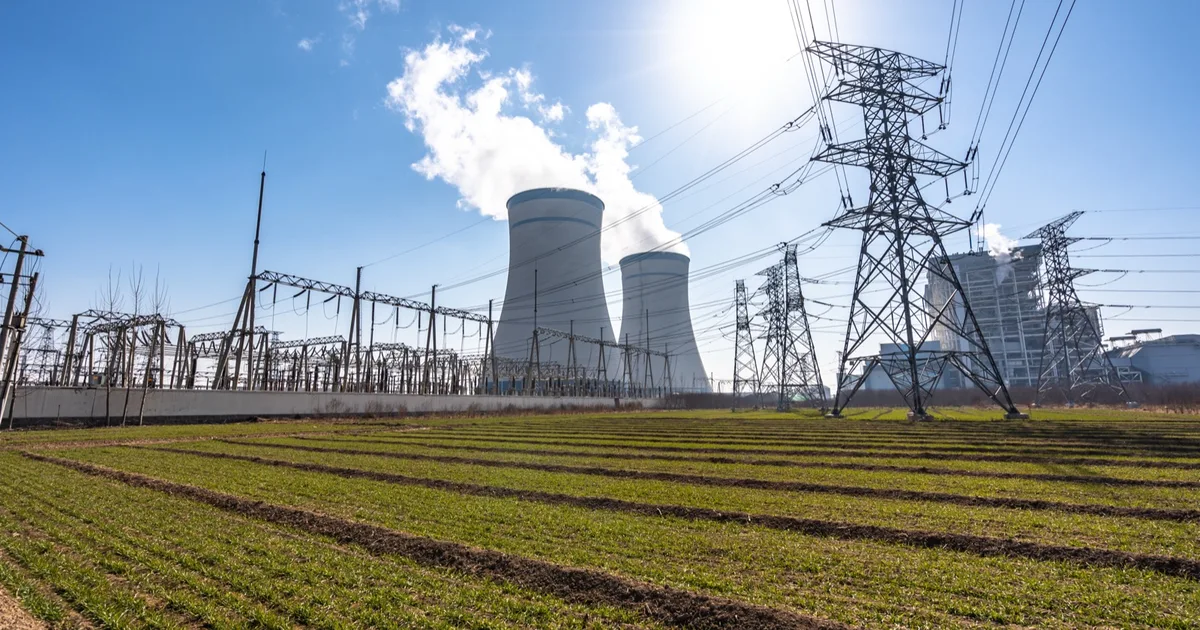
National Grid Pays UK Businesses to Reduce Their Electricity Consumption at Specific Times. Most SMEs Have Never Heard of It.
Demand-Side Response (DSR) is a mechanism through which electricity consumers are paid — either by National Grid’s system operator (NESO) or via aggregator intermediaries — to reduce or shift their energy consumption during periods when the grid is under stress. The principle is simple: instead of the grid operator commissioning additional generation to meet a demand peak, it pays consumers to reduce demand instead. In many cases, reducing demand is cheaper and faster than generating additional supply.
For UK businesses, DSR is an underutilised revenue opportunity. Participation doesn’t require capital investment in most cases — it requires an assessment of whether your business has flexible consumption, the right metering in place, and a relationship with an aggregator or direct programme participant pathway.
How Demand-Side Response Works in the UK
The UK’s demand-side response landscape has two primary tiers:
National Grid ESO/NESO programmes: NESO (the National Energy System Operator, which replaced the ESO function from 2024) runs several demand-side services for which large consumers can qualify directly or through aggregators:
- Dynamic Containment (DC): A frequency response service. Participants agree to respond automatically — within 1 second — to grid frequency deviations, either reducing consumption (when frequency falls below 49.95 Hz) or increasing consumption (when frequency rises above 50.05 Hz). DC services are available to batteries, flexible industrial loads, and some building management systems. DC clearing prices have been highly variable — from £1/MW/hr to £25/MW/hr — depending on market conditions and available capacity.
- Demand Flexibility Service (DFS): Introduced during the 2022–23 winter to manage potential supply shortfalls, the DFS has become a recurring seasonal service. Participants receive notification ahead of a DFS event window (typically 30 minutes to a few hours ahead) and are paid for consumption reduction during the window. Payment rates in 2022–23 ran at approximately £3/kWh of reduction — significantly higher than typical electricity unit rates.
- Balancing Mechanism (BM) participation: Larger consumers with half-hourly metering and a Balancing Mechanism Unit registration can offer load reduction directly to NESO as a balancing action. This requires more infrastructure and expertise but provides access to the full BM pricing range.
Aggregator-mediated programmes: For businesses below the direct participation thresholds — the most practical route for SMEs — aggregators bundle multiple small flexible consumers into a combined portfolio that meets the minimum participation requirements for NESO services. The aggregator manages the technical compliance, notification, and settlement; the business receives a share of the revenue generated.
Major UK DSR aggregators operating in the SME market include Flexitricity, Kiwi Power, Limejump, and Open Energi, among others. Their business models vary — some pay a capacity fee for availability regardless of activation; others pay only on activation events.
What Qualifies as Flexible Consumption
The prerequisite for DSR participation is that your business has loads that can be reduced or shifted for defined periods without materially affecting operations. Common qualifying categories in the SME context:
HVAC and air conditioning: The thermal mass of a building means that HVAC can typically be curtailed for 20–60 minutes without the space temperature moving outside acceptable bounds. Pre-cooling or pre-heating before a DSR event provides additional buffer. HVAC curtailment is the most accessible DSR application for office, retail, and hospitality businesses.
Refrigeration setback: Refrigeration systems can tolerate a temporary setpoint increase of 1–2°C for 30–60 minutes without food safety implications, provided the preceding temperature was within normal range. For food retailers and hospitality businesses with significant refrigeration loads, this represents meaningful DSR capacity.
Industrial process deferral: Manufacturing businesses with discrete production processes — batch operations, scheduled production runs, drying cycles — may be able to defer or delay start times during a DSR event window. The key qualification is whether the deferral creates a production constraint or can be absorbed by scheduling flexibility.
EV fleet charging: Fleets of electric vehicles charging at a depot can typically have charging sessions paused or rate-reduced for 30–60 minutes during a DSR event, with minimal impact on fleet readiness for the following day’s operations — provided the event window falls outside the period when vehicles need to complete their charge.
Battery storage: A business with a battery storage system can participate in DSR by discharging the battery during a DSR event — reducing net grid demand — and recharging off-peak. This is the cleanest DSR use case from a technical standpoint and the reason battery storage and DSR participation are often discussed together.
The Revenue Opportunity: What SMEs Can Realistically Earn
DSR revenue for SME participants is genuinely variable — it depends on the number of activation events, the payment rate for each service, the size of the flexible load offered, and the aggregator’s fee structure. Conservative realistic estimates for a medium-sized commercial or industrial SME with 50–200 kW of genuinely flexible load:
- Demand Flexibility Service (seasonal, event-based): £500–£3,000/year depending on event frequency and flexible load size
- Aggregated frequency response (via DC or similar): £1,000–£8,000/year for consistent availability of 50–200 kW of flexible capacity, at current clearing prices
- Triad avoidance combined with DSR: Triad avoidance alone saves £3,000–£15,000/year for appropriate sites; DSR revenue adds on top
These numbers are not transformative for most SMEs on their own. But they represent genuine additional revenue from existing assets — equipment you’re already operating — with no capital investment required beyond the aggregator onboarding process and any minor control system modifications needed to enable automated response.
The Metering and Monitoring Prerequisite
Participating in DSR requires that your flexibility can be measured and verified. This means:
- Half-hourly metering: Non-HH settled sites cannot participate in most DSR services because the settlement data doesn’t have the granularity to measure demand response at the 30-minute level. This is one of the practical arguments for electing HH settlement if your consumption profile has DSR potential.
- Monitoring of flexible assets: Aggregators typically require visibility of the loads they’re dispatching — whether through smart building management system integration, sub-meter data, or control hardware installed at the asset level.
Is Your Business Eligible? The Initial Assessment
The fastest way to determine DSR eligibility is a load flexibility assessment — a review of your consumption profile and operational processes to identify flexible loads, quantify their MW potential, and match them against available DSR programmes. Most aggregators offer this assessment free of charge, as their business model depends on identifying viable participants.
The questions to answer:
- Do you have half-hourly metering (or can you elect it)?
- Do you have loads that can be reduced for 20–60 minutes without operational impact?
- Is your flexible load above approximately 50 kW? (Below this, aggregation economics become thin)
- Are your operational hours compatible with typical DSR event windows (peak demand periods, typically weekday afternoons in winter)?
Telnergy and DSR
We include DSR eligibility in our review process for larger commercial and industrial clients. If your site has the consumption profile for DSR participation and you haven’t had this conversation with your current energy adviser, that’s a gap worth addressing. We can connect you with appropriate aggregators and provide independent assessment of the revenue proposals they offer.
📱 WhatsApp Business: 07360 272168
📧 Email: hello@telnergy.com
📞 Direct line: 01202 028888
Telnergy Limited • Independent Energy Consultants since 2002 • Ofgem-Aligned Consultancy • Christchurch, Dorset
Telnergy Limited is an independent commercial energy consultancy established in 2002, based in Christchurch, Dorset. Ofgem-aligned consultancy · ADR Ref E3561 · CRN 04576876.