
The Energy Company of the Future Won’t Sell You Units. It’ll Rent You the Kit.

Your energy bill is about to look very different.
Not because wholesale prices have fallen — they haven’t, not sustainably. Not because the government has fixed the market — it hasn’t. But because a handful of forward-thinking energy businesses have quietly worked out something the rest of the industry hasn’t caught up with yet.
The most valuable thing in energy isn’t the commodity. It’s the asset on your roof.
The model the smart money is building
Here’s the shift happening right now, largely outside the headlines:
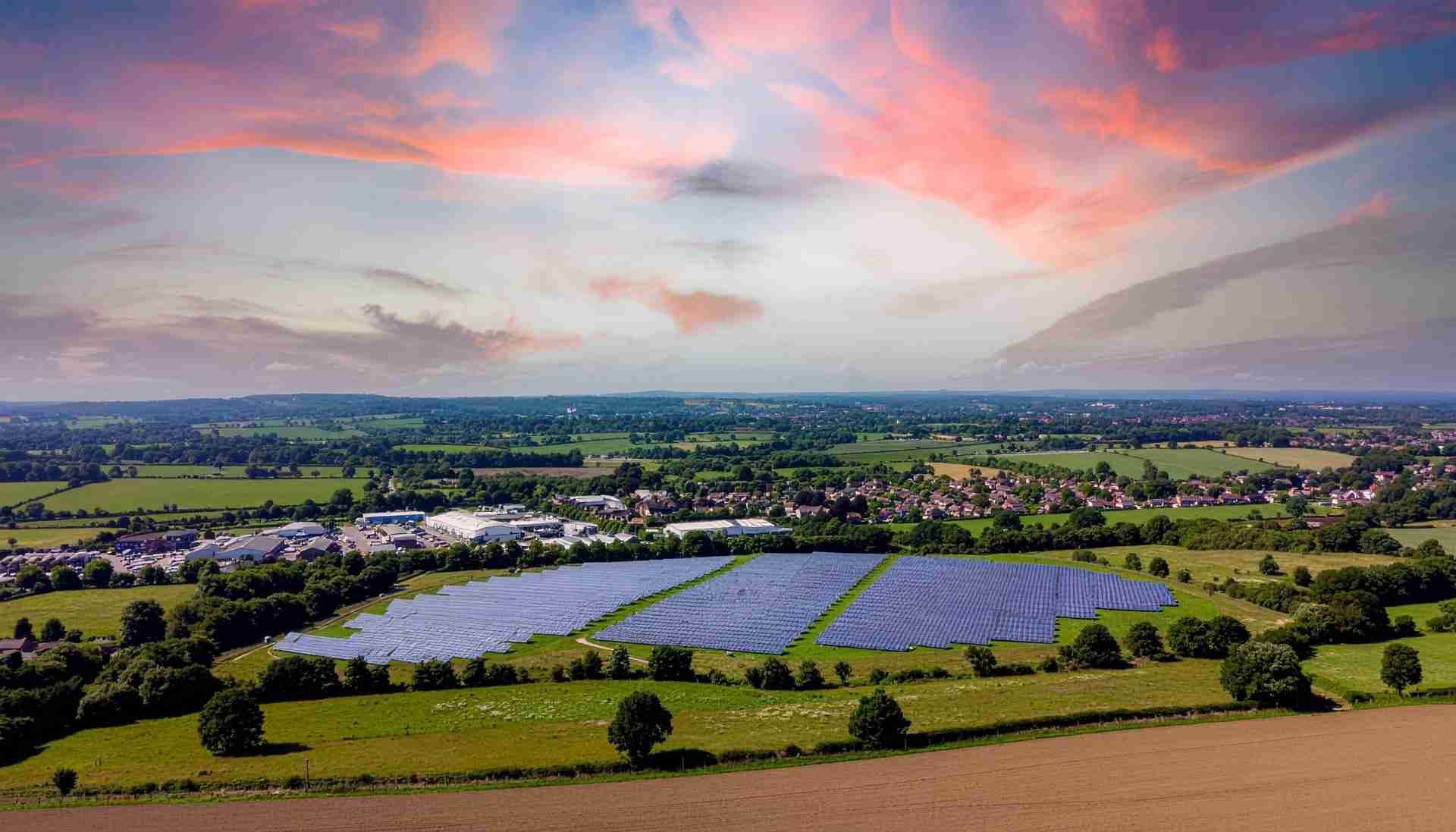
Instead of supplying electricity at a per-unit rate and watching margins get squeezed by brokers, comparison sites, and Ofgem price controls, a new breed of energy business installs solar panels — at zero upfront cost to the customer — and charges a monthly rental fee for the asset.
You, the business owner, get:
- Panels installed and maintained at no capital cost
- Reduced grid dependency from day one
- A fixed, predictable monthly fee instead of a volatile unit rate
- No contracts with termination fees tied to wholesale swings
They get:
- Recurring revenue that doesn’t move with wholesale gas prices
- An asset that appreciates in value and compounds over time
- A customer relationship measured in decades, not contract years
- Data from every panel — which becomes its own product
It’s not a new concept in residential. What’s new is that it’s coming for commercial premises. Fast.
Why now?
Three things have converged.
First, the cost of solar has collapsed. The price per watt of installed solar has dropped over 90% in the last fifteen years. What cost £40,000 to install in 2010 costs under £8,000 today for an equivalent output. The economics of owning and leasing that asset have never been better.
Second, SMEs are exhausted. I’ve spoken to hundreds of UK business owners since the energy crisis began. The single biggest frustration isn’t the price — it’s the unpredictability. A hospitality operator can’t build a P&L when their energy cost swings 40% between renewal cycles. A fixed monthly rental? That’s not an energy cost. That’s infrastructure.
Third, the grid is becoming a liability. Demand charges, distribution costs, standing charges — the portion of a commercial energy bill that isn’t the unit rate has grown substantially. Businesses that reduce grid reliance don’t just save on generation. They reduce their entire exposure.
So why aren’t the big suppliers doing this already?
This is the question I get asked most often. And the honest answer is: because they structurally can’t. Not without dismantling everything that makes them what they are.
Revenue recognition is completely wrong for them. Legacy suppliers book revenue per unit consumed — transactional, immediate, and clean on a P&L. An asset-rental model means capitalising hardware, depreciating it over 15–25 years, and booking a monthly fee. Their finance teams, investor reporting, and credit facilities are all architected around the old model. Switching isn’t an accounting adjustment. It’s a fundamental restructure of how the business looks on paper.
They’re capital-light businesses trying to become capital-heavy ones. Most energy suppliers hold very few physical assets — that’s by design, low balance sheet exposure. The rental model requires owning hardware on thousands of commercial rooftops. That’s a balance sheet transformation requiring project finance, asset management capability, and maintenance infrastructure they’ve never needed to build.
Their existing contracts actively work against them. The moment a customer installs solar, grid consumption drops — potentially by 40–60%. The supplier has just funded the destruction of their own revenue stream. The internal politics of cannibalising existing contracted book value are brutal. No commercial director signs off on that willingly.
Regulatory perimeter and legal paralysis. They’re licensed as electricity suppliers. Moving into distributed generation, asset ownership, and rental agreements crosses into different territory — potentially FCA consumer credit regulation, planning consent, and DNO coordination. Compliance teams default to “no.” Every time.
And fundamentally — the wrong people. Running an asset-rental energy business needs project managers, surveyors, electricians, and field service operations. Legacy suppliers are built on traders, billing systems, and call centres. The human capital base is entirely mismatched.
The brutal irony? The businesses best placed to execute this model aren’t energy suppliers at all. They’re infrastructure funds, facilities management companies, and technology-led disruptors — organisations that built without the legacy constraints in the first place. Octopus didn’t inherit a broken model. They wrote a new one.
The playbook for those who can move
This isn’t theoretical. The model is buildable. The execution is hard, but the path is clear:
- Own or finance the hardware — panels, batteries, EV chargers, heat pumps
- Install at zero cost to the customer — remove the barrier entirely
- Charge a rental or service fee — fixed, transparent, inflation-linked if necessary
- Layer in smart metering and energy management — the data is the moat
- Offer grid supply as a backstop, not the primary product
And then there’s the bigger question nobody’s asking
If we accept that energy infrastructure — the hardware generating and distributing power across this country — is the most strategically important national asset we have, why are we leaving it entirely to private capital to figure out?
Here’s the thought experiment I keep coming back to:
What if Britain built a publicly owned energy company — not a renationalised legacy utility with all its inherited dysfunction — but something designed from scratch for this model? An organisation that installs and maintains distributed generation assets on homes, farms, commercial premises, and public buildings across the country. That charges affordable, transparent rental fees. That reinvests surplus into grid resilience, fuel poverty reduction, and further deployment. An asset owned by the state, held in permanent trust for the people — enshrined in law so that no future government could ever sell it.
Not British Gas mark two. Not a political football. A sovereign infrastructure endowment — structured like the BBC licence model, accountable like a public utility, and protected like the NHS is supposed to be.
The technology exists. The economic case exists. The need is undeniable.
What’s missing is the political will to say that some assets are simply too important — too foundational to daily life and national security — to be owned by a private equity fund in Luxembourg.
That conversation is coming. The only question is whether we have it on our terms, or after the next crisis forces our hand.
The question for business owners right now
While that debate unfolds, the practical reality is this: the businesses adapting to the asset-rental model today are locking in customer relationships that will last twenty years. The ones still fighting over p/kWh margins are building on sand.
If someone offered to install solar panels on your commercial premises tomorrow — no capital outlay, maintained for life, fixed monthly fee, net reduction in your overall energy cost — would you say no?
Most wouldn’t.
Which means the first energy businesses to bring this to UK SMEs at scale aren’t just building a product. They’re building a position the rest of the industry will spend a decade trying to copy.
The energy company of the future isn’t selling you electrons.
It’s charging you rent. Or it’s owned by all of us.
Either way, the commodity model is finished.
Telnergy Limited is an independent commercial energy consultancy established in 2002, based in Christchurch, Dorset. Ofgem-aligned consultancy · ADR Ref E3561 · CRN 04576876.