
EV Dealership Energy: Why Showroom Electricity Is About to Get Complicated
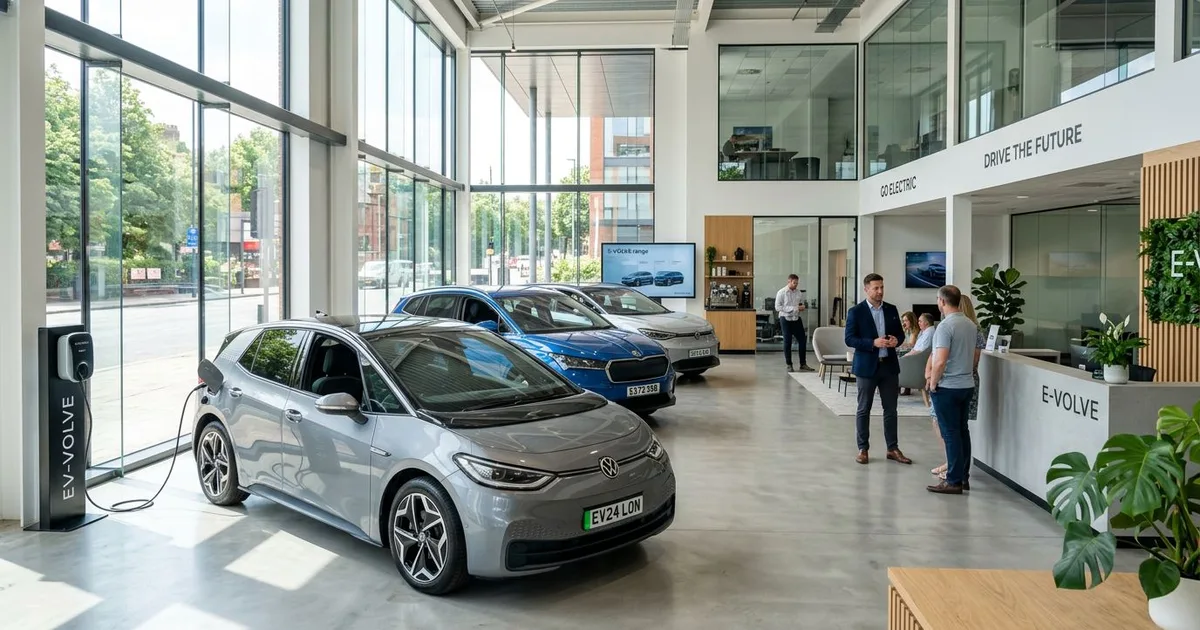
EV Charging Infrastructure in a Car Dealership Will Multiply Your Peak Electricity Demand. Most Dealers Don’t Find Out Until the Bill Arrives.
The UK automotive retail sector is in the middle of the most significant operational energy transition in its history. The Zero Emission Vehicle mandate requires 80% of new car sales to be battery electric vehicles by 2030. Every UK car dealership selling new vehicles must now maintain a demonstrator fleet of EVs, offer test drives on electric vehicles, and increasingly provide customer-facing charging infrastructure as part of the service proposition.
None of this is optional for franchised dealers, and all of it has energy implications that are materialising right now — not in 2030. Dealerships that haven’t reviewed their electricity supply, maximum demand capacity, and contract structure in light of EV infrastructure requirements are almost certainly running towards an energy cost shock.
The EV Charging Load: Why It’s Different From Everything Else in the Dealership
A typical franchised car dealership in the UK is a medium-to-high electricity consumer — showroom lighting, workshop equipment, air compressors, car wash, office systems, CCTV. Annual electricity consumption for a medium-sized dealership (showroom, workshop, forecourt) might run 80,000–150,000 kWh per year before any EV infrastructure is installed.
EV charging fundamentally changes the peak demand profile. Here’s why this matters technically:
A 7kW Type 2 AC charger (the most common residential and slow commercial charger) draws 7 kW of electricity continuously during a charging session — typically 2–8 hours for a full charge on a modern BEV. A 50kW DC rapid charger draws 50 kW during an active session. A 150kW ultra-rapid charger draws 150 kW.
A dealership that installs four 50kW rapid chargers for demonstrator and customer use has added 200 kW of potential peak demand to its electricity supply. If those four chargers operate simultaneously — as they might during a busy Saturday — the dealership’s maximum demand has increased by 200 kW in addition to whatever it was previously drawing from the showroom and workshop.
Maximum demand is measured by your electricity meter and recorded in kW. Your Distribution Network Operator (DNO) uses your maximum demand to determine your grid connection capacity. If your charging infrastructure takes your peak demand above your current agreed supply capacity, you will need a grid connection upgrade — a process that can take 6–18 months and cost tens of thousands of pounds.
Connection Upgrade Costs: The Capital Surprise
Many dealerships installing EV chargers have discovered, after the fact, that their existing grid connection cannot support the installed charging capacity without a network reinforcement. The sequence typically runs:
- EV chargers installed by an OZEV-registered installer
- Chargers commissioned and operational
- Site begins drawing above its agreed supply capacity during peak charging periods
- DNO identifies the overload and either throttles the connection or requires a formal upgrade application
- Upgrade application submitted — DNO quotes the reinforcement cost and timeline
- Dealership faces a connection upgrade cost of £15,000–£80,000 and a wait time of up to 18 months for works
This sequence is avoidable with upfront network capacity assessment before charging infrastructure is sized and installed. The assessment is low-cost; the retrospective upgrade is not. Dealers planning EV infrastructure expansion should obtain a DNO capacity check before committing to charger specifications.
Smart Load Management: The Technical Mitigation
For dealerships where grid connection upgrade is not immediately feasible or desirable, smart load management systems (also called energy management or dynamic load balancing) can distribute available supply capacity across active charging sessions, preventing any single combination of chargers from exceeding the site’s agreed supply capacity.
Rather than each charger drawing its maximum rated power independently, a load management system monitors total site demand and adjusts charge rates across all active sessions to stay within the supply limit. In practice, this means charge sessions take slightly longer during periods of high concurrent demand, but the site never trips its supply limit.
Load management is now standard on most commercial charging hardware from leading manufacturers (Chargepoint, Alfen, ABB, Schneider). For dealers, the critical step is ensuring the system is properly configured to the site’s actual supply capacity — not just installed at default settings.
The Electricity Bill Impact of EV Infrastructure
Beyond maximum demand and connection capacity, EV charging adds directly to electricity consumption. A dealership running a 10-vehicle demonstrator fleet, each EV charged from near-empty to full overnight twice per week, is adding approximately 50,000–80,000 kWh per year in charging consumption — potentially doubling or tripling the site’s previous electricity spend.
At current contracted electricity rates, 70,000 kWh of additional consumption costs approximately £15,400–£19,600 per year. This is before any customer-facing charging revenue is factored in — and customer-facing charging at commercially viable rates can partially or fully offset the electricity cost, but requires a pricing strategy and a billing system for customer sessions.
If the dealership’s electricity contract was negotiated before EV infrastructure was installed, the contract may have been priced against a consumption profile that no longer reflects reality. A contract renewal based on updated (higher) consumption data will typically attract a different rate from suppliers — volume pricing improves at higher consumption levels, partially offsetting the raw volume increase.
The Manufacturer Pressure Layer
Franchised dealers are increasingly subject to manufacturer standards on EV infrastructure — minimum charger counts, charging speeds, customer-facing technology requirements, and showroom energy performance metrics. These standards are embedded in franchise agreements and facility audits.
Meeting manufacturer facility standards while managing the energy cost of compliance requires an integrated approach: infrastructure sizing, connection capacity, smart load management, energy procurement, and — for larger dealers — the potential case for onsite solar to offset charging electricity costs.
A 100–200 kW rooftop solar installation on a dealership with large south-facing workshop and showroom roof area can generate 90,000–180,000 kWh per year — covering a significant proportion of both existing site consumption and the additional EV charging load. The capital cost of such an installation (£80,000–£160,000) is typically recovered in 6–10 years at current electricity prices, with a Power Purchase Agreement option reducing or eliminating the upfront capital requirement.
What Dealerships Should Be Reviewing Right Now
- Current agreed supply capacity (kVA): Check your Connection Agreement with your DNO. This is the technical ceiling on your site’s electricity demand.
- Current and planned EV charging capacity: Total kW of installed and planned chargers.
- Smart load management configuration: Is it installed? Is it configured to your actual supply limit?
- Electricity consumption pre- and post-EV installation: Has your consumption data been updated? Is your current contract priced against old consumption?
- Contract renewal timing: With consumption rising, the next renewal is an opportunity to reprice based on new volumes — potentially improving your unit rate.
Telnergy’s Work with Automotive Retail
We work with franchised and independent dealer groups on electricity procurement that accounts for EV charging infrastructure, maximum demand management, and the shift from conventional dealership energy profiles to EV-era consumption patterns. If your dealership has installed EV infrastructure in the last two years and hasn’t reviewed your energy contract since, that review is overdue.
📱 WhatsApp Business: 07360 272168
📧 Email: hello@telnergy.com
📞 Direct line: 01202 028888
Telnergy Limited • Independent Energy Consultants since 2002 • Ofgem-Aligned Consultancy • Christchurch, Dorset
Telnergy Limited is an independent commercial energy consultancy established in 2002, based in Christchurch, Dorset. Ofgem-aligned consultancy · ADR Ref E3561 · CRN 04576876.