
Farm Energy Costs: Managing the Bill Across Grain Drying, Dairy and Livestock
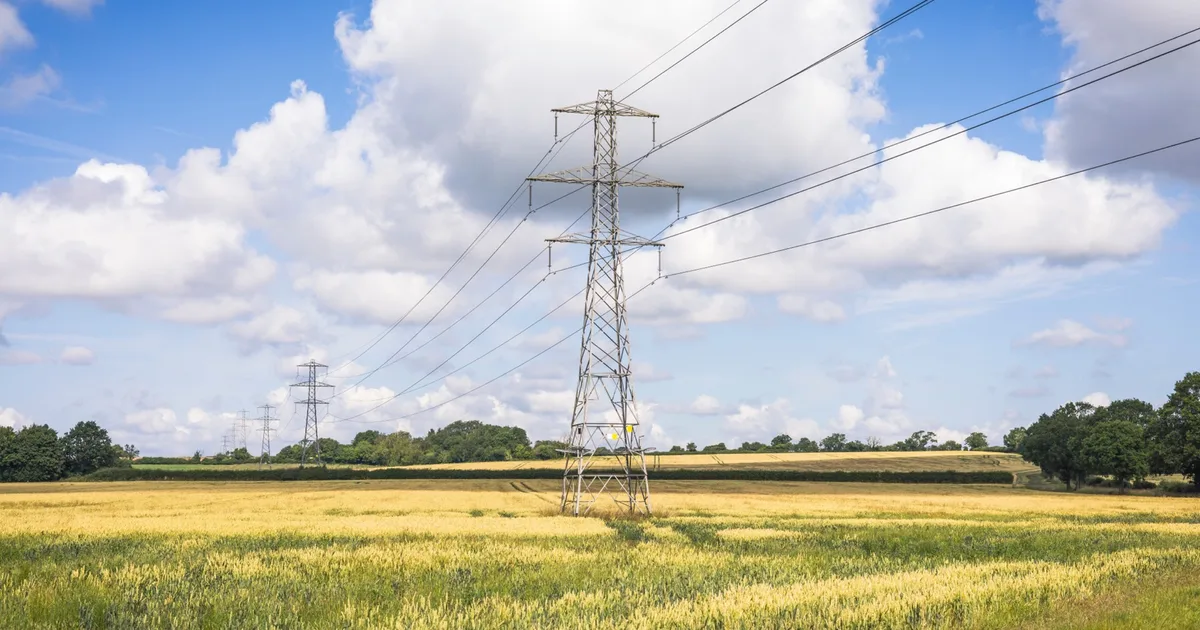
UK agriculture pays approximately £1.5 billion in energy costs every year. For individual farming businesses, energy can represent 5–15% of total operating costs depending on enterprise type — and in some sectors, particularly dairy and intensive livestock, it’s one of the largest variable costs on the farm. Yet agricultural energy management remains one of the least systematically addressed areas in the rural business sector, with many farms still on deemed rates or auto-renewed contracts paying significantly above competitive market rates.
Grain drying: the arable sector’s biggest energy event
For arable farms, grain drying is the most energy-intensive operation on the holding and the one with the highest variability year to year. Removing moisture from grain requires approximately 1.0–1.5 kWh per tonne per percentage point of moisture removed. A 500-tonne wheat harvest coming off at 20% moisture and needing to reach 14.5% requires roughly 2,750–4,125 kWh for that batch alone — and a wet harvest year can multiply this significantly.
Grain dryer efficiency is primarily determined by burner setup, airflow balance, and intake temperature. A poorly maintained or incorrectly calibrated dryer can use 30–50% more energy per tonne than a well-maintained one processing the same crop. Annual burner servicing and airflow checks before harvest are the most cost-effective grain drying energy investment available.
Dairy: the continuous load
Dairy farms are among the most energy-intensive agricultural enterprises, with electricity consumption driven by three main loads: milking parlour vacuum pumps, milk cooling and refrigeration, and water heating for equipment cleaning and cow welfare. A 200-cow dairy unit might consume 100,000–180,000 kWh of electricity per year — a consumption profile more in common with a small factory than a typical SME.
Milk cooling accounts for 25–35% of dairy electricity. Plate pre-coolers — using cold mains water to remove heat from milk before it enters the bulk tank — can reduce refrigeration energy by 30–40% by reducing the temperature differential the refrigeration system needs to manage. The capital cost is relatively low; installation is straightforward.
Variable speed drives on vacuum pumps are one of the most consistent ROI investments in dairy energy. Traditional vacuum pumps run at constant speed; VSD-equipped pumps modulate to actual demand during milking. Savings of 20–40% on milking parlour electricity are typical.
Poultry and pig buildings: ventilation costs
Intensive livestock buildings require controlled ventilation for animal welfare compliance. In poultry and pig buildings, ventilation can account for 40–60% of electricity consumption. The transition to variable speed drive (VSD) fans — which modulate to maintain target temperature and air quality rather than running at fixed speed — is the single most impactful efficiency improvement available in most modern livestock buildings. AHDB data suggests typical savings of 30–50% on ventilation electricity from VSD retrofits.
VAT on agricultural energy
Agricultural energy used for eligible farming purposes qualifies for the 5% reduced rate of VAT rather than the standard 20% — but the eligibility is linked to the end use, not simply to the fact that the meter is on a farm. Energy used for qualifying agricultural activities is eligible; energy used for non-qualifying activities (a holiday cottage on the farm, for example, or a farm shop) is not. Many farms pay 20% across the board because they’ve never separated their meters or reviewed the split. The VAT saving on the eligible portion is 15 percentage points — material on a £30,000 annual energy bill.
Procurement for farms
Agricultural energy procurement has historically been neglected — partly because farms are often perceived as domestic customers, partly because the energy spend is spread across multiple meters (farmhouse, grain store, dairy unit, workshop), and partly because farming businesses don’t always have a dedicated person managing operational costs. The result is that many farms are on deemed contracts or auto-renewed tariffs paying 20–40% above competitively tendered rates.
Consolidating multiple farm meters into a single procurement exercise — presenting the combined volume to the market — is usually more effective than tendering individual meters separately. Telnergy manages agricultural procurement across all meter types and can handle the VAT structuring as part of the engagement.
📱 WhatsApp: 07360 272168 | 📧 hello@telnergy.com | 📞 01202 028888 Telnergy Limited · Independent commercial energy consultancy since 2002 · Ofgem-aligned consultancy · ADR Ref E3561 · CRN 04576876 · Christchurch, Dorset
FAQ
Does my farm qualify for reduced rate VAT on energy?
Agricultural energy used for eligible farming activities qualifies for 5% VAT under Schedule 7A of the VATA 1994. The key test is end use: if the electricity or gas is used for farming purposes (crop drying, livestock housing, milking, irrigation), it qualifies. Energy for non-farming use on the same holding does not. If you’re unsure whether your supplier is applying the correct rate, check the VAT line on your bill and discuss with your accountant.
Can farm energy be covered by a Climate Change Agreement?
Several agricultural sectors have sector-level Climate Change Agreements (CCAs) negotiated with DESNZ, including horticulture and some livestock sectors. A valid CCA exempts the business from the Climate Change Levy element of energy bills, which can represent a significant saving. Check with your relevant agricultural trade body or the DESNZ CCA register to confirm whether your enterprise type has an applicable agreement.
Is solar PV worth considering for a farm?
Farm buildings — large, south-facing roofs, rural grid connections that can often accommodate export — are among the best candidates for solar PV in the UK. For farms with significant daytime electricity consumption (dairy, irrigation, grain store fans), self-consumption rates of 60–80% are achievable, dramatically improving the ROI compared with a business with lower daytime demand. Agricultural solar is well-established; the development costs and planning constraints are generally lower than for ground-mounted systems.
Telnergy Limited is an independent commercial energy consultancy established in 2002, based in Christchurch, Dorset. Ofgem-aligned consultancy · ADR Ref E3561 · CRN 04576876.