
Gym and Fitness Centre Energy
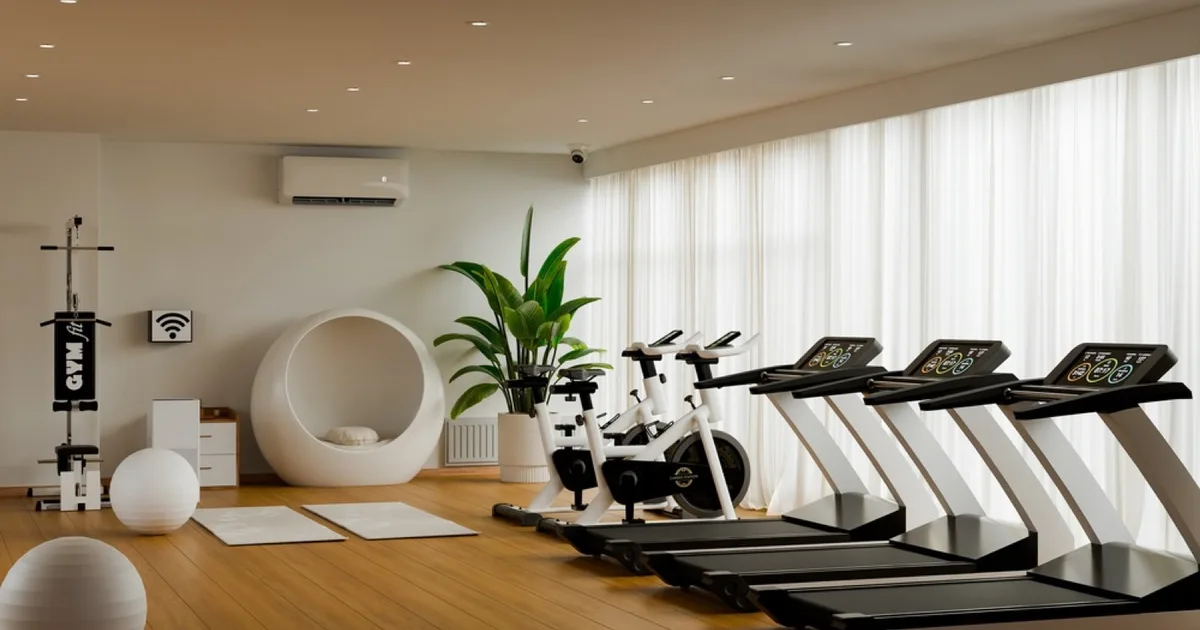
A private gym of 1,000 square metres, running from 06:00 to 22:00, seven days a week, will typically spend between £30,000 and £55,000 a year on electricity. For a multi-studio fitness facility with spin rooms, HIIT studios, and a functional training floor, the figure can be considerably higher — and a material fraction of it will be driven not by the equipment members use, but by the air they breathe. HVAC accounts for 40 to 60% of energy consumption in a typical fitness facility, and it’s routinely oversized, poorly controlled, and running when it doesn’t need to.
HVAC: the dominant cost and the biggest opportunity
Fitness facilities have unusually high fresh air ventilation requirements. Building regulations require a minimum of 8 litres per second per person in general gym areas, rising to 25 litres per second per person in high-intensity studio spaces. Most ventilation systems in fitness facilities are designed for peak occupancy and run at or near peak capacity regardless of how many people are actually in the building. Heat recovery ventilation (HRV) systems, which capture warmth from exhaust air and use it to pre-heat incoming fresh air, can reduce the heating energy cost of ventilation by 70 to 80%.
Occupancy-responsive ventilation — systems that modulate air handling unit output based on CO₂ levels, occupancy sensors, or class timetable data — offers the most cost-effective path for existing facilities. A CO₂-driven controller fitted to an existing AHU can be installed for £2,000 to £4,000 and will typically deliver energy savings of 15 to 25% on ventilation costs within the first year.
Lighting: LED is the baseline, control is the gain
Sports hall lighting — traditionally high-bay metal halide or fluorescent strip — has largely been replaced by LED in most fitness facilities built or refurbished since 2015. If yours hasn’t made that switch, it should be the first capital investment on your energy list. A typical sports hall LED retrofit delivers a 60 to 70% reduction in lighting energy consumption. For facilities already on LED, the remaining gain is in control. Occupancy-sensing in changing rooms, corridors, and ancillary spaces is straightforward and inexpensive. Studio lighting tied to class timetables prevents the common situation where studios are lit for two hours between sessions.
Changing room hot water: the wasteful system nobody measures
Changing room hot water is consistently the most wasteful energy system in fitness facilities, and consistently the least monitored. A busy gym with 500 member visits per day and good shower facilities will use 8,000 to 15,000 litres of hot water daily. A poorly insulated cylinder-fed system with a continuous circulating pump can waste as much in standing losses as it uses in actual showers. The baseline interventions — pipe insulation, timer-controlled circulation pumps, temperature set-point optimisation — cost very little and are frequently absent even from recently refurbished facilities.
EV charging: the emerging load that changes your profile
EV charging at gym car parks is becoming a genuine operational consideration for larger facilities. A gym installing ten 7kW AC chargers adds up to 70kW of potential demand to its electrical profile — a significant addition to a building whose total existing demand might be 80 to 100kW. EV chargers are typically used during morning and evening peak periods — exactly when electricity wholesale costs are highest. A gym that installs EV charging without reviewing its energy contract may find its half-hourly maximum demand charge increases substantially.
The procurement angle: flat profiles, neglected rates
Private gyms typically have one of the most consistent consumption profiles of any commercial operation. Seven-day trading, long opening hours, and relatively constant HVAC and hot water loads create a flat half-hourly profile with modest variation. That predictability is an asset in procurement — suppliers can price with confidence, and the risk premium built into the rate should be low. The problem is that most gym operators don’t know this, and don’t use it as a negotiating point. Fixed all-inclusive contracts renewed annually by the gym manager without a tender process are the norm.
📱 WhatsApp: 07360 272168 | 📧 hello@telnergy.com | 📞 01202 028888 Telnergy Limited · Independent commercial energy consultancy since 2002 · Ofgem-aligned consultancy · ADR Ref E3561 · CRN 04576876 · Christchurch, Dorset
FAQ
Our gym has solar panels on the roof. Should we be on a different type of energy contract? If your solar generation covers 15% or more of your daytime demand, your procurement should account for the net import profile rather than gross consumption. You should also check whether your export is being handled optimally — many small commercial solar installations are exporting at the default SEG rate when a better export tariff may be available. Reviewing both the import and export contracts together is the right approach.
We’re a franchise gym — does the franchisor arrange our energy contracts or do we do it ourselves? This varies by franchise. Some franchisors operate collective purchasing schemes where all franchisees are supplied under a group contract. Others leave energy procurement entirely to individual franchisees. If you’re part of a group contract, it’s worth understanding what rate you’re paying relative to the open market — group contracts aren’t always as competitive as franchisors suggest.
We’ve just signed a lease on a second site. Should we combine it with our existing energy contract? Combining sites under a single contract — or at minimum tendering them simultaneously — is usually the better approach. Two sites represent more procurement leverage than one. The more relevant question is timing: if your existing contract has 18 months to run and the new site needs energy immediately, you’ll need to manage them separately until the existing contract end approaches.
Telnergy Limited is an independent commercial energy consultancy established in 2002, based in Christchurch, Dorset. Ofgem-aligned consultancy · ADR Ref E3561 · CRN 04576876.