
The Hidden Cost in Every Business Energy Bill: Network Charges Unpacked
The Wholesale Price Is Around 35–40% of Your Electricity Bill. The Rest Is Charges Most Business Owners Have Never Examined.
Ask most business owners what drives their electricity bill and they’ll say “the unit rate.” They’re not wrong — but the unit rate they’re thinking of is the wholesale cost of electricity, which represents only 35–45% of a typical business electricity bill. The remaining 55–65% is composed of network charges, environmental levies, and supplier margin — a cost stack that has grown significantly over the past decade and will continue to grow as the UK’s energy infrastructure investment requirements accelerate.
For a business spending £80,000 per year on electricity, this means approximately £44,000–£52,000 of that spend is in charges that have nothing to do with the wholesale price of power. Focusing exclusively on the unit rate when negotiating or comparing contracts is, at best, an incomplete approach.
The Full Cost Stack: What’s in Your Electricity Bill
A business electricity bill has six primary cost components. Understanding each one changes how you interpret your invoice and how you evaluate contract options.
1. Wholesale Energy Cost (35–45% of total)
This is the cost of the electricity itself — purchased by your supplier on the wholesale market and passed through to you, either as a visible component on pass-through contracts or embedded in your unit rate on fixed contracts. This is the element that moves with gas prices, renewable generation levels, and geopolitical events. It’s the headline number in procurement conversations.
2. Transmission Network Use of System (TNUoS) — typically 8–12% of total bill
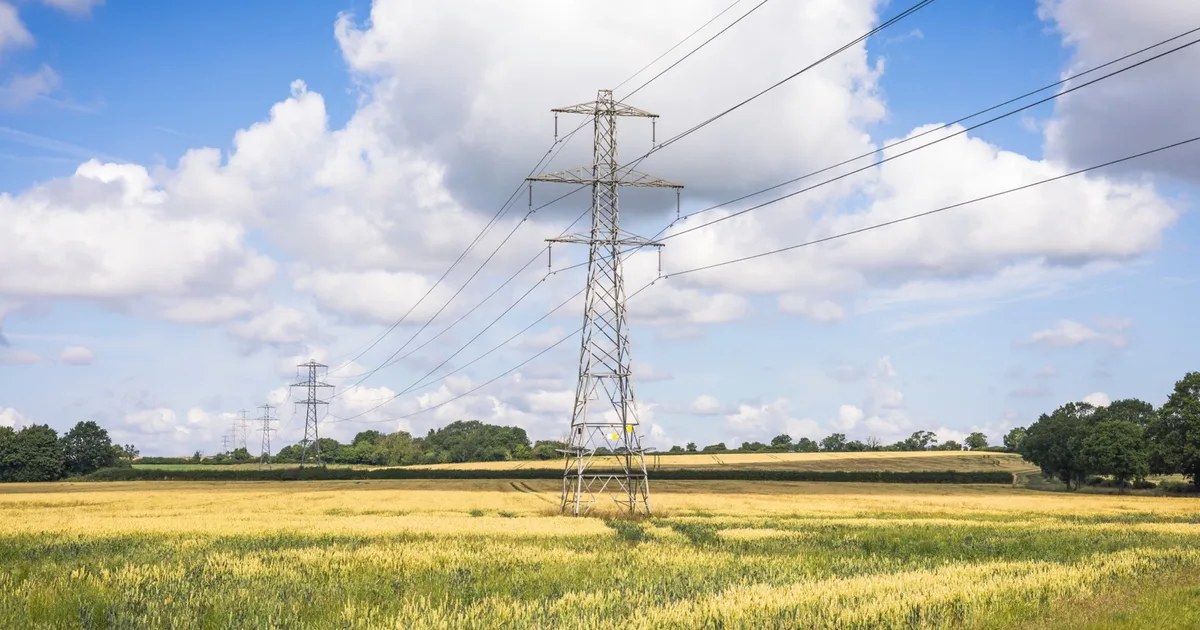
TNUoS charges fund the high-voltage transmission network operated by National Grid — the pylons, substations, and cables that move electricity from power stations to regional distribution networks. The charge is recovered from generators and suppliers, and passed through to consumers.
TNUoS includes the Triad charging mechanism — the three half-hours of peak system demand each winter, assessed in November–February, which attract significantly higher charges for businesses consuming at those specific times. For larger electricity users (above roughly 500 kW demand), active Triad avoidance — reducing consumption during forecast Triad windows — can save thousands of pounds per year.
TNUoS rates also vary by location in the UK. Businesses in Scotland and Northern England pay different rates to those in the South, reflecting the cost of transmitting electricity from generation-heavy areas in the north to demand-heavy areas in the south.
3. Distribution Use of System (DUoS) — typically 10–15% of total bill
DUoS charges fund the local distribution networks operated by the 14 regional Distribution Network Operators (DNOs) — UK Power Networks, Western Power Distribution, Northern Powergrid, and others. These are the cables and substations that deliver electricity from the transmission network to your premises.
DUoS is charged in three bands — red, amber, and green — corresponding to time-of-use periods. Red band periods (typically 4pm–7pm on weekday evenings) attract the highest charges. Green band periods (overnight and weekends) attract minimal charges. Businesses with flexible consumption can reduce DUoS costs by shifting load away from red band periods.
Like TNUoS, DUoS rates vary by region — your DNO determines your rate schedule.
4. Environmental and Policy Levies — typically 12–18% of total bill
This category encompasses several distinct charges:
- Renewables Obligation (RO): Funds renewable energy generation. Suppliers must purchase Renewable Obligation Certificates proportional to their electricity sales. The cost is recovered from consumers.
- Contracts for Difference (CfD): The mechanism that funds new renewable and nuclear projects with guaranteed strike prices. The difference between strike price and market price is recovered via a per-unit levy on electricity consumers.
- Feed-in Tariff (FiT): Legacy scheme for small-scale renewable generation (solar panels on domestic and small commercial properties). Still being recovered from consumers despite the scheme closing to new entrants in 2019.
- Capacity Market Supplier Charge: Funds the Capacity Market payments to backup generation and storage (covered in detail in our separate Capacity Market article).
- Energy Intensive Industry (EII) exemption scheme: The most energy-intensive industrial users receive partial exemptions from some levies. This is funded by non-exempt consumers.
5. Climate Change Levy (CCL) — variable by consumption
CCL is a tax on energy used by businesses, charged per unit of electricity and gas consumed. The main rates from April 2024 are 0.775p/kWh for electricity and 0.672p/kWh for gas. Some businesses are exempt — or eligible for an 80% CCL discount — if they hold a Climate Change Agreement (CCA) through their relevant trade association. Most businesses eligible for CCA discounts are not claiming them because their energy adviser hasn’t raised it.
For a business consuming 500,000 kWh of electricity per year, the difference between paying full CCL (£3,875) and an 80% reduced CCL (£775) is £3,100 per year — for what is essentially an administrative qualification exercise.
6. Supplier Margin and Metering — typically 5–10% of total bill
This covers the supplier’s operating costs and profit margin, plus metering charges (for smart or advanced meters) and data collection costs. This is the element over which competitive procurement has the most direct influence — suppliers with lower operating cost structures and higher volume can offer thinner margins.
What Changes Between Fixed and Pass-Through Contracts
On a fixed all-inclusive contract, all six components above are bundled into a single unit rate. The supplier carries the risk that network charges and levies change during your contract term — if DUoS rates rise or the Capacity Market levy increases, the supplier absorbs the impact.
On a pass-through contract (sometimes called third-party charge pass-through), the wholesale cost is fixed but all network charges, levies, and taxes are passed through at actual rates. You see each component as a separate line item. Changes during your contract term are passed to you — up or down.
For short contracts (12 months), the distinction matters less because there is limited time for charges to change materially. For 24–36 month contracts, the distinction is significant. In a period where infrastructure investment costs are rising — as they are, driven by the energy transition — pass-through contracts carry more upward charge risk than fixed contracts.
How to Use This Information
The immediate practical value of understanding the cost stack is this: when you receive an electricity contract quote, you can ask the supplier or broker to break out the estimated non-commodity charge component. Any competent supplier or broker should be able to provide this. If they can’t — or won’t — that’s telling you something about the quality of the advice you’re receiving.
Beyond transparency, there are specific actions available to businesses willing to engage with the details:
- Half-hourly metered sites over 500 kW: review Triad history and consider active avoidance
- Businesses with flexible consumption: consider load-shifting away from DUoS red band periods
- Businesses in manufacturing, food processing, or other qualifying sectors: check Climate Change Agreement eligibility
- All businesses: ensure CCL is charged at the correct rate — VAT and CCL errors are common on business energy bills
Telnergy’s Full Bill Review
We review business energy bills at component level — not just unit rate. For clients spending over £50,000 per year on electricity, we routinely identify CCL incorrectly applied, DUoS band errors, and TNUoS charges that could be reduced through Triad management. These are not theoretical savings — they’re recoverable costs that appear in bills regularly.
If your bill has never been broken down by component, a review is worth an hour of your time.
📱 WhatsApp Business: 07360 272168
📧 Email: hello@telnergy.com
📞 Direct line: 01202 028888
Telnergy Limited • Independent Energy Consultants since 2002 • Ofgem-Aligned Consultancy • Christchurch, Dorset
Telnergy Limited is an independent commercial energy consultancy established in 2002, based in Christchurch, Dorset. Ofgem-aligned consultancy · ADR Ref E3561 · CRN 04576876.