
How Much Does Energy Cost Per Month for a Gym Business?
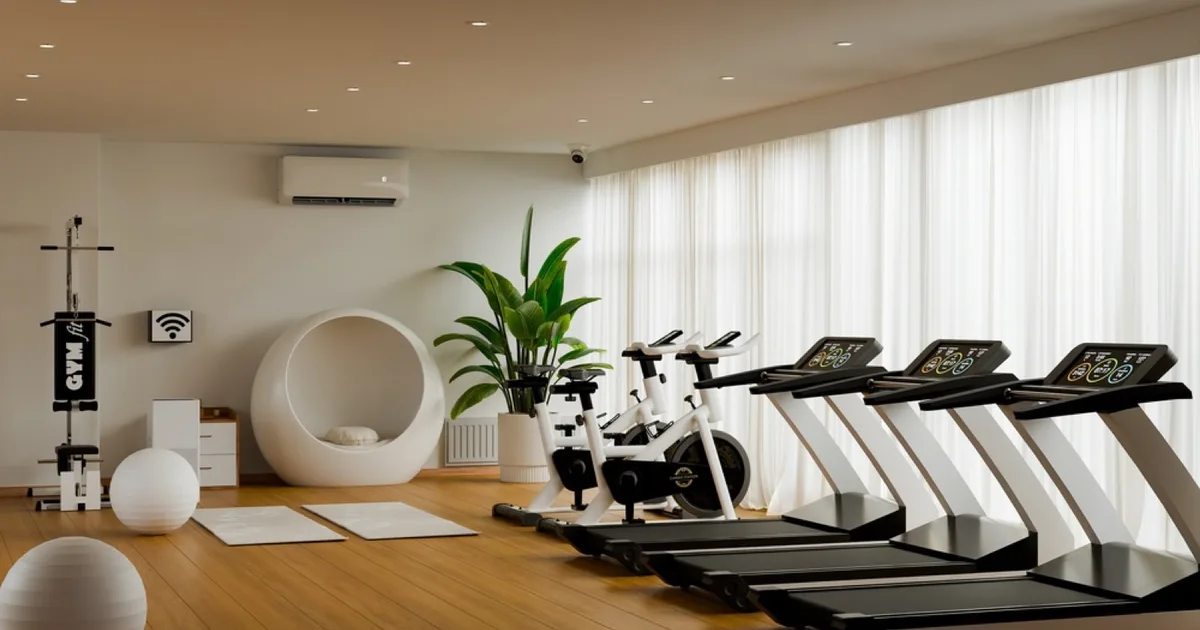
A gym is one of the most electricity-heavy tenants a commercial building can have — and one of the least gas-heavy, unless there’s a pool involved.
Gyms are an electricity business, not a gas business. Cardio machines, resistance kit with digital consoles, LED and studio lighting, air handling units running twelve to twenty-four hours a day, and increasingly EV chargers in the car park — all of it draws electricity. Gas typically shows up in one place only: hot water for showers. Unless there’s a swimming pool or spa on site, gas is a minor line on the bill, not a driver of it.
That split matters commercially. Most energy conversations with gym owners default to “what’s my unit rate,” when the more useful question is “how much of my usage is even gas-dependent.” For a dry-side gym — no pool, no sauna — the answer is often under 15% of total spend.
What drives the electricity bill in a gym
- Cardio and resistance equipment — treadmills, cross-trainers, and rowers with digital displays draw continuously through opening hours, whether occupied or not
- Lighting — studio spaces, free-weights areas, and car parks are typically lit for the full trading day, often 5am to 11pm in larger sites
- HVAC and ventilation — a gym floor generates more heat load per square metre than almost any other retail or leisure use, so air handling runs harder and longer
- Hot water for showers — the one place gas typically appears, if the site isn’t fully electric
- Pools and spas — where present, this becomes the dominant cost, not a secondary one
What the numbers look like by floor size
Energy use scales with floor size, but not in a straight line — a 24-hour gym on a small footprint can outspend a larger site that closes at 10pm. The figures below use typical UK commercial rates (roughly 28–32p/kWh electricity, 8–11p/kWh gas, standing charges extra) against typical consumption bands for standard-hours, dry-side gyms unless stated.
| Floor size | Typical use | Annual electricity | Annual gas | Estimated monthly cost |
|---|---|---|---|---|
| 150–300 m² (1,600–3,200 sq ft) | Boutique studio, no pool | 35,000–45,000 kWh | 5,000–8,000 kWh | £950–£1,150 |
| 300–700 m² (3,200–7,500 sq ft) | Standard mid-size gym, no pool | 60,000–90,000 kWh | 10,000–15,000 kWh | £1,700–£2,300 |
| 700–1,500 m² (7,500–16,000 sq ft) | Large health club, no pool | 120,000–180,000 kWh | 20,000–30,000 kWh | £3,400–£4,700 |
| 1,500–3,000+ m² (16,000–32,000+ sq ft) | Large club with pool/spa | 180,000–250,000 kWh | 60,000–100,000 kWh | £5,500–£7,000 |
Two things flip that table on its head. First, 24-hour access. A boutique studio running unstaffed overnight access can see electricity consumption 60–80% higher than an identical footprint on standard 12-hour trading, because HVAC, lighting on motion sensors, and security systems never fully switch off. Second, a pool. The moment water heating enters the picture, gas consumption can jump from a rounding error to a third or more of total energy spend — a mid-size gym with a small pool will often out-spend a much larger dry-side club on gas alone.
Why floor size alone is a weak predictor
A landlord or letting agent will quote a gym by square footage because that’s how commercial rent works. Energy doesn’t follow the same logic. Two 500m² sites can differ by 40% in annual spend depending on: opening hours, equipment age (a refurbished cardio floor from 2015 draws meaningfully more than 2024-spec kit), insulation and glazing on the building envelope, and whether the site has motion-sensor lighting in changing rooms and back-of-house areas versus lights running on a timer for the full trading day.
What this means for budgeting
If a gym owner is forecasting spend on a new site or reviewing an existing contract, floor size is a starting point, not an answer. The more useful inputs are: opening hours, presence of a pool or spa, age of the HVAC and lighting installation, and whether the site runs any 24-hour unstaffed access. Two gyms of identical square footage can sit £1,000 a month apart once those four factors are accounted for.
For gym operators reviewing renewal terms or comparing a prospective site, a sample usage report from a comparable footprint is usually more useful than a headline unit rate — the rate matters less than what’s actually driving the consumption underneath it.
If you’re reviewing a gym energy contract or want a sample report from a comparable site, call 01202 028888 or email hello@telnergy.com.
Telnergy Limited is an independent commercial energy consultancy established in 2002, based in Christchurch, Dorset. Ofgem-aligned consultancy · ADR Ref E3561 · CRN 04576876.