
How to Read a Business Energy Bill (And What to Check Every Month)
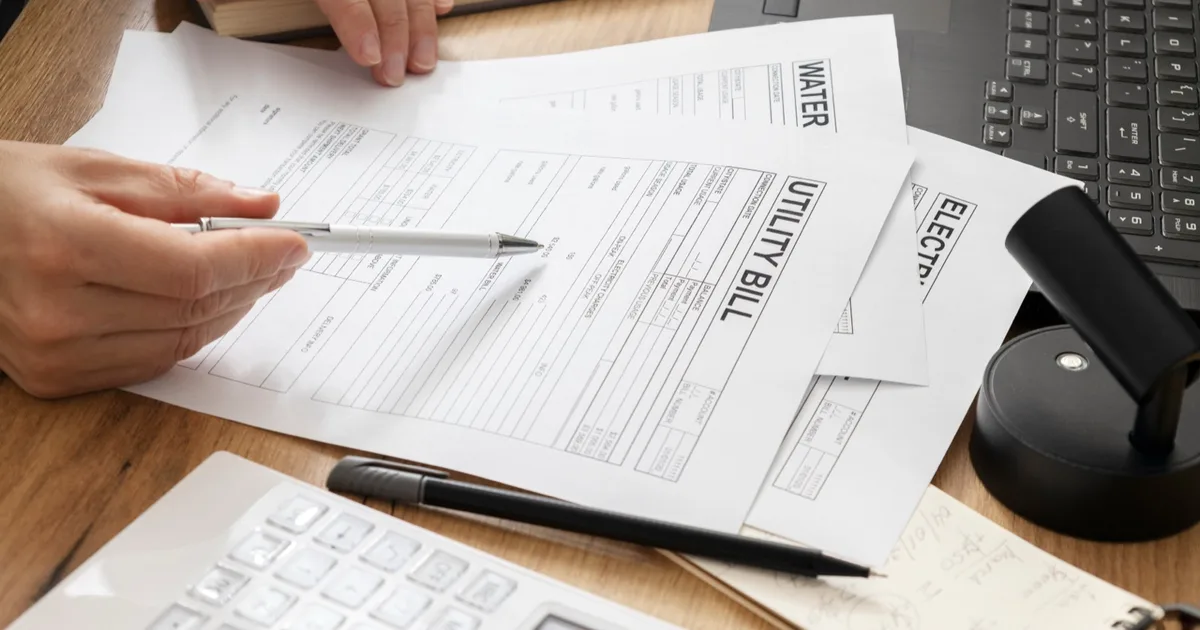
Most Business Owners Look at the Total on Their Energy Bill. The Total Is Almost Always Wrong.
Not wrong in the sense of fraud — wrong in the sense of estimated consumption, incorrect VAT rates, misapplied Climate Change Levy, standing charge errors, and meter read disputes that have compounded across billing cycles without anyone catching them. In over 20 years of reviewing business energy bills, Telnergy finds billing errors on a significant proportion of the accounts we audit. The majority of these errors favour the supplier.
Reading your energy bill is not a passive activity. It is an active audit exercise that, done correctly once a month, catches errors before they become entrenched, identifies whether your consumption is trending in the right direction, and gives you the data you need to have an informed conversation with your supplier or broker at renewal time.
Here is what to check — and what to do when you find something wrong.
Section 1: Account and Meter Details
Before anything else, verify that the basic account information on your bill is correct:
Meter serial number: The meter serial number on your bill should match the number physically printed on your meter. If it doesn’t, you may be billed for the wrong meter — a problem that is uncommon but not rare, particularly on multi-tenancy sites or properties that have recently changed occupancy.
MPAN (electricity) or MPRN (gas): Your Meter Point Administration Number (electricity) or Meter Point Reference Number (gas) is the unique identifier for your supply point. It should be consistent across every bill you receive. If it changes, something has gone wrong administratively.
Supply address: Verify the address on the bill matches your premises. On multi-site accounts, ensure each bill corresponds to the correct site — transposition errors are more common than you’d expect on accounts with multiple supply points.
Section 2: Consumption — Actual vs Estimated
Every electricity and gas bill will indicate whether the consumption figure is based on an actual meter read or an estimate. Look for the letters “A” (actual) or “E” (estimated) next to the opening and closing read figures.
Why this matters: Estimated bills are calculated using a consumption profile derived from your historical usage and industry benchmarks. The estimate may be accurate, but it may also significantly overstate or understate your actual consumption — particularly if your business operations have changed, if you’ve installed new equipment, or if seasonal patterns have shifted.
What to do: If you’ve had two or more consecutive estimated bills, submit an actual meter read. Most suppliers accept meter reads online, by phone, or via app. An actual read resets the billing cycle to reality and clears any accumulated estimation variance. If an estimated read has been significantly above actual consumption, request a credit balance reconciliation.
Smart meter note: If you have a smart meter, your consumption should be actual on every bill. If it isn’t — if your smart meter bill still shows “E” — your meter’s communications may have failed. Raise this with your supplier; it’s their responsibility to fix.
Section 3: Unit Rates and Standing Charges
Your bill will show a unit rate (price per kWh) and a standing charge (daily fixed charge). These should match exactly what’s in your contract.
Check your contract against the bill. Pull out your energy contract (or ask your broker for a copy) and compare the unit rate on your bill to the contracted rate. On fixed-price contracts, the unit rate should be fixed for the duration. If it’s changed without your knowledge, query it immediately.
Standing charge: The daily standing charge covers network access and supplier administrative costs. It should also match your contract. A standing charge that has increased mid-contract without notification is a billing error.
Multiple rates: If your supply has day/night rates (Economy 7 or similar) or peak/off-peak time-of-use rates, ensure each rate tier is correctly applied and that the meter reads for each register correspond to the correct tariff.
Section 4: VAT — Are You Being Charged the Right Rate?
Business energy is subject to 20% VAT as the standard rate. However, there are specific circumstances where a reduced 5% rate applies:
- Businesses whose primary use of energy is for a qualifying purpose under the relief scheme
- Supplies to charities and certain non-profit organisations
- Small consumption supplies (electricity: 33 kWh per day or less; gas: 145 kWh per day or less)
- Mixed-use sites where a proportion of consumption qualifies for reduced rate
VAT at the wrong rate is a recoverable error. If you believe you should be on 5% VAT and have been paying 20%, you can reclaim overpaid VAT from your supplier — typically for up to four years of past billing. This is a specific and valuable check for charities, care homes, sheltered housing, and some small businesses that are chronically overlooked.
Section 5: Climate Change Levy — Rate and Exemptions
Climate Change Levy (CCL) is a government tax on business energy consumption. The current rates (from April 2024) are 0.775p/kWh for electricity and 0.672p/kWh for gas.
Check: Is CCL applied at all? CCL should appear as a separate line item or be incorporated in a stated rate. If it’s not visible, ask your supplier whether it’s embedded in the unit rate and at what rate it’s being applied.
Check: Should you be exempt or on the reduced rate? Businesses with a Climate Change Agreement (CCA) through their relevant trade association receive an 80% reduction in CCL. Charities and businesses using energy for certain qualifying purposes may be fully exempt. Incorrectly applied CCL is one of the most common billing errors on business energy accounts — and one of the most valuable to catch.
Check: Is CCL applied to the correct fuels? CCL does not apply to electricity from wholly renewable sources (where verified through Renewable Energy Guarantees of Origin). If your contract includes REGO-backed renewable electricity, CCL on the electricity component should be zero or reduced accordingly.
Section 6: Reconciliation and Credit Balances
If your account has been on estimated billing and actual reads have shown you were overcharged, you may have a credit balance building up. Check your account balance on every statement.
Suppliers are not required to proactively refund credit balances on business accounts — unlike domestic accounts, where there’s a stronger regulatory push toward refund. Business credit balances can sit on accounts for extended periods if not actively claimed.
If you have a credit balance of more than two months’ typical charges, request a refund. It’s your money.
Your Monthly Energy Bill Checklist
- Meter serial number matches meter on premises
- MPAN/MPRN correct and consistent
- Consumption reads: actual or estimated? If estimated — submit a read
- Unit rates match contract
- Standing charges match contract
- VAT rate correct (5% or 20%?)
- CCL applied at correct rate — check CCA eligibility if applicable
- No unexplained charges or levies
- Account balance — credit or debit? Request refund if credit exceeds 2 months
Telnergy’s Bill Audit Service
For businesses that have never had a thorough bill audit, we provide a no-obligation review that covers every component described above. We regularly identify recoverable overcharges — VAT corrections, CCL errors, estimated read variance, and standing charge discrepancies — that cover the cost of working with us before any contract saving is even factored in.
📱 WhatsApp Business: 07360 272168
📧 Email: hello@telnergy.com
📞 Direct line: 01202 028888
Telnergy Limited • Independent Energy Consultants since 2002 • Ofgem-Aligned Consultancy • Christchurch, Dorset
Telnergy Limited is an independent commercial energy consultancy established in 2002, based in Christchurch, Dorset. Ofgem-aligned consultancy · ADR Ref E3561 · CRN 04576876.