
IT and Tech Business Energy: Server Rooms
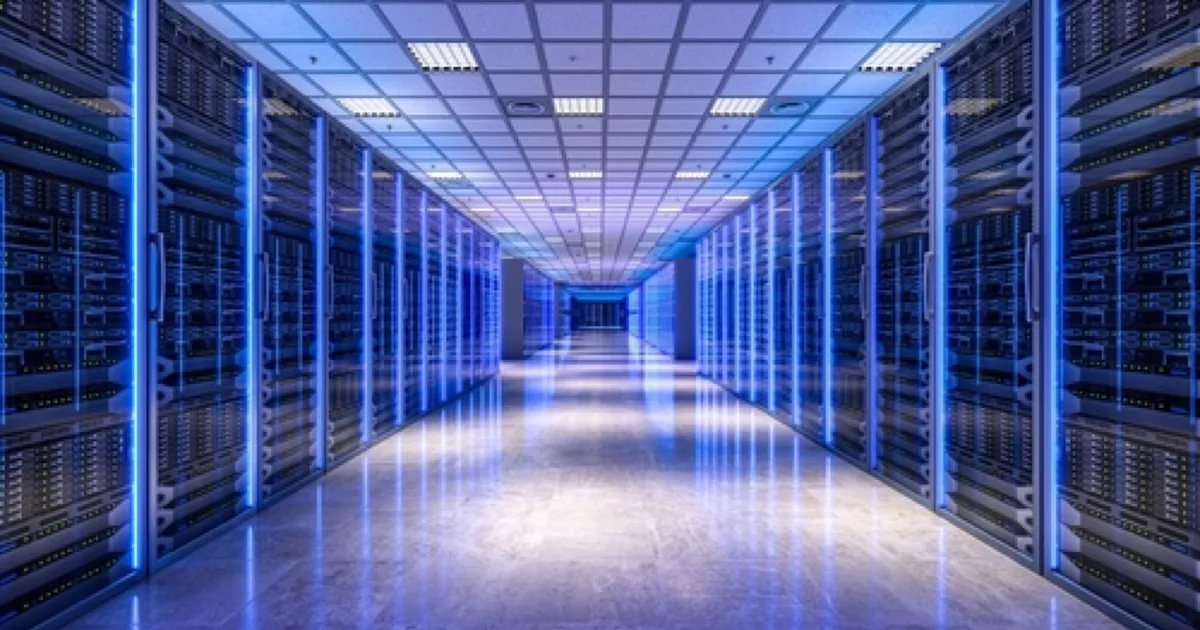
A server room drawing 20kW of IT load and running with a Power Usage Effectiveness (PUE) of 2.0 is consuming 40kW in total — 20kW on computing and 20kW on cooling, lighting, and power conditioning. At current electricity prices, that’s approximately £55,000 to £65,000 a year in energy costs for a room that, in a well-designed facility with a PUE of 1.4, would cost £38,000 to £45,000. The gap between mediocre and good PUE, at current energy prices, frequently justifies the capital investment required to close it. And yet most on-premise server rooms in UK SME tech businesses have never had a PUE audit.
PUE: What It Means and What’s Achievable
Power Usage Effectiveness is the ratio of total facility energy consumption to IT equipment energy consumption. A PUE of 1.0 is theoretically perfect — every watt drawn from the supply is used for computing. Large hyperscale data centres (Google, Microsoft, AWS) routinely achieve PUE values of 1.1 to 1.2. Enterprise data centres targeting best practice aim for 1.2 to 1.5. A typical SME on-premise server room, with a standard precision air conditioning unit and no airflow management, sits between 1.8 and 2.5.
The primary driver of poor PUE in SME server rooms is cooling inefficiency. Precision air conditioning units are typically sized for peak load with a margin and run at full output regardless of the actual IT load in the room. They cool the room rather than the equipment — a fundamentally wasteful approach compared to hot aisle/cold aisle containment, which directs cool air precisely to where IT equipment needs it.
Hot Aisle/Cold Aisle Containment
The principle is straightforward: server racks are arranged so that equipment exhausts hot air into a defined hot aisle, and intake faces draw cool air from a defined cold aisle. Physical containment — curtains, doors, or sealed overhead panels — prevents hot and cold air from mixing before the hot air reaches the cooling unit’s return. The result is that the cooling unit receives consistently hot return air, operates at its designed efficiency point, and doesn’t need to work harder than necessary.
Hot aisle/cold aisle containment in an existing server room can typically be implemented for £5,000 to £15,000 depending on room size and existing rack layout. In a room drawing 20kW of IT load, it commonly reduces cooling energy consumption by 20 to 35% — a saving of £6,000 to £12,000 a year at current energy prices, with payback in well under two years.
The Shift to Cloud and Its Effect on On-Premise Loads
The migration of workloads to cloud infrastructure has changed the nature of on-premise server room energy consumption for many UK tech businesses. What was once a dense room of owned compute and storage hardware has in many cases become a lighter mix of network infrastructure, edge computing, and legacy systems that haven’t yet migrated. The energy cost implication is that the server room’s IT load has reduced — but the cooling infrastructure, lighting, and power conditioning were sized for the historic peak and haven’t been scaled back accordingly.
This creates a specific procurement consideration: if your server room’s consumption is declining due to cloud migration, your energy contract needs to reflect that trajectory. A three-year fixed contract signed when the room was running at full capacity may have an annual consumption estimate that doesn’t reflect current or projected usage.
UPS Losses and Their Contribution to PUE
Uninterruptible power supply systems sit between the mains supply and the IT equipment, protecting against power fluctuations and outages. They also introduce conversion losses — typically 5 to 15% of the power passing through them. An older double-conversion UPS with 85% efficiency is losing 15% of IT power as heat, which then needs to be removed by the cooling system, further compounding the PUE problem. Modern high-efficiency UPS systems operate at 96 to 99% efficiency in eco mode — replacing a 15-year-old UPS reduces losses from perhaps 3kW to under 1kW, saving £1,500 to £2,000 a year plus reduced cooling demand.
The Procurement Angle: A Flat, Predictable Profile Commands the Best Rate
Server rooms and on-premise data centres have the flattest consumption profile of any commercial operation. IT equipment runs 24/7. Cooling runs 24/7. The load variation between midnight on a Sunday and 10:00 on a Monday morning is typically less than 15%. For an energy supplier, pricing this is simple — there’s very little uncertainty about what the customer will consume in any given half-hour period. That predictability should translate into a competitive rate, but tech businesses frequently manage their energy procurement as an afterthought. A well-prepared server room energy tender, presenting 12 months of flat half-hourly data and a clear picture of the site’s trajectory, is one of the more straightforward exercises we run.
📱 WhatsApp: 07360 272168 | 📧 hello@telnergy.com | 📞 01202 028888 Telnergy Limited · Independent commercial energy consultancy since 2002 · Ofgem-aligned consultancy · ADR Ref E3561 · CRN 04576876 · Christchurch, Dorset
FAQ
We’re a managed service provider with a data room hosting client equipment alongside our own. Does the mixed ownership of equipment affect our energy contract? No — the energy contract is between you and the supplier, based on your metered consumption. Who owns the equipment drawing that power is irrelevant to the supplier. However, if you’re recharging clients for energy use within your data room, you’ll want submeter data or a transparent allocation methodology. This is increasingly expected by clients managing their own carbon reporting — they’ll ask for a kWh figure attributable to their hosted equipment, not just a line item on an invoice.
We’re evaluating moving our remaining on-premise infrastructure to AWS. Should we wait until after the migration to review our energy contract? No — review the contract now. If your server room is currently drawing 25kW and will draw 10kW post-migration, the annual consumption estimate in your current contract will be significantly overstated. When the contract renews, you want to go to market with an accurate picture of post-migration consumption, not the pre-migration figure.
How does carbon reporting work for a business like ours where most energy is used in a server room? Server room electricity consumption sits within your Scope 2 emissions — purchased electricity used in your own operations. You report it using either the location-based method (the UK grid average emissions factor, currently around 0.207 kg CO₂e/kWh) or the market-based method (the emissions factor of your contracted supply — if you’re on a REGO-backed renewable tariff, this can be zero). The distinction matters if you’re submitting ESG data to clients or investors, and it makes the question of what type of electricity contract you’re on a reporting question as well as a cost question.
Telnergy Limited is an independent commercial energy consultancy established in 2002, based in Christchurch, Dorset. Ofgem-aligned consultancy · ADR Ref E3561 · CRN 04576876.