
Law of Unintended Consequences: Net Zero Targets and the Coal Plants That Came Back
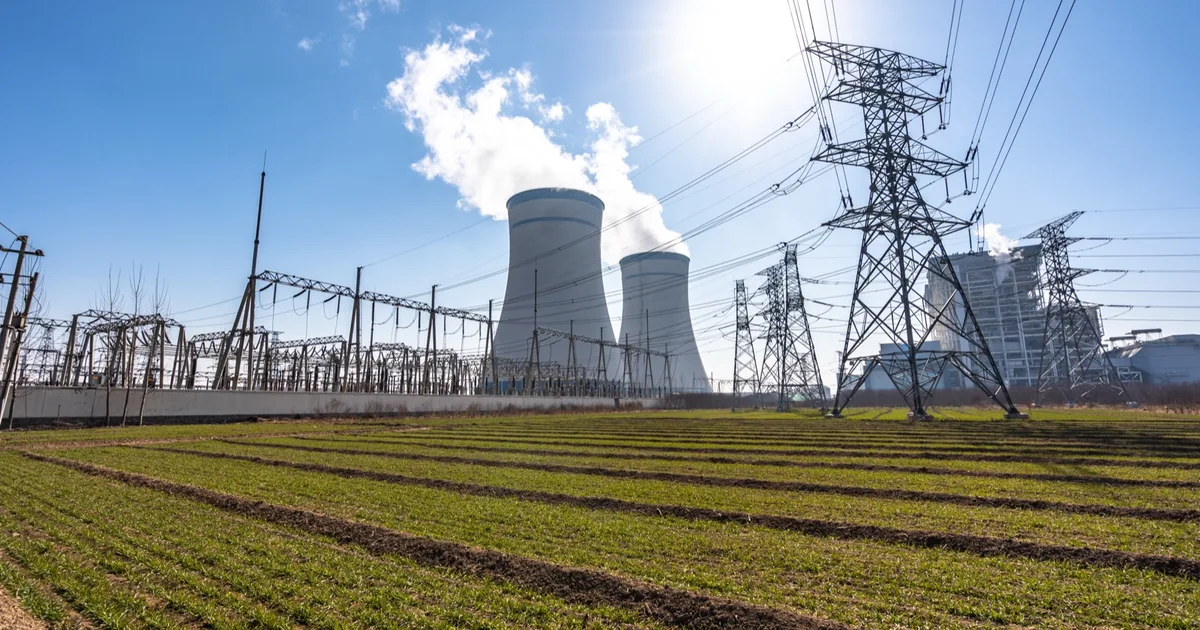
European governments committed to Net Zero. The energy crisis brought coal back online across the continent. Both facts are true — and understanding why matters for UK energy costs.
The third instalment in the Law of Unintended Consequences series examines what happened when ambitious Net Zero targets collided with an energy supply crisis. The collision produced an outcome that would have seemed inconceivable in 2019: retired and mothballed coal-fired power stations being returned to service across Europe, while governments simultaneously maintained their 2050 Net Zero commitments.
The Net Zero commitment and the fossil fuel retirement plan
By 2020, the EU and UK governments had committed to ambitious carbon reduction pathways. Both pathways assumed a managed, sequential transition: renewables capacity growing to replace fossil fuel capacity before that capacity was closed. Natural gas — the “transition fuel” — would bridge the period between coal retirement and renewable maturity. This sequencing was reflected in retirement schedules across Europe. German coal plants had mandated closure dates. UK coal generation had a 2024 phase-out date. Several European countries had accelerated coal retirement programmes tied to EU emissions trading commitments.
The crisis and the reversal
The 2022 energy crisis inverted the transition sequence. When Russian gas was removed from the European supply mix, the “transition fuel” disappeared before the fossil fuel it was supposed to replace. European electricity systems that had closed coal plants to meet carbon commitments suddenly faced a choice: accept the lights going out, pay extraordinary prices for LNG to fuel gas generation, or bring coal back. They brought coal back.
Germany extended operational licences for coal plants scheduled for closure. Austria reactivated a mothballed coal plant. The Netherlands extended coal operations beyond their mandated retirement date. France kept its last coal plant — Cordemais — operational. The UK extended the operational status of several coal plants and maintained them as winter contingency capacity through 2023–24. Total European coal power generation increased in 2022 for the first time in several years, in countries that had made formal commitments to coal phase-out.
The structural vulnerability the crisis exposed
The coal return revealed a sequencing problem in the energy transition: renewables capacity must scale to cover retiring fossil fuel generation; grid infrastructure must scale to handle renewable intermittency; and then, and only then, can fossil fuel capacity retire without risk of supply gaps. In 2022, the sequencing was disrupted by a supply shock that removed the transition fuel before renewable capacity and grid infrastructure were at sufficient scale to compensate.
Post-2022, European energy policy has both accelerated renewable deployment targets AND increased emphasis on backup capacity, storage, and demand flexibility. The lesson was not “renewables don’t work” — it was “renewables plus storage plus backup is the system, and you cannot shortcut any of the three elements.”
The UK Capacity Market response
In the UK, the episode reinforced the importance of the Capacity Market mechanism. It exists precisely to prevent the coal-return scenario: it pays standby generators to be available, ensuring backup capacity remains accessible during system stress without requiring those generators to produce electricity at all times. The cost — borne by electricity consumers through the Capacity Market Supplier Charge — is the cost of the resilience that prevents the UK from having to make the coal-return choice that European neighbours made.
The takeaway for UK SMEs
The coal return illustrates that the energy transition is not a smooth, linear process. For UK businesses, the relevant implication is that energy costs will reflect this complexity: higher non-commodity charges to fund system resilience, continued wholesale price volatility driven by geopolitical events, and occasional episodes where policy commitments and operational reality diverge. Managing energy costs through this environment requires active procurement strategy. The Law of Unintended Consequences will continue to generate surprises — the best protection is a contract structure that limits your exposure to each episode’s financial consequences.
Telnergy reviews contract structure against current market conditions and forward risk as standard. If your contract is approaching renewal, talk to us before you commit.
📱 WhatsApp: 07360 272168 | 📧 hello@telnergy.com | 📞 01202 028888 Telnergy Limited · Independent commercial energy consultancy since 2002 · Ofgem-aligned consultancy · ADR Ref E3561 · CRN 04576876 · Christchurch, Dorset
Telnergy Limited is an independent commercial energy consultancy established in 2002, based in Christchurch, Dorset. Ofgem-aligned consultancy · ADR Ref E3561 · CRN 04576876.