
Law of Unintended Consequences: How Russian Sanctions Rebuilt European LNG
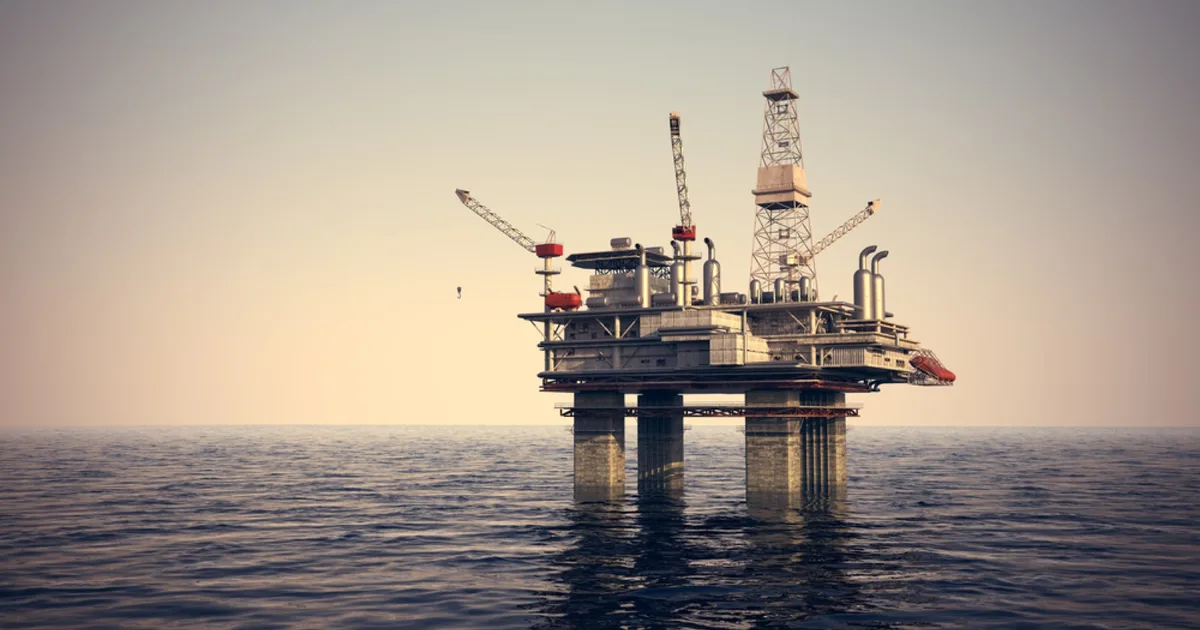
The West Cut Off Russian Gas to Punish an Aggressor. The Consequence Was a Global LNG Construction Boom That Now Shapes UK Energy Prices.
The Law of Unintended Consequences is the governing principle of energy geopolitics. Policy decisions made for entirely rational short-term reasons produce secondary and tertiary effects that their architects didn’t model — and those effects can be more financially significant than the primary intention. The story of how Western sanctions on Russian energy reshaped the global LNG market is the clearest illustration of this principle in action in the 2020s.
Before February 2022, Russia supplied approximately 40% of European gas demand through a network of pipeline infrastructure built over decades — Nordstream 1 and 2, the Yamal pipeline through Poland, and flows through Ukraine. This dependence was known, criticised, and — despite repeated warnings from energy security analysts — maintained because Russian gas was cheap, reliable, and abundant.
The full-scale invasion of Ukraine changed the calculus overnight. European governments faced an impossible choice: continue funding Russian energy exports that directly supported the war effort, or dismantle the supply relationships that kept their industries running and their citizens warm. The decision to reduce and ultimately eliminate dependence on Russian gas was correct by any geopolitical and moral measure. The energy market consequences were enormous, immediate, and are still working through the system in 2026.
The Immediate Effect: European LNG Demand Surge
When Russia curtailed gas flows to Europe — partly by choice, partly in response to Western sanctions, and definitively following the Nordstream pipeline sabotage in September 2022 — Europe needed replacement supply urgently. The only available replacement at short notice was LNG: liquefied natural gas shipped from the United States, Qatar, Norway (limited additional pipeline capacity), and other global producers.
European LNG import capacity expanded rapidly. Germany — which had zero LNG import infrastructure before 2022 — commissioned floating storage and regasification units (FSRUs) at record speed, bringing emergency LNG import capacity online within months. Similar rapid deployments occurred in the Netherlands, Italy, Finland, and other countries. Europe went from being an LNG market participant to the world’s largest LNG importing region within 18 months.
This demand surge created the price spike of 2021–22. European gas prices reached over 300p/therm in late 2021 and over 600p/therm briefly in August 2022 — levels that were not simply high by historical standards, they were extraordinary. UK business electricity and gas contracts priced in this window reflected those wholesale prices, producing the 3–5x rate increases that devastated sectors from hospitality to manufacturing.
The Secondary Effect: The Global LNG Construction Boom
Here is where the Law of Unintended Consequences asserts itself. European demand for LNG — sustained, large-scale, and backed by long-term import contracts that European utilities signed in 2022–23 to secure supply — sent a powerful investment signal to LNG producers globally: build more liquefaction capacity, because Europe will buy it.
The response has been the largest wave of LNG liquefaction investment in history. US Gulf Coast LNG projects — Sabine Pass expansion, Corpus Christi Stage 3, Plaquemines LNG, Rio Grande LNG, and others — have collectively sanctioned over 150 million tonnes per year of new liquefaction capacity since 2022. Qatar is expanding its North Field to add 48 million tonnes per year. Australia, East Africa, and Canada are contributing further additions.
Most of this capacity will come online between 2025 and 2030. The projected global LNG supply increase by 2030 versus 2022 is approximately 50% — a structural transformation of the supply side of the global gas market, driven directly by the European response to Russian supply withdrawal.
The Tertiary Effect: The Coming Supply Glut and Price Pressure
The third-order consequence of the sanctions-driven LNG boom is the one most directly relevant to UK business energy costs in 2026 and beyond: a potential structural oversupply of LNG globally, which would put sustained downward pressure on gas prices for years.
If the new liquefaction capacity coming online between 2025 and 2028 exceeds demand growth — particularly if Chinese LNG import growth is slower than projected, if European demand reduction through efficiency and renewables proceeds faster than expected, and if mild winters reduce storage draw-down — the global LNG market will move into oversupply. Oversupply means lower spot prices, lower forward curves, and lower business energy contracts for UK SMEs.
This is not a certainty. Demand forecasts have been wrong before, construction timelines slip, and geopolitical events can remove supply at any point. But the supply side of the equation has fundamentally changed since 2022 — and the direction of that change, all else equal, is toward lower prices through the late 2020s than the 2022–24 crisis period produced.
The Fourth Effect: European Digital Sovereignty in Energy
The sanctions also accelerated a political conversation about energy sovereignty that had been theoretical before 2022 and became operationally urgent after it. European governments and the EU collectively recognised that dependence on a single dominant gas supplier was a strategic vulnerability — and that the same logic could apply to other energy-adjacent technologies and infrastructure.
The European response has included accelerated renewable energy deployment (the REPowerEU plan targeted 45% renewable electricity by 2030, significantly ahead of prior targets), heat pump mandates, efficiency requirements, and — most relevantly for future market structure — increased political will to develop domestic energy resources rather than depend on external suppliers.
For UK energy markets, this European shift matters because the UK is connected to European gas markets via the Interconnector. A Europe that is genuinely less dependent on imported gas — through renewable growth, efficiency improvements, and domestic production development — is a Europe that puts less demand pressure on the global LNG market, which is structurally positive for UK gas prices over the medium term.
What This Means for UK Business Energy in 2026
The sanctions story is not over — it is still playing out through the LNG supply wave, the European energy transition, and the ongoing geopolitical pressures that make supply disruption a permanent feature of the risk landscape rather than an exceptional event.
For UK businesses, the practical implications are:
- The structural oversupply of LNG coming online through 2025–2028 provides a potential tailwind toward lower gas prices — but this benefit is only captured by businesses whose contracts are timed to renew during the lower-price window, not those locked into long contracts from the 2022–23 peak.
- The European energy transition accelerates a structural reduction in fossil gas demand that, over a 5–10 year horizon, changes the supply-demand balance in ways that benefit buyers.
- The geopolitical risk premium remains elevated — the events of 2022 established that supply disruption at scale is possible, and that premium doesn’t fully disappear from forward curves while the underlying conflicts and tensions persist.
The Law of Unintended Consequences in energy markets means that today’s policy decision is tomorrow’s price signal. Understanding the causal chains — from sanctions to LNG boom to supply glut to price implications — positions you to make better contract timing decisions than reacting to headlines alone.
📱 WhatsApp Business: 07360 272168
📧 Email: hello@telnergy.com
📞 Direct line: 01202 028888
Telnergy Limited • Independent Energy Consultants since 2002 • Ofgem-Aligned Consultancy • Christchurch, Dorset
Telnergy Limited is an independent commercial energy consultancy established in 2002, based in Christchurch, Dorset. Ofgem-aligned consultancy · ADR Ref E3561 · CRN 04576876.