
Law of Unintended Consequences: The Windfall Tax That Slowed North Sea Investment
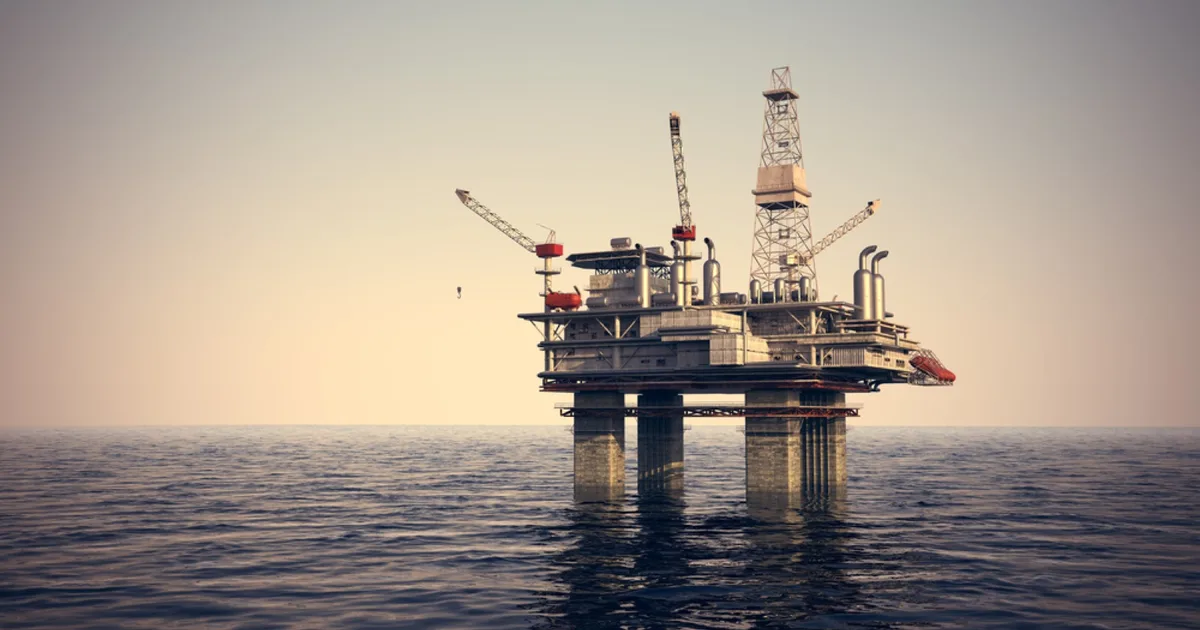
The Energy Profits Levy Was Designed to Fund Bill Support for Households. Its Secondary Effect Was to Reduce the Investment That Would Have Produced Lower Energy Prices.
The second instalment in the Law of Unintended Consequences series examines the Energy Profits Levy (EPL) — the UK North Sea windfall tax introduced in May 2022. The first article in this series covered how Russian sanctions triggered the global LNG construction boom. This one covers a domestic policy decision whose supply-side consequences for UK energy costs will play out over a decade, not a quarter.
The EPL raised approximately £9 billion over its first two years. It was used to fund the Energy Price Guarantee and Energy Bills Support Scheme — policy instruments that provided direct relief to households and businesses facing catastrophic energy bills during the 2022–23 crisis. The political rationale was straightforward and defensible: oil and gas companies were recording record profits from an energy crisis that was devastating their customers. Redistributing some of that profit to the people paying their bills was politically popular and economically reasonable.
The unintended consequence was that the policy design — specifically its application to existing production, its repeated rate changes, and its structural uncertainty — materially reduced North Sea investment at precisely the moment when UK domestic gas supply needed to be maintained as a hedge against import dependency.
The Investment Decision Logic
North Sea oil and gas investment decisions are not made on a quarterly basis. They are made on a 5–20 year basis. A final investment decision (FID) on a new North Sea field development, a tie-back project connecting a satellite field to existing infrastructure, or a compression investment to extend the productive life of a declining field requires confidence about the fiscal regime over the life of the asset — not just the current tax year.
The EPL disrupted this confidence in four specific ways:
Retrospective application: The EPL applied to existing production — not just future investment. Companies that had made investment decisions based on the existing fiscal regime (Ring Fence Corporation Tax at 30% plus Supplementary Charge at 10% = 40% total) suddenly faced a total rate of 65%, rising later to 75% and then 78%, applied to the production those investments were generating. The retroactive change established that the UK government was willing to alter the economics of existing North Sea assets after the investment decision had been made. This is the defining characteristic of fiscal unpredictability.
Repeated rate changes in short succession: The EPL launched at 25% in May 2022. It increased to 35% in November 2022. It increased again to 38% in late 2024. Three rate changes in under three years is not a stable fiscal environment. For companies modelling 10–15 year investment cases, uncertainty about which direction the next change will be is as damaging as the level itself. Capital allocators assign a political risk premium to assets in unpredictable fiscal environments — and that premium reduces the attractiveness of North Sea investment relative to more stable jurisdictions.
Investment Allowance design limitations: The EPL included an Investment Allowance that provided 91.25p of relief for every £1 of qualifying investment. This was intended to partially offset the EPL’s impact on capital expenditure decisions. In practice, the allowance was more accessible to companies making large new developments than to those making the incremental investments — compression upgrades, tie-back developments, water injection — that extend the productive life of existing fields. The marginal investment case that keeps a declining field productive for another five years often doesn’t meet the threshold for the allowance at a project level, even while it makes economic sense at a field level.
Industry response — capital redeployment: The operator response was both predictable and well-documented. Harbour Energy — the largest independent North Sea producer at the EPL’s introduction — explicitly cited the levy in its decision to reduce UK headcount, curtail planned North Sea investment, and redirect capital toward Norway, Germany, and Southeast Asia. Multiple other operators indicated similar portfolio rebalancing. OEUK (Offshore Energies UK) published data showing North Sea investment intentions declining materially in the 18 months following the EPL’s introduction.
The Supply Consequence: A Faster Decline Curve
The North Sea is a mature basin. Production was declining before the EPL — domestic gas output has fallen by over 60% from its 2000 peak. The question is not whether it will continue to fall, but how fast.
Investment in the North Sea doesn’t just produce new supply. It also maintains existing supply. Declining fields require capital investment to sustain their output: water injection to maintain reservoir pressure, compression upgrades to handle lower wellhead pressure as fields deplete, tie-backs that bring smaller adjacent discoveries into production. Without this investment, field decline rates accelerate. Production falls faster than it would with sustained capital commitment.
The EPL’s investment deterrent effect, modelled by OEUK and independent analysts, is projected to result in production that is meaningfully lower by the late 2020s and into the 2030s than it would have been under the pre-EPL fiscal regime. The range of estimates varies, but the directional conclusion is consistent: the UK will import more gas earlier than it would have otherwise, with the import dependency consequences described in our European storage and LNG articles.
The Fiscal Stability Problem Beyond the Rates
The deepest unintended consequence of the EPL is not the specific tax rates — those can change again. It is the precedent that the tax regime governing North Sea investment can be materially altered, retrospectively and at short notice, in response to political pressure from energy price events.
Energy price spikes will happen again. The global energy system has become more volatile, not less, since 2022. The next price spike will generate the same political pressure to tax the profits of oil and gas producers. The EPL established that this pressure will be acted upon. Investors in long-cycle North Sea projects carry that knowledge in their risk models — permanently, regardless of what any current government says about fiscal stability.
This reputational effect on UK North Sea investment attractiveness cannot be fully reversed by subsequent policy commitments. It is priced into the discount rate that investors apply to North Sea projects relative to comparable opportunities in more fiscally stable jurisdictions. The cost of the EPL, in investment terms, is therefore larger than the observable reduction in announced capex — it includes the future investments that will never be announced because the UK North Sea is now a riskier place to put capital than it was before May 2022.
The Household Support Paradox
The deepest irony of the EPL is the temporal mismatch between its benefits and its costs. The £9 billion raised funded immediate bill relief for households and businesses in 2022–23 — a genuine and significant benefit that prevented real hardship during a genuine crisis. The investment deterrent effect will manifest as higher gas import dependency and higher energy prices in the late 2020s and 2030s — paid by the same households and businesses that the EPL was designed to protect.
This is the Law of Unintended Consequences in its most direct form: a policy that helped people in the short term at the cost of harming them (and their successors) in the medium term. The harm was not designed, predicted with confidence, or widely understood at the time of the policy’s introduction. It is now becoming visible in declining North Sea production trajectories, reduced investment appetite, and structural import dependency growth.
What This Means for UK Business Energy Procurement
The EPL’s supply consequences reinforce the case for managing energy contracts as a hedge against structural market conditions rather than as a simple price comparison exercise:
- UK domestic gas production will decline faster than it would have without the EPL — increasing import dependency and the associated geopolitical and logistics risk premium
- The global LNG oversupply scenario (covered in Part I of this series) may partially offset this — but the oversupply is temporary and the domestic production decline is structural
- Businesses with long-term energy cost exposure should understand that the supply side of the UK gas market is structurally tightening, not expanding — and manage contract timing and structure accordingly
📱 WhatsApp Business: 07360 272168
📧 Email: hello@telnergy.com
📞 Direct line: 01202 028888
Telnergy Limited • Independent Energy Consultants since 2002 • Ofgem-Aligned Consultancy • Christchurch, Dorset
Telnergy Limited is an independent commercial energy consultancy established in 2002, based in Christchurch, Dorset. Ofgem-aligned consultancy · ADR Ref E3561 · CRN 04576876.