
MHHS: What Market-Wide Half Hourly Settlement Means for Your Business
If you run a business with multiple sites, you may have heard the term “MHHS” being thrown around by your energy supplier or consultant. It stands for Market-Wide Half Hourly Settlement, and it is one of the most significant structural changes to the UK electricity market in two decades. Yet for most finance directors and operations managers, it remains entirely opaque. This post explains what it is, why it matters, what the timeline looks like, and — most importantly — what your business should be doing about it.
What Is Market-Wide Half Hourly Settlement?
To understand MHHS, you first need to understand how electricity billing currently works for most UK businesses.
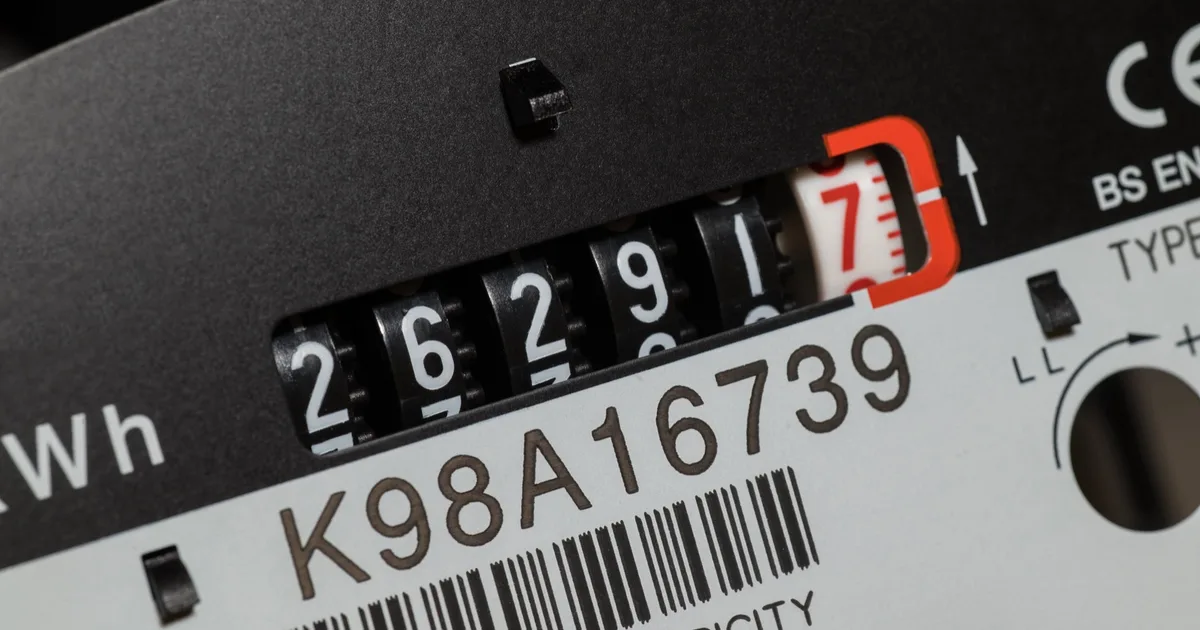
Your electricity meter records how much power you use. But the way that data is used to calculate your bill depends on the type of meter you have and which “profile class” it falls into. Profile classes are categories assigned by the industry to describe typical consumption patterns — a domestic home might be Profile Class 1 or 2, while a small business might be Profile Class 3 or 4, and larger commercial premises fall into Classes 5 through 8.
For the majority of meters — around 25 million non-half-hourly (NHH) meters across the country — billing is not based on your actual, granular consumption data. Instead, suppliers use industry-wide statistical profiles that estimate when customers in your profile class are likely to be using electricity. Your actual meter readings are reconciled against those estimates, but the settlement process (the mechanism by which generators are paid and costs are allocated) relies on these averages.
The result is a system that is fundamentally disconnected from reality. Your business’s actual consumption pattern — the peaks, the overnight usage, the shift-work patterns, the refrigeration load that never switches off — is largely invisible to the market.
Market-Wide Half Hourly Settlement changes that. Under MHHS, every meter in Great Britain will be settled using actual half-hourly data: 48 separate readings per day, every day. That means your settlement will reflect what your business actually did, not what the statistical model assumes businesses like yours typically do.
The Ofgem Programme: Background and Rationale
MHHS is an Ofgem-led programme, developed in response to the electricity market’s need to support the energy transition. As the UK grid incorporates more renewable generation — wind and solar in particular — supply becomes more variable and time-sensitive. The old system of profile-based settlement was designed for a world of predictable, dispatchable generation. It is poorly suited to a grid where the value of electricity changes dramatically from one half-hour to the next.
Ofgem’s case for MHHS rests on several pillars. First, accurate settlement: if every meter is settled on real data, the market operates more efficiently and costs are allocated fairly. Second, enabling flexibility: when consumers can see and respond to half-hourly price signals, they can shift demand to cheaper, greener periods — a concept known as demand-side response (DSR). Third, supporting net zero: the flexibility that MHHS enables is considered essential infrastructure for a decarbonised grid.
The programme was formally launched by Ofgem following its decision in 2021, with industry delivery led by Elexon, the body that manages the Balancing and Settlement Code. The scale of the undertaking is significant: moving 25 million meters to half-hourly settlement requires changes to metering infrastructure, data flows, supplier systems, and the settlement engine itself.
How MHHS Differs from P272
Many businesses with larger meters will be familiar with P272, the earlier Ofgem-mandated change that required meters in Profile Classes 5–8 to be settled on half-hourly data by April 2017. If you have a meter consuming above roughly 100kW at peak, the chances are P272 already applies to you and your meter is already settled half-hourly.
MHHS is different in scope. P272 covered only the upper end of the commercial market — the larger meters, typically AMR-equipped, in Classes 5 to 8. MHHS covers everything: all 25 million non-half-hourly meters, including the smaller Profile Class 1–4 meters used by homes and small businesses. In other words, P272 was a targeted intervention for large commercial sites; MHHS is a market-wide transformation.
If your business already had meters moved to half-hourly settlement under P272, you are not unaffected by MHHS. The programme introduces new data flows, new data access rights, and new commercial opportunities even for sites that are already technically settled on half-hourly data.
The Timeline: What Is Actually Happening and When
The MHHS programme has a phased rollout running from 2025 to 2030, with the initial go-live targeted for April 2025. This first phase does not mean all 25 million meters will be settled half-hourly from that date. Rather, it marks the point at which the new settlement systems and processes go live, and migration of meters begins in earnest.
The rollout is structured around meter operators and data collectors — the companies responsible for physically reading and communicating meter data. Different meter operators will migrate their portfolios of meters on a phased schedule, meaning some businesses will transition earlier than others. By 2030, the aim is that the entire market is operating under the new settlement regime.
For businesses with smart meters or advanced AMR (Automated Meter Reading) meters already installed, the transition should be relatively straightforward — the data capability is already there. For businesses still operating on traditional, manually-read meters, the migration will require a meter upgrade. This is where proactive planning matters.
It is worth noting that timelines in major energy industry programmes have historically been subject to revision. Businesses should treat April 2025 as the programme’s intended start point and plan accordingly, rather than assuming the deadline will move.
What This Means Practically for Your Business
The transition to half-hourly settlement has real, tangible implications for how your energy costs are calculated and what commercial options become available to you.
More accurate billing. Your bill will reflect what your business actually consumed and when. For businesses with flat, predictable consumption patterns, this may make little material difference. For businesses with peaks, overnight loads, or seasonal variation, it could be significant in either direction.
Time-of-use tariffs become viable. Under profile-based settlement, there is limited commercial logic in offering small and medium businesses time-of-use pricing — the granular data needed to price and settle such contracts accurately simply did not exist. With half-hourly settlement, suppliers can offer tariffs that reward you for shifting demand away from peak periods. If your business has any flexibility in when it uses electricity — whether that is scheduling production runs, charging vehicles, running refrigeration cycles, or timing cleaning and HVAC — time-of-use tariffs could reduce your costs materially.
Demand flexibility and response. MHHS is the enabling infrastructure for demand-side response schemes. These are arrangements where businesses agree to reduce or shift their electricity consumption at certain times — typically in response to grid stress or high wholesale prices — in exchange for payments. Several large businesses already participate in such schemes. MHHS will open these opportunities to a much broader range of sites.
Data access. The MHHS programme also introduces clearer data access rights. You will have a legal entitlement to your own half-hourly consumption data, which means you can use that data for energy management, identify inefficiencies, and share it with advisers or service providers. Currently, accessing detailed half-hourly data for non-HH meters is not straightforward.
What Should Your Business Be Doing Now?
The honest answer is that most businesses do not need to take urgent action today, but there are steps that will put you in a better position as the programme progresses.
The first step is to understand your current metering position. Do you have a smart meter or an AMR meter that is already capable of recording and communicating half-hourly data? Or are you still on a traditional meter that requires manual reads? Your current supplier or a consultant can confirm your meter type. If you have multiple sites, this audit is worth doing systematically.
The second step is to think about your consumption patterns. MHHS creates opportunity primarily for businesses with time-flexible loads. If your premises are occupied during standard business hours and your consumption is relatively predictable, the tariff opportunities may be modest. If you run shifts, have significant process loads, manage refrigeration or HVAC systems, or have vehicles to charge, the flexibility opportunities could be substantial.
The third step is to start a conversation with your energy adviser about how your procurement strategy might evolve. Fixed-rate contracts have dominated SME energy procurement for years because they provide certainty. As half-hourly data and time-of-use pricing become mainstream, the question of whether a fixed or flexible contract is right for each of your sites will become more nuanced.
The Opportunity in the Data
One of the underappreciated benefits of half-hourly settlement is what the data itself reveals. When you have 48 data points per day for every day of the year, patterns emerge that are invisible under monthly meter reads. Equipment running overnight that should be off. Heating or cooling systems that are cycling when the building is empty. A process line whose actual demand profile turns out to be far peakier than anyone realised.
Businesses that engage with their half-hourly data — rather than simply filing it away — typically find genuine savings opportunities that have nothing to do with tariff structure. It becomes an energy management tool as much as a billing mechanism.
For multi-site operations, the value compounds. Comparing half-hourly profiles across sites that ostensibly serve similar functions can reveal outliers — sites where something is consuming more than expected, or at unexpected times. This kind of benchmarking is difficult with monthly consumption figures and straightforward with half-hourly data.
How Telnergy Helps Clients Navigate MHHS
At Telnergy, we have been advising multi-site businesses on energy procurement since 2002, and the shift to half-hourly settlement is something we see as genuinely beneficial for clients who are prepared for it.
We help clients by starting with a metering audit across their estate — understanding which meters are already AMR or smart capable, which sites might need upgrading, and what the likely timeline is for each site to transition. For clients with significant energy spend, we also review their current contract structures and model what time-of-use arrangements might look like based on available consumption data.
Where clients already have half-hourly data available, we work through that data to identify demand flexibility opportunities and, where appropriate, introduce them to suppliers and aggregators offering demand response programmes. Our role is to translate what can be a technically complex programme into clear decisions: what to do, in what order, and what the likely financial impact is.
We are also rigorous about not overselling the opportunity. For some businesses, MHHS will make a significant difference to energy costs. For others, the main benefit will be more accurate billing and better data. We tell clients which category they are likely to fall into before they make any commitments.
Frequently Asked Questions
Does MHHS affect me if my meters are already settled half-hourly under P272?
Yes, but primarily in terms of data access and new commercial opportunities. The MHHS programme introduces standardised data flows and clearer rights for businesses to access their own consumption data. Even if your meters are already half-hourly settled, the programme may open up new demand flexibility and time-of-use tariff options.
When will my meters actually be migrated under MHHS?
This depends on your meter operator and the phasing of their migration schedule. The programme’s initial go-live is targeted for April 2025, with full market migration intended by 2030. Your energy consultant or supplier can advise on your specific meters’ expected migration timeline.
Will MHHS definitely reduce my energy bills?
Not automatically. MHHS enables more accurate billing and makes time-of-use tariffs possible, but whether your costs go up or down depends on your consumption pattern. Businesses that use a disproportionate amount of energy during peak periods may see costs rise. Businesses with flexible loads who can shift consumption to off-peak times are most likely to benefit.
Do I need to install a new meter to prepare for MHHS?
If you already have a smart meter or an AMR meter that communicates half-hourly data, you are likely already equipped for the transition. If you have an older, manually-read meter, an upgrade will be required at some point before your site migrates. It is worth confirming your current meter type rather than assuming.
What is the difference between a smart meter and an AMR meter?
Both record consumption at half-hourly intervals. Smart meters communicate data remotely using a secure national network (the Smart Metering System). AMR meters also communicate remotely but typically use mobile or GPRS networks. For the purposes of MHHS, both are capable of providing the half-hourly data the programme requires.
How does MHHS relate to demand-side response and flexibility schemes?
MHHS is the foundational infrastructure that makes widespread demand-side response possible. By establishing half-hourly settlement for all meters, it becomes commercially viable for suppliers and aggregators to offer businesses payments for shifting their consumption. These schemes already exist for larger industrial consumers; MHHS is expected to extend accessibility to a much broader range of SME sites.
Get in Touch
If you manage energy across multiple sites and want to understand how MHHS will affect your specific estate — or want a straightforward assessment of whether time-of-use tariffs and demand flexibility could reduce your costs — we are happy to talk it through.
Telnergy works with multi-site SMEs across hospitality, retail, manufacturing, and healthcare. We access pricing from a panel of 21+ suppliers, and our fee is agreed with you upfront and disclosed in writing — paid directly or via the supplier. No hidden commissions.
Get in touch with Telnergy for an honest, no-obligation conversation about your energy strategy.
Telnergy is an independent commercial energy consultancy (Ofgem-aligned, ADR Ref E3561). We’ve helped UK businesses reduce energy costs since 2002. Get in touch to discuss your energy strategy.
Telnergy Limited is an independent commercial energy consultancy established in 2002, based in Christchurch, Dorset. Ofgem-aligned consultancy · ADR Ref E3561 · CRN 04576876.