
School Energy Management: How to Cut the Bill Without Cutting the Curriculum
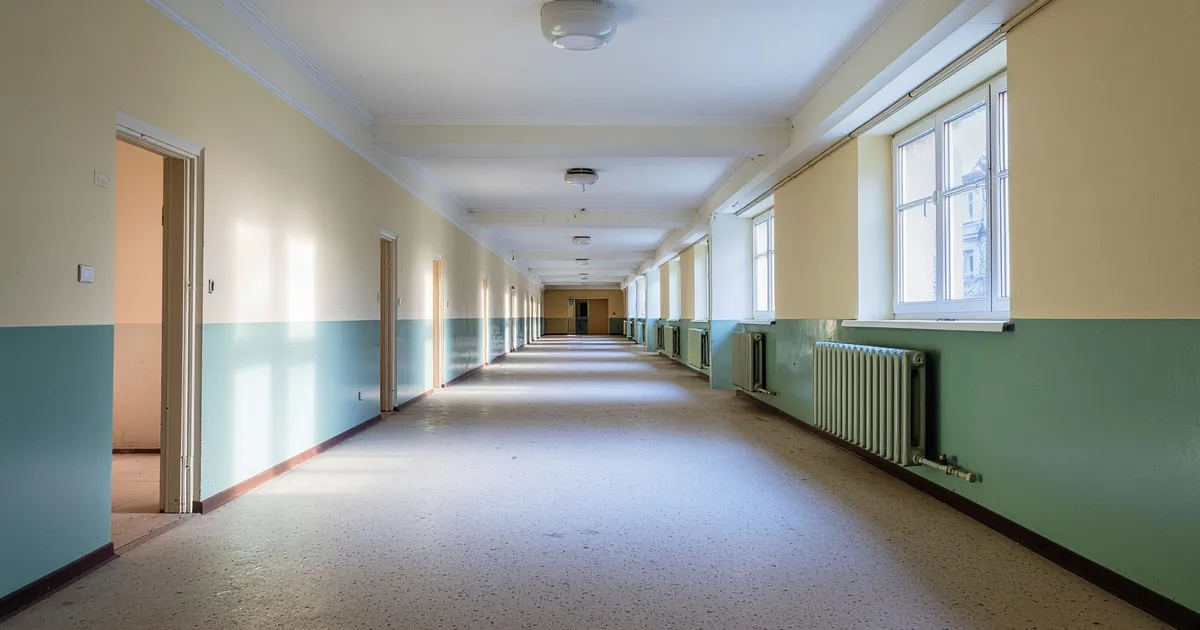
Schools in England spend approximately £600 million on energy every year. That’s money that competes directly with teaching hours, classroom resources, and support staff — and in most schools, it’s being spent without any systematic management. The irony is that schools have every structural reason to be good at energy management: they’re largely unoccupied for 13 weeks a year, they have clear occupancy patterns, and they often have students who are genuinely motivated to understand sustainability. The gap between what schools could spend on energy and what they actually spend is one of the most consistent inefficiencies in the UK public sector.
Where school energy goes
Heating is the largest single cost in most UK schools — typically 50–60% of total energy spend. The majority of school buildings were constructed before 1980, many before 1960, and the heating plant in older buildings is frequently oversized, inefficient, and poorly controlled. Boilers running at design capacity to heat buildings on mild October days, or running during half-term when the school is empty, represent some of the most avoidable waste in the estate.
Lighting is the second significant cost, and the LED retrofit case in schools is stronger than almost anywhere else: high operating hours (typically 7am–6pm for 190 school days), large lit areas (classrooms, corridors, sports halls), and relatively old installations with fluorescent tubes that consume 50–70% more than their LED replacements. A typical secondary school spending £15,000 per year on lighting can expect savings of £7,000–10,000 per year after LED conversion, with a payback of 18–36 months.
ICT infrastructure has become a significant load in modern schools — server rooms, wireless access points, interactive whiteboards, and student device charging. This load runs continuously, including holidays, if not properly managed. Server room cooling is often the most overlooked element: a small server room with inadequate cooling can consume 10,000–20,000 kWh per year unnecessarily if not properly maintained.
The holiday opportunity
Schools are uniquely positioned to benefit from aggressive holiday setbacks. A school that reduces heating to frost protection (7–8°C) during summer holidays, half-terms, and Christmas break — rather than maintaining occupancy temperatures — can save 15–20% of annual heating energy. Many schools have building management systems capable of this, but the holiday programmes are never properly configured.
Electricity baseload during holidays is worth measuring. A school drawing 20kW continuously during August — servers, clocks, vending machines, some HVAC — is spending approximately £1,100 per month on an empty building. Systematically identifying and switching off non-essential loads during extended closures is low-cost, high-impact energy management.
Display Energy Certificates
Schools with floor areas above 250m² are legally required to display a Display Energy Certificate (DEC). DECs rate the building’s actual energy use against a benchmark for the building type, on an A–G scale, and must be renewed annually. They’re publicly visible — and a G rating is the kind of thing that attracts attention from parents, Ofsted, and the press.
More usefully, the DEC advisory report that accompanies the certificate identifies specific improvement actions with estimated savings and payback periods. Many schools receive a DEC advisory report, file it, and never act on any of the recommendations. Treating the advisory report as an action plan — working through it systematically over two to three years — is one of the most structured approaches to school energy management available.
Procurement for academies and maintained schools
Maintained schools typically procure energy through local authority frameworks. Academy schools can procure energy independently on the open market, giving them access to the same competitive tendering process available to commercial businesses. The difference in unit rates between framework pricing and a properly tendered commercial contract can be 10–20% — material on a school spending £40,000 per year on energy.
Multi-academy trusts with ten or more schools have a portfolio that creates genuine procurement leverage. Consolidating a trust’s energy into a single procurement exercise with a specialist broker routinely delivers better pricing than sites procuring independently through frameworks.
📱 WhatsApp: 07360 272168 | 📧 hello@telnergy.com | 📞 01202 028888 Telnergy Limited · Independent commercial energy consultancy since 2002 · Ofgem-aligned consultancy · ADR Ref E3561 · CRN 04576876 · Christchurch, Dorset
FAQ
Is school energy subject to CCL?
State-funded schools qualify for the reduced 5% rate of VAT on energy (rather than the standard 20%) as qualifying charitable use. They are also eligible for exemption from the Climate Change Levy — but CCL exemption must be actively claimed by providing the supplier with a valid declaration of eligibility. Many schools pay full CCL because nobody has submitted the declaration. Check your energy bills — if CCL appears as a line item, it may be recoverable.
Can a school generate its own electricity?
Yes — solar PV on school roofs is well-established and financially robust. A south-facing school roof of 500m² can accommodate a 75–100kWp system generating 70,000–90,000 kWh per year, covering a significant proportion of daytime electricity demand. Power purchase agreements (PPAs) allow schools to install solar with no capital cost, paying for the electricity generated at a rate below grid supply. Battery storage is increasingly added to extend self-consumption into evening activities.
What’s a realistic energy reduction target for a school?
A school with no prior energy management focus — default boiler controls, fluorescent lighting, no holiday setbacks, no staff engagement programme — can typically achieve 25–35% total energy cost reduction over three years through a structured programme of procurement improvement, controls optimisation, LED conversion, and behavioural measures. The procurement element alone can deliver 10–15% immediately.
Telnergy Limited is an independent commercial energy consultancy established in 2002, based in Christchurch, Dorset. Ofgem-aligned consultancy · ADR Ref E3561 · CRN 04576876.