
Smart Meters for Business: What They Actually Tell You (And What They Don’t)
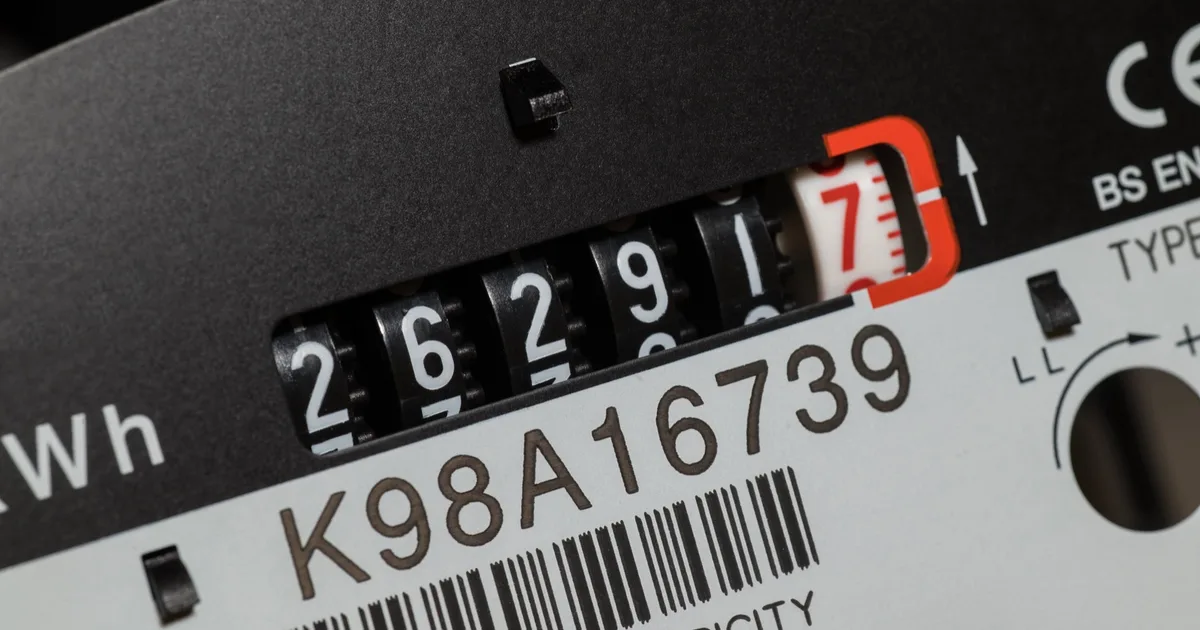
Your Smart Meter Is Recording Data Every 30 Minutes. The Question Is Whether Anyone Is Using It.
The UK government’s smart meter rollout has been one of the most extensively discussed and most consistently misunderstood infrastructure programmes in recent energy policy. For business owners, smart meters have been presented as a solution to estimated billing, a gateway to better tariffs, and a tool for energy management. The reality is more nuanced — and for many small businesses, the gap between what smart meters were promised to deliver and what they actually deliver in practice is significant.
Understanding what a smart meter does, what it doesn’t do, and how to get genuine value from the data it generates is more useful than accepting the simplified narrative that smart meters automatically save you money. They don’t. But used properly, the data they generate can.
What a Smart Meter Actually Does
A smart meter records your electricity and/or gas consumption in 30-minute intervals and transmits that data automatically to your supplier using the Smart Metering Wide Area Network managed by the Data Communications Company (DCC). The transmission removes the need for manual meter reads and eliminates estimated billing.
SMETS1 (first generation): Often lost smart functionality when customers switched suppliers — reverting to “dumb” operation. The SMETS1 fleet has been progressively enrolled onto the DCC network, but some commercial premises still have connectivity issues.
SMETS2 (second generation): Current standard. Retains smart functionality on supplier switch. The platform on which time-of-use tariffs and future smart energy services are built.
Both generations record half-hourly consumption data. The question is whether that data is being used for billing and analysis — which leads to the most important point most business owners don’t know.
The Settlement Gap: Why Smart Meter ≠ Half-Hourly Settlement
Having a smart meter installed does not automatically mean you are billed on a half-hourly settled basis.
Most small business smart meter installations — for businesses in Profile Class 3–6 — are settled on a non-half-hourly basis by default. Your meter records consumption every 30 minutes, but your billing uses an industry-standard consumption profile (an estimated pattern based on your meter class) rather than your actual half-hourly readings.
Your bill is accurate at the annual total level — but the pricing within the year uses the profile, not your actual pattern. To access time-of-use tariffs and benefit financially from shifting consumption, you need to actively elect half-hourly settlement. This is an administrative step requiring a contract change. It won’t happen automatically, and no supplier will proactively suggest it unless it serves their commercial interests.
What Smart Meter Data Can Tell You
Baseload identification: Your overnight minimum consumption — lowest 30-minute reading on a typical weeknight — represents equipment running when no one is in the building. A site consuming 5 kW overnight when it should be consuming 1–2 kW is burning 8,760–14,600 kWh per year unnecessarily. At 25p/kWh: £2,190–£3,650 per year on nothing.
Peak demand timing: HH data shows exactly when your peak demand occurs — the prerequisite for Triad management, EV charging coordination, and staggered equipment startup planning.
Consumption anomalies: A spike in a single half-hour period typically indicates a specific equipment event: a motor startup, large equipment switching on, or a fault condition. HH data makes these events visible; monthly bills don’t.
Efficiency intervention measurement: LED installation, insulation, equipment replacement — HH data gives you before/after comparison at the half-hourly level, not confounded by weather and occupancy variations that make monthly bill comparisons unreliable.
What Smart Meters Cannot Tell You
Which appliances are consuming what. Smart meters measure total site consumption at the import point only. Distinguishing lighting from refrigeration from HVAC requires sub-metering on individual circuits. Smart meters are whole-site meters, not circuit-level tools.
They don’t automatically reduce your bill. The meter records data. Acting on it requires analysis. A smart meter generating data no one examines saves nothing.
They don’t guarantee time-of-use pricing. Access depends on your supplier, contract type, and whether you’ve elected HH settlement. It is not automatic.
They have nothing to do with your unit rate. A business on a smart meter and an uncompetitive contract is worse off than one on a conventional meter and a well-negotiated contract. The meter measures what you use; the contract determines what you pay per unit. These are separate issues.
Practical Steps to Extract Value From Your Smart Meter
- Confirm your meter is communicating: If you’re still receiving estimated bills, communication has failed — investigate with your supplier.
- Access your HH data: Most suppliers provide it via online portal or on request. Review overnight minimums and peak readings — even a basic review is informative.
- Check your settlement class: Profile Class 3–6 = non-HH settlement. Profile Class 0 = HH. Confirm which you’re on and whether electing HH makes commercial sense.
- Set an overnight baseload target: Track it. Any increase from baseline signals a change — investigate before it compounds.
Telnergy’s Approach
We review available smart meter data as a standard part of new client onboarding — not a premium extra. It frequently reveals overnight baseload waste, misaligned HVAC schedules, and demand spikes that are costing money before we’ve even discussed the contract rate.
📱 WhatsApp Business: 07360 272168
📧 Email: hello@telnergy.com
📞 Direct line: 01202 028888
Telnergy Limited • Independent Energy Consultants since 2002 • Ofgem-Aligned Consultancy • Christchurch, Dorset
Telnergy Limited is an independent commercial energy consultancy established in 2002, based in Christchurch, Dorset. Ofgem-aligned consultancy · ADR Ref E3561 · CRN 04576876.