
Smart Meters Changed the Game for UK Businesses — Most Just Haven’t Noticed Yet
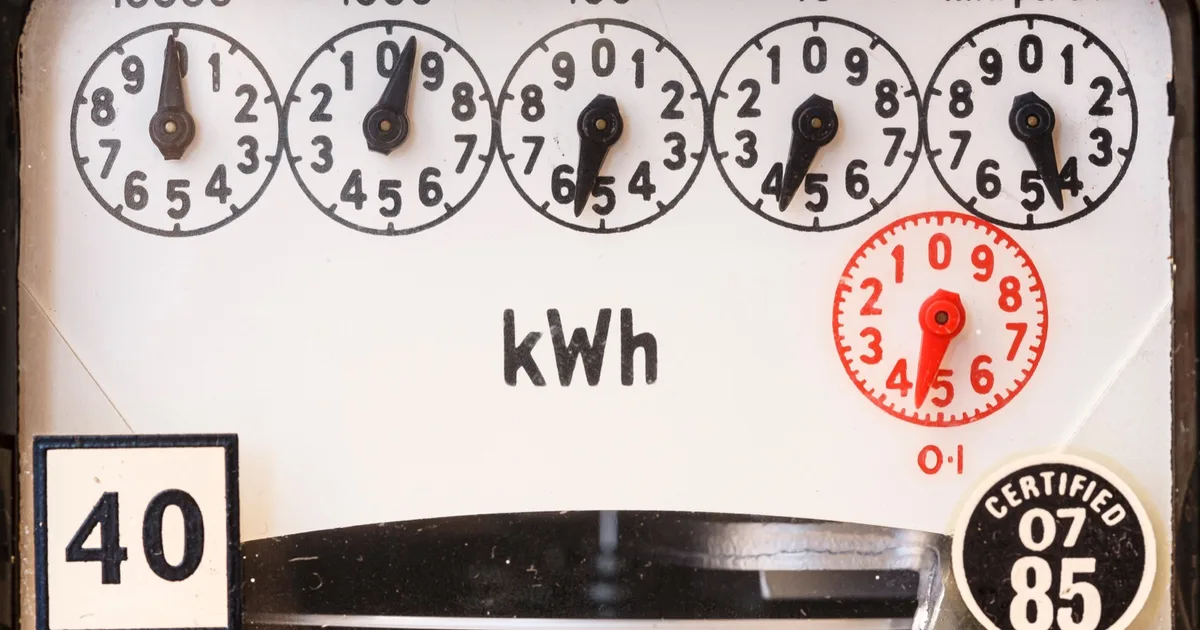
Thirty-six per cent of UK commercial premises are still running on legacy meters. That means over a third of British businesses are making energy procurement decisions — sometimes worth tens of thousands of pounds a year — based on estimated data that may not reflect how they actually consume power.
The shift to half-hourly settlement is the biggest structural reform to UK energy markets in a generation, and the businesses without smart meters are about to find out what it costs to be on the wrong side of it.
I’ve reviewed hundreds of commercial energy contracts over the past two decades. The single biggest factor separating businesses that overpay from those that don’t isn’t the supplier they chose or the broker they used — it’s whether they had accurate consumption data when they went to market.
The numbers that matter right now
As of September 2025, there are over 40 million smart meters installed across Great Britain, covering approximately 70% of all meters. In the non-domestic sector, 2 million smart or advanced meters are in place — representing 64% of business premises. The Government’s Smart Metering Implementation Programme has delivered a net benefit of £3.7 billion to date, with the largest gains coming from reduced energy consumption and eliminated manual meter readings.
During Q3 2025 alone, large energy suppliers installed 26,000 new business smart or advanced meters. The rollout is accelerating. But the 36% still on legacy metering are not just missing a technology upgrade — they’re locked out of the tariff structures, the procurement leverage, and the operational visibility that the rest of the market now takes for granted.
Two deadlines that change the commercial calculus
Market-wide Half-Hourly Settlement went live in October 2025. Every electricity MPAN in Britain is being migrated to settle on actual half-hourly consumption rather than estimated profiles. Completion is expected by mid-2027. Ofgem forecasts net consumer benefits of £1.6 billion to £4.5 billion by 2045 from this reform alone.
For businesses, this means prices will increasingly reflect when you use energy, not just how much. Those with smart meters can access time-of-use tariffs that reward off-peak consumption. Those on legacy meters get profiled on assumed patterns that may bear no resemblance to how they actually operate.
From December 2026, suppliers must submit half-hourly data for all metering types to Ofgem. This is a hard backstop. Businesses without smart meters before this date will find their suppliers under increasing pressure to accelerate installations — and some commercial tariff structures will simply no longer be available to legacy meter holders.
The GOV.UK non-domestic smart metering consultation requires all energy suppliers to take “all reasonable steps” to reach 100% smart meter penetration by 31 December 2030. The direction is unambiguous.
Estimated bills are the most expensive kind of wrong
Estimated bills are one of the most persistent sources of cash-flow disruption for SMEs. When a supplier estimates consumption based on historic profiles, you either get a surprise debt demand or an overpayment sitting as credit on their balance sheet. Neither outcome helps your business.
Smart meters transmit verified consumption data on a half-hourly basis. Every invoice reflects actual usage. Disputes about billing accuracy — which consume significant finance team time across multi-site portfolios — become a rarity rather than a monthly headache.
But the billing accuracy is the least interesting part. What matters is what happens next.
The real value is in the data you didn’t know you were missing
A smart meter paired with an energy management platform gives you a live consumption view updated every 30 minutes. I’ve seen this data surface patterns that businesses had no idea existed:
Overnight baseload creep — equipment left running outside business hours that accounts for 20–40% of total consumption in some commercial premises. Servers, HVAC, kitchen equipment on standby, lighting on timer faults. These are savings that require no capital investment to capture — just someone looking at the data.
Peak demand spikes — short bursts of high consumption that inflate maximum demand charges on half-hourly metered accounts. Often caused by multiple high-draw systems starting simultaneously, fixable with staggered scheduling.
Seasonal anomalies — unexpected winter consumption that points to heating inefficiencies, or air-conditioning running in heating season because nobody updated the BMS calendar.
According to the Smart Metering Costs and Benefits Report, reduced customer energy use is consistently the single largest source of smart meter financial benefit. Data visibility drives behaviour change; behaviour change drives bill reductions.
Time-of-use tariffs only exist if you have the meter to access them
With half-hourly settlement rolling out, suppliers are offering time-of-use tariffs that reward consumption shifted to off-peak periods. Businesses that can flex demand — running machinery overnight, scheduling EV charging outside the 4–7pm peak, pre-cooling or pre-heating before peak hours — achieve material unit rate savings.
This is only accessible on a smart meter. Legacy metering records total consumption with no time stamp, making time-of-use settlement technically impossible.
For businesses with electric vehicle fleets, industrial refrigeration, flexible manufacturing, or on-site battery storage, the financial case is direct: without a smart meter, you are ineligible for the tariff structures designed to reward exactly the kind of flexible consumption you already run.
The asymmetry nobody talks about
Here’s the structural truth that most smart meter conversations miss.
Your energy supplier already has more data about your consumption than you do. They model your load profile, they know your peak demand patterns, they understand your seasonal variation. They use this data to price your contract. The question is whether you have the same data when you sit down to negotiate.
A business with 12–24 months of verified half-hourly usage data is in a fundamentally different negotiating position to one relying on estimated annual quantities. When we tender a contract for a client with clean smart meter data, we can model the actual load profile against every available tariff structure. The spread between the cheapest and most expensive quote on the same meter regularly exceeds 30–50%. The difference between a profiled estimate and verified actuals translates directly into thousands of pounds per year.
Without that data, you are negotiating blind against a counterparty that can see everything. That is not a market failure. It is a feature of how commercial energy procurement works — and it is entirely fixable.
Which businesses see the biggest returns
Hospitality and catering — hotels, restaurants and cafés run complex energy profiles with significant overnight baseload. Smart meter data routinely identifies refrigeration losses, HVAC inefficiencies and kitchen equipment on standby that collectively account for 10–20% of avoidable spend.
Retail and leisure — multi-site operators gain the ability to benchmark consumption across comparable sites, identifying outliers that warrant investigation. This is essentially impossible with estimated billing.
Manufacturing and logistics — businesses with flexible production scheduling or large EV fleets can optimise charging and process timing around half-hourly settlement windows, directly reducing per-kWh costs.
Office-based businesses — even for lower-consumption premises, smart meters typically surface overnight baseload pointing to servers, AV equipment and lighting left running. Savings that require no capital investment to capture.
What the smart meter conversation is really about
The policy framing of smart meters — net zero enabler, billing accuracy, consumer empowerment — is fine as far as it goes. But it misses the commercial point.
Smart meters are not an environmental initiative. They are procurement infrastructure. They are the mechanism by which a business stops accepting whatever price its supplier offers and starts understanding what its energy should actually cost. In a market with no price cap, no regulatory ceiling on commercial rates, and suppliers under no obligation to offer you their best deal — that data is the only leverage you have.
The businesses that install smart meters now, establish clean consumption baselines, and engage with time-of-use tariff options will enter their next energy procurement cycle in a materially stronger position than those that wait.
Those that don’t will continue to negotiate blind.
The meter on your wall determines whether you control your energy costs or your supplier does.
In a market with no price cap, that is not a minor administrative detail.
It is the difference between procurement and guesswork.
Sources:
Telnergy Limited is an independent commercial energy consultancy established in 2002, based in Christchurch, Dorset. Ofgem-aligned consultancy · ADR Ref E3561 · CRN 04576876.