
Smart Meters for UK Businesses: The Transformative Effects You Need to Know
Energy bills are one of the most controllable costs on your P&L — yet most UK businesses are still flying blind, paying estimated charges on aging meters and missing weeks of granular usage data that could slash their annual spend.
Smart meters change that completely. By automatically transmitting real-time energy readings directly to your supplier, they replace guesswork with data and estimated bills with actuals. But the transformation goes far beyond billing accuracy. With Market-wide Half-Hourly Settlement (MHHS) now live and a Government target of 100% smart meter penetration by 2030, businesses that act now are gaining a structural advantage over those that wait.
This guide explains exactly what smart meters do for UK businesses, which industries benefit most, and what the shift to half-hourly data means for your bottom line in 2026 and beyond.
What Is a Smart Meter for Business?
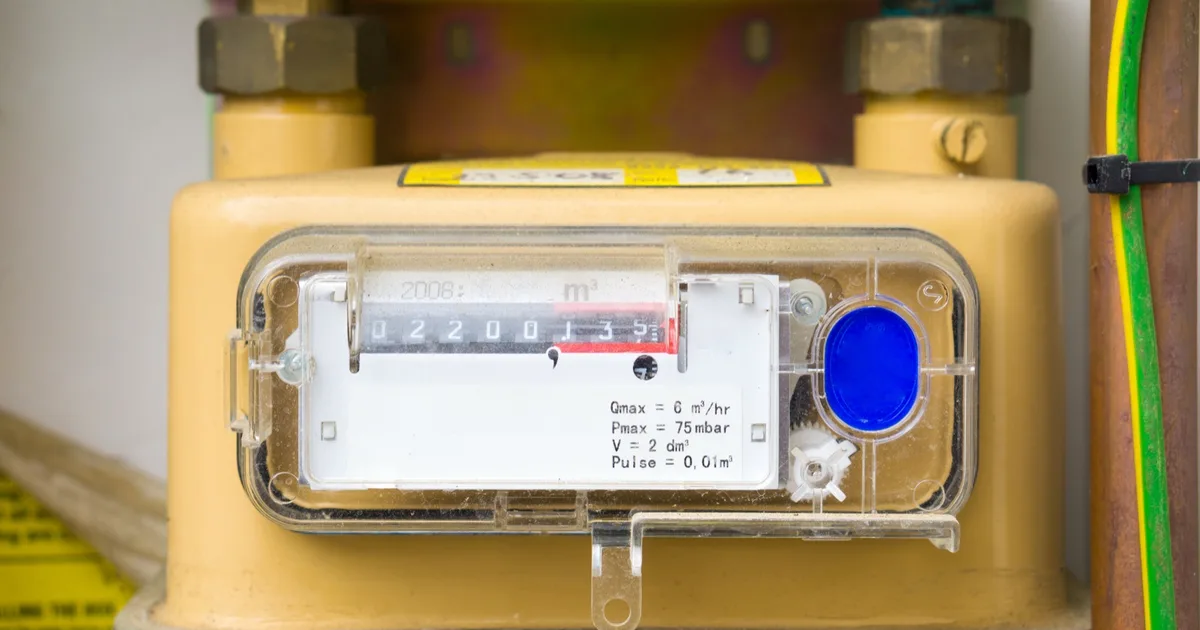
A smart meter is a second-generation digital energy meter that automatically records electricity and gas consumption in real time and transmits readings to your supplier — typically every 30 minutes — without any manual intervention. Unlike traditional meters, which require someone to physically take a reading, smart meters deliver a continuous stream of consumption data directly to both the business and the energy supplier.
For UK businesses, smart meters come in two main types: SMETS2 (the current standard) for smaller commercial premises, and Advanced Meters for larger industrial and commercial sites consuming above certain thresholds. Both eliminate estimated billing and open the door to time-of-use tariffs that simply aren’t accessible on legacy metering.
The State of Smart Meters in the UK: 2026 Snapshot
Quick Answer: As of September 2025, there are over 40 million smart meters installed across Great Britain, covering approximately 70% of all meters. In the non-domestic sector, 2 million smart or advanced meters are in place — representing 64% of business premises. The Government’s Smart Metering Implementation Programme has delivered a net benefit of £3.7 billion to date, with the biggest gains coming from reduced energy consumption and eliminated manual meter readings.
The rollout is accelerating. During Q3 2025 alone, large energy suppliers installed 26,000 new business smart or advanced meters. Yet with 36% of non-domestic premises still on legacy metering, a significant proportion of UK businesses remain locked out of the full benefits — and face increasing regulatory pressure to upgrade.
Why 2026 Is the Year That Changes Everything for Business Energy
Two industry shifts make 2026 a pivotal year for UK business energy management.
1. Market-wide Half-Hourly Settlement (MHHS) has gone live.
From October 2025, the migration of all electricity MPANs to the MHHS Target Operating Model began, with completion expected by mid-2027. This is the biggest structural reform to UK energy markets in a generation. Under MHHS, every electricity meter — commercial and domestic — will eventually settle based on actual half-hourly consumption rather than estimated profiles.
For businesses, this means prices will increasingly reflect when you use energy, not just how much. Ofgem forecasts net consumer benefits of £1.6 billion to £4.5 billion by 2045 from this reform alone. Businesses that have smart meters in place can access time-of-use tariffs that reward off-peak consumption; those still on legacy meters will be profiled on assumed patterns that may not reflect how they actually operate.
2. From December 2026, suppliers must submit half-hourly data for all metering types to Ofgem.
This regulatory deadline creates a hard backstop. Businesses without smart meters before this date will find their suppliers under increasing pressure to accelerate installations, and some commercial tariff structures will no longer be available to legacy meter holders.
According to the GOV.UK non-domestic smart metering consultation, all energy suppliers are required to take “all reasonable steps” to reach 100% smart meter penetration by 31 December 2030. The policy direction is unambiguous — and the businesses getting ahead of it now will be better positioned commercially.
6 Transformative Effects of Smart Meters for UK Businesses
1. Elimination of Estimated Bills and Billing Disputes
Estimated bills are one of the most persistent sources of cash-flow disruption for SMEs. When a supplier estimates consumption based on historic profiles rather than actual readings, the result is either a surprise debt demand (when you’ve used more than estimated) or an overpayment sitting as credit on your account (when you’ve used less).
Smart meters transmit verified consumption data directly to your supplier on a half-hourly basis, eliminating the need for estimated readings entirely. Every invoice reflects actual usage — and disputes about billing accuracy become a rarity rather than a monthly headache.
For businesses running multiple sites, the cumulative effect is substantial. Reconciling estimated bills across a portfolio of premises can consume significant finance team time; automated, verified readings remove that workload entirely.
2. Real-Time Visibility of Energy Consumption
A smart meter paired with an In-Home Display (IHD) or a connected energy management platform gives you a live view of your consumption, updated every 30 minutes. This level of visibility transforms how businesses identify and eliminate waste.
Common patterns revealed by smart meter data include:
- Overnight baseload creep — equipment left running outside business hours that accounts for 20-40% of total consumption in some commercial premises
- Peak demand spikes — short bursts of high consumption that inflate maximum demand charges on half-hourly metered accounts
- Seasonal patterns — unexpected winter consumption that points to heating inefficiencies or air-conditioning being run in heating season
According to the Smart Metering Implementation Programme Costs and Benefits Report, reduced customer energy use is consistently the single largest source of smart meter financial benefit. Data visibility drives behaviour change; behaviour change drives bill reductions.
3. Access to Time-of-Use Tariffs and Flexible Pricing
With half-hourly settlement now rolling out across the market, energy suppliers are increasingly offering time-of-use (ToU) tariffs that reward consumption shifted to off-peak periods. Businesses that can flex their energy demand — running machinery overnight, scheduling charging outside 4-7pm peak hours, or pre-cooling or pre-heating before peak periods — can achieve material unit rate savings.
This is only accessible on a smart meter. Legacy metering records total consumption with no time stamp, making ToU settlement technically impossible.
For businesses with electric vehicle fleets, industrial refrigeration, flexible manufacturing, or on-site battery storage, the financial case for smart metering is direct: without one, you are ineligible for the tariff structures designed to reward exactly the kind of flexible consumption you already run.
4. Improved Carbon Footprint Reporting and ESG Compliance
Half-hourly consumption data dramatically improves the accuracy of Scope 2 carbon reporting. Businesses calculating their electricity-related emissions on estimated billing data introduce significant uncertainty into their GHG inventory — an increasingly sensitive issue as mandatory reporting thresholds extend further down the supply chain and customer ESG questionnaires grow more granular.
Smart meter data enables consumption-based carbon accounting rather than spend-based approximation. For businesses subject to the UK’s Streamlined Energy and Carbon Reporting (SECR) regime — which applies to large companies and LLPs — verified half-hourly data removes a major source of reporting variance.
For SMEs operating as suppliers to larger corporates with net-zero targets, demonstrable energy data management is becoming a procurement differentiator.
5. Stronger Position When Comparing and Switching Suppliers
Accurate consumption data is the foundation of an effective energy procurement strategy. A business with 12-24 months of verified half-hourly usage data is in a fundamentally different negotiating position to one relying on estimated annual quantities.
Smart meter data allows energy brokers and comparison services to model your actual load profile when obtaining quotes — rather than applying a generic profile that may not reflect your consumption pattern. In a market where the spread between the cheapest and most expensive quote on the same meter can exceed 30-50%, the difference between a profiled estimate and verified actuals can translate directly into thousands of pounds per year.
When your contract ends, having clean smart meter data makes it straightforward to validate quotes, check that unit rates are applied correctly, and identify any discrepancies early.
6. Reduced Administrative Overhead for Multi-Site Businesses
For businesses managing energy across multiple premises — retailers, hospitality groups, property managers, logistics operators — the administrative cost of traditional meter reading is significant. Coordinating site access, chasing readings, reconciling estimated bills, and resolving billing queries across a portfolio is a time-consuming process that adds nothing to the business.
Smart metering automates all of it. Readings are captured and transmitted without human intervention, billing is based on actuals, and portfolio-level consumption data is available through a single platform. For energy managers and finance teams, the shift from reactive billing reconciliation to proactive consumption monitoring is a meaningful operational improvement.
Which UK Businesses Benefit Most from Smart Meters?
While every business gains from the billing accuracy and visibility that smart meters provide, certain sectors see particularly high returns:
Hospitality and catering — Hotels, restaurants and cafés typically run complex energy profiles with significant overnight baseload. Smart meter data routinely identifies refrigeration losses, HVAC inefficiencies and kitchen equipment left on standby that collectively account for 10-20% of avoidable spend.
Retail and leisure — Multi-site operators gain the ability to benchmark consumption across comparable sites, identifying outliers that warrant investigation — a process that is essentially impossible with estimated billing.
Manufacturing and logistics — Businesses with flexible production scheduling or large EV fleets can optimise charging and process timing around half-hourly settlement windows, directly reducing per-kWh costs under time-of-use tariffs.
Office-based businesses — Even for lower-consumption premises, smart meters typically surface overnight baseload that points to servers, AV equipment and lighting left running — savings that require no capital investment to capture.
How to Get a Smart Meter for Your Business
- Contact your energy supplier directly. Most of the major business energy suppliers — British Gas, EDF, E.ON, SSE, npower, and others — will arrange smart meter installation at no upfront cost to eligible commercial premises as part of the national rollout.
- Check your eligibility.
- Prepare your premises. Ensure the meter location is accessible and note any site-specific constraints. Installation typically takes 1-2 hours and can be scheduled to minimise disruption.
- Set up your data access. Ask your supplier how to access your consumption data — either through their portal, a compatible third-party energy management platform, or direct data feeds for larger sites.
- Review your tariff. Once your smart meter is installed, ask your supplier or broker whether a time-of-use or Half-hourly tariff would be more cost-effective than your current arrangement given your load profile.
Frequently Asked Questions
Does getting a smart meter change my energy tariff automatically?
No. Installing a smart meter does not automatically change your contract. However, it does open you up to tariff structures — including time-of-use and half-hourly settled contracts — that are only available to smart-metered premises. Speak to your supplier or broker about whether your current tariff is still optimal once your smart meter is live.
Is a smart meter installation free for businesses?
For most small and medium commercial premises, yes. Smart meter installations are covered by the national rollout programme at no upfront cost. Larger sites requiring advanced metering infrastructure may incur separate meter operator costs — check with your supplier.
What happens to my energy billing if my smart meter loses connectivity?
If a smart meter temporarily loses its communication signal, it will revert to estimated readings until connectivity is restored. Modern SMETS2 meters use a dedicated Smart Metering Wide Area Network (SM WAN) with high reliability, so outages are infrequent. Your data continues to be recorded on the device and uploads automatically when connection resumes.
Will MHHS affect my energy bills straight away?
The MHHS migration is being phased in from October 2025 to mid-2027. The impact on your bills depends on your meter type and supplier’s timeline. Businesses on smart meters with time-of-use tariffs will see the benefits sooner; those on fixed-rate contracts may not notice a change until renewal.
Can I switch suppliers with a smart meter?
Yes, and more easily than on a legacy meter. SMETS2 meters retain their smart functionality when you switch between accredited suppliers — unlike the earlier SMETS1 generation, which sometimes reverted to dumb-meter operation on a supplier change.
The Bottom Line
Smart meters are not a minor administrative upgrade — they are the infrastructure layer that makes modern business energy management possible. With the UK’s shift to Market-wide Half-Hourly Settlement underway, a £3.7 billion net benefit already delivered by the rollout programme, and a December 2026 regulatory deadline for half-hourly data submission approaching, the window for businesses to get ahead of this change is narrowing.
The businesses that install smart meters now, establish clean consumption baselines, and engage with time-of-use tariff options will enter the next energy procurement cycle in a materially stronger position than those that wait.
If your premises is still on a legacy meter, the single most impactful step you can take is contacting your energy supplier today to arrange an installation date.
Sources:
– Ofgem State of the Market Report, January 2026
– GOV.UK Non-Domestic Smart Metering Consultation Response
– Smart Metering Implementation Programme Costs and Benefits Report, 2025
– POST Parliament: Smart Meters
– Energy Assets: 2026 Trends for UK Commercial Metering
Telnergy Limited is an independent commercial energy consultancy established in 2002, based in Christchurch, Dorset. Ofgem-aligned consultancy · ADR Ref E3561 · CRN 04576876.