
Solar PPA for UK Businesses: When It Makes Sense and When It Doesn’t
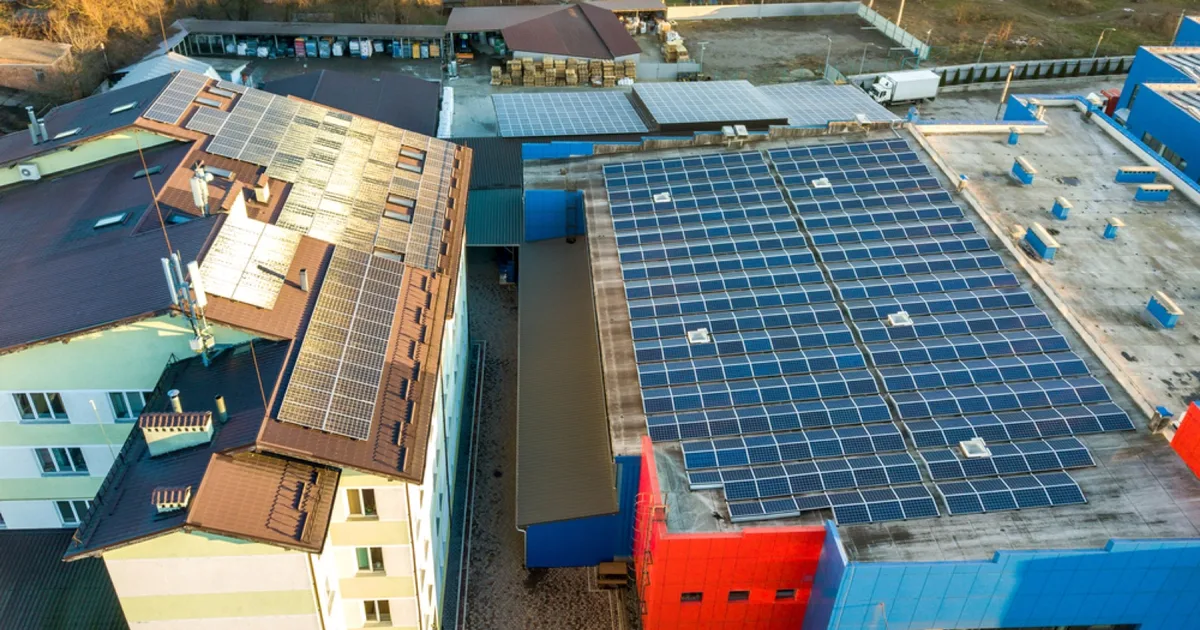
A Solar PPA Lets You Install Solar With No Capital Cost. You Don’t Own the Panels — But You Buy Cheaper Electricity From Them for 10–25 Years.
Power Purchase Agreements for solar have fundamentally changed the commercial solar proposition for UK businesses. Before PPA structures became widely available in the UK commercial market, solar adoption required significant upfront capital — a barrier that put solar out of reach for businesses that preferred to preserve working capital or whose landlord arrangements didn’t support tenant investment in building infrastructure.
A Solar PPA removes the capital requirement. A third-party investor installs, owns, and maintains the solar system on your premises. You agree to purchase the electricity it generates at a contracted rate — typically 15–25% below your current grid rate — for the term of the agreement, usually 10–25 years.
The model works. But it is not right for every business, and the contract terms require careful evaluation before commitment. This is a commercial property decision as much as an energy decision.
The Mechanics of a Solar PPA
The structure is straightforward in principle:
- Assessment: A solar developer surveys your premises — roof area, orientation, structural integrity, shading — and calculates expected annual generation.
- PPA offer: The developer proposes a contracted rate for solar electricity — expressed in p/kWh — at which you’ll purchase whatever the system generates. This rate is fixed or indexed (typically to RPI or CPI) for the contract term.
- Installation: The developer installs and commissions the system at their cost. The panels, inverters, mounting structure, and monitoring equipment belong to the developer throughout the agreement.
- Generation and billing: You continue to purchase grid electricity for your non-solar consumption. For the proportion of your consumption covered by solar generation, you pay the PPA rate rather than your grid rate. The saving is the difference between the two.
- Export: Electricity generated but not consumed on-site is either exported to the grid (with the developer receiving export income) or, in some PPA structures, credited to your account at an agreed export rate.
When Solar PPA Makes Sense for a UK Business
The PPA model makes strong commercial sense when four conditions are met:
High daytime consumption: Solar generates electricity between approximately 7am and 5pm on winter days, and 6am and 8pm in summer. Businesses that consume most of their electricity during daylight hours — offices, retail premises, manufacturing with day shift operations — have a high self-consumption rate. The saving per kWh of solar generation is at its maximum when that generation displaces grid purchases rather than being exported.
Businesses with primarily overnight or evening consumption — restaurants serving dinner only, nighttime distribution, security lighting — self-consume a low proportion of solar generation and derive limited financial benefit from a PPA.
Suitable roof area: Commercial solar requires south- or southwest-facing roof area with minimal shading. Flat roofs (which can be fitted with pitched frame mounting to achieve optimal angle) are common in commercial and industrial premises. The minimum viable system for a meaningful commercial PPA is typically 30–50 kWp — requiring approximately 200–300m² of usable roof area.
Adequate remaining occupation period: PPA terms typically run 15–25 years. For businesses in leased premises, the remaining lease term (including options to renew) needs to be compatible with the PPA term, or the landlord needs to consent to the arrangement and agree to accommodate the PPA as part of a lease renewal. A business with 3 years remaining on its lease should not enter a 20-year PPA without a plan for how the PPA is handled at lease end.
Planning consent: Commercial solar installations typically require permitted development approval or full planning consent depending on the building type, location, and system size. Listed buildings, conservation area properties, and some commercial developments have additional constraints. This is the developer’s responsibility to manage, but the timeline (typically 4–12 weeks) affects project commencement.
The Financial Case: What the Numbers Look Like
A 100 kWp commercial solar system on a south-facing industrial roof in southern England will generate approximately 90,000–95,000 kWh per year. For a business consuming 400,000 kWh per year with a high daytime profile:
- Self-consumed solar: approximately 70,000–80,000 kWh (75–85% self-consumption rate)
- Grid electricity displaced: 70,000–80,000 kWh × (grid rate minus PPA rate)
- At grid rate 25p/kWh and PPA rate 18p/kWh (typical current offer): saving of 7p/kWh × 75,000 kWh = £5,250/year
- Export income (remaining 15,000–20,000 kWh): varies by agreement structure
Over a 20-year PPA, assuming the PPA rate is RPI-indexed and grid rates follow historical trends, the cumulative saving for this site could reach £120,000–£180,000. With zero capital investment from the business.
What to Check in a PPA Contract
The PPA contract governs a 15–25 year commercial relationship. The key provisions to review before signing:
PPA rate and indexation: The starting rate and how it escalates annually. Fixed escalation (e.g., 2% per year) is more predictable than RPI linkage. Model the total cost of PPA electricity over the full term and compare to a scenario where your grid rate also escalates — this determines whether the agreement maintains its value over time.
Minimum volume obligations: Some PPAs require you to purchase a minimum volume of solar electricity annually. If your consumption falls (operational change, building change, sub-tenanting), you may be paying for generation you’re not consuming. Understand the minimum purchase commitment.
Early termination: Life changes. Businesses move, merge, cease trading, or sell premises. PPA contracts typically have early termination provisions — either a buy-out option (purchasing the system at an agreed value) or transfer provisions (assigning the PPA to a new occupier). Understand the cost of exit before committing.
System performance guarantee: The developer should guarantee minimum annual generation — typically a degradation allowance (solar panels lose approximately 0.5% efficiency per year) and a performance ratio against modelled generation. If the system underperforms its guarantee, what remedy is available?
End of term: At PPA expiry, what happens to the panels? Typical outcomes: system transferred to you at nominal cost, lease extended on agreed terms, or system removed by developer. The default position should be asset transfer to the site owner/occupier — negotiate this upfront.
Outright Purchase: When It’s Better Than PPA
For businesses with available capital and long-term occupation certainty, outright system purchase typically produces better financial returns than a PPA over the full system lifetime. The entire electricity generation benefit accrues to the business from day one, rather than being shared with the developer through the PPA margin.
A 100 kWp commercial solar system purchased outright currently costs approximately £70,000–£100,000 installed. At 75,000 kWh/year self-consumption and 25p/kWh grid rate avoided, the annual saving is approximately £18,750. Payback: 3.7–5.3 years. After payback, the system continues to generate for 25+ years at minimal maintenance cost.
The PPA vs purchase decision ultimately depends on capital availability, occupation security, and risk appetite. Both are legitimate routes to commercial solar benefit.
Talk to Telnergy About Solar in the Context of Your Energy Contract
Solar doesn’t operate in isolation from energy procurement. A business installing solar changes its consumption profile — the proportion of consumption sourced from the grid falls, which can affect the volume-based pricing available at the next contract renewal. We factor solar generation into contract strategy for clients who are considering or have recently installed solar.
📱 WhatsApp Business: 07360 272168
📧 Email: hello@telnergy.com
📞 Direct line: 01202 028888
Telnergy Limited • Independent Energy Consultants since 2002 • Ofgem-Aligned Consultancy • Christchurch, Dorset
Telnergy Limited is an independent commercial energy consultancy established in 2002, based in Christchurch, Dorset. Ofgem-aligned consultancy · ADR Ref E3561 · CRN 04576876.