
Submetering for Business: How to Know Where Your Energy Actually Goes
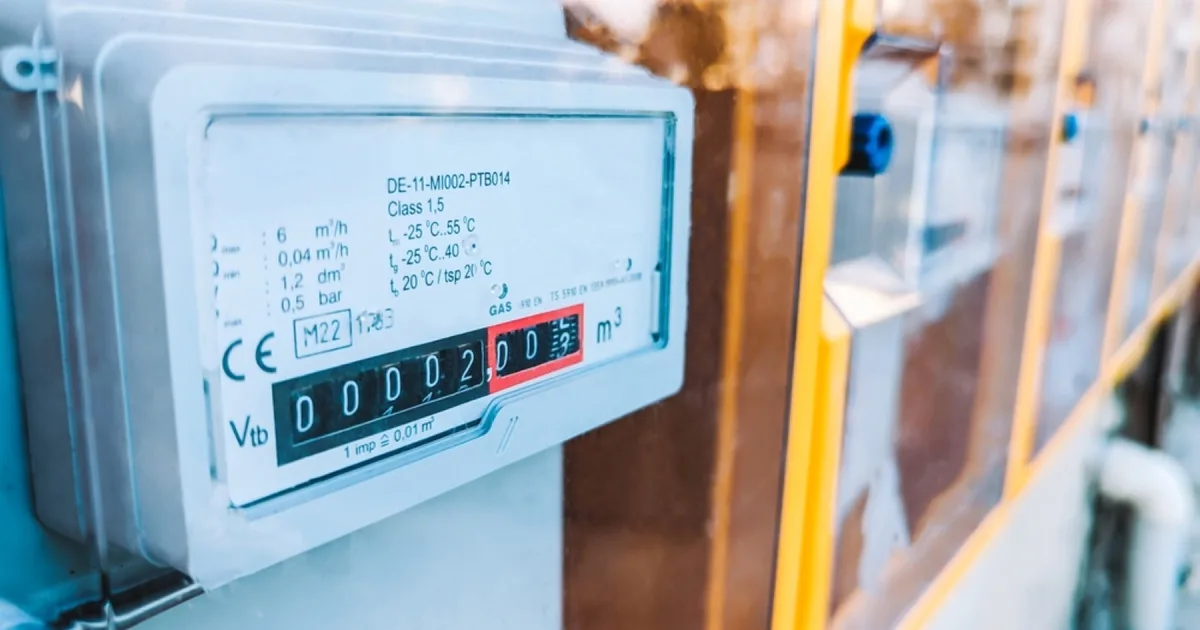
Most businesses have one electricity meter and one gas meter. The utility supplier reads them, bills the total, and that’s the end of the visibility. Whether the refrigeration plant is responsible for 60% of your electricity cost or 30%, whether the office block or the warehouse is the bigger consumer — without submetering, you’re guessing. And you can’t systematically reduce costs you can’t accurately locate.
What submetering is
A submeter is any meter installed downstream of the main utility meter to measure consumption at a specific circuit, zone, building, or piece of plant. It doesn’t communicate with your supplier — it feeds data to your own systems. The purpose is visibility and cost allocation, not billing.
Submetering can cover electricity, gas, water, or heat. For most SMEs, electricity submetering delivers the fastest insight because electricity consumption varies most by equipment and time of day — and because half-hourly data reveals demand patterns that monthly bills completely obscure.
The three main applications
Process or equipment submetering. Fitting a meter on a specific piece of plant — a refrigeration compressor, an air compressor, a CNC machine, a commercial kitchen — to understand exactly what it consumes and when. This is often the fastest route to identifying waste. One food retailer we’ve seen found their overnight refrigeration cycling was consuming 40% more than expected due to a door seal failure that the energy data identified before any physical inspection took place.
Zone or floor submetering. In multi-tenancy or multi-department buildings, submetering individual floors or zones enables accurate internal cost allocation and identifies which areas are driving consumption. This is particularly relevant for property managers recharging tenants, and for businesses that want to compare energy performance across departments or sites.
Whole-building submetering in a portfolio. For businesses with multiple premises each on their own main meter, treating each site as a submeter within your overall portfolio — feeding data to a centralised analytics platform — gives the benchmarking capability to identify which sites are performing well and which need attention.
Metering technology options
The two main approaches for electricity are pulse output meters and CT clamp meters. Pulse output meters are revenue-grade devices installed on a circuit; they output a pulse for each unit of energy consumed, which a data logger records. CT clamp meters (current transformer clamps) fit around existing cables without breaking the circuit, making them easier to retrofit and lower in installation cost, though slightly less accurate.
Data from submeters reaches a central system via M-Bus (a European standard for meter communication), Modbus, or increasingly via wireless protocols (LoRaWAN, Zigbee). Cloud-based platforms aggregating submeter data have reduced the cost of deployment significantly — for a site with five to ten submeters, the total hardware and first-year software cost now typically runs to £3,000–8,000.
ESOS and compliance
Under ESOS (Energy Savings Opportunity Scheme), qualifying businesses must conduct energy audits every four years. The quality of a submeter dataset significantly improves the audit output — instead of estimated consumption splits based on nameplate ratings and assumed run hours, the audit can work from actual measured data. This produces more accurate savings recommendations and a more defensible compliance record.
For ISO 50001, submetering provides the significant energy use (SEU) measurement infrastructure the standard requires. If your organisation has identified refrigeration or compressed air as significant energy uses, submetering those loads directly is the most rigorous way to establish baselines and track performance improvement.
The procurement link
Submeter data is also useful at contract renewal. If your half-hourly submeter data shows that a significant proportion of your consumption occurs overnight and at weekends — outside DUoS red band periods — this is a negotiating point for a pass-through contract where you benefit from time-differentiated network charges. Without the data, you’re procuring blind against an assumed profile your supplier has constructed for you.
Telnergy uses consumption data — including submeter data where available — to match businesses to the right contract structure, not just the right supplier. If you want to get more from your energy data at renewal, talk to us first.
📱 WhatsApp: 07360 272168 | 📧 hello@telnergy.com | 📞 01202 028888 Telnergy Limited · Independent commercial energy consultancy since 2002 · Ofgem-aligned consultancy · ADR Ref E3561 · CRN 04576876 · Christchurch, Dorset
FAQ
Do I need a qualified electrician to install submeters?
For CT clamp meters fitted to existing cables without breaking the circuit, installation is relatively straightforward and can be carried out by a competent person. Pulse output meters installed on new circuits require a qualified electrician. Any work inside a distribution board or panel must be carried out by a qualified electrician regardless of meter type.
Can I use submeter data for tenant recharging?
Yes, but with a caveat: submeters used for tenant billing should be revenue-grade (MID-approved) to ensure accuracy that would withstand challenge. CT clamp meters used for indicative monitoring are not typically suitable for billing purposes without verification against the main meter.
How much data can I realistically act on?
Half-hourly data from ten submeters generates around 175,000 data points per year. Without a platform to aggregate, visualise, and alert on anomalies, this volume of raw data is unmanageable. Submetering investment only delivers value if paired with software that surfaces the insight — raw data dumps are not useful to most site managers.
Telnergy Limited is an independent commercial energy consultancy established in 2002, based in Christchurch, Dorset. Ofgem-aligned consultancy · ADR Ref E3561 · CRN 04576876.