
What Is a Unit Rate? Business Energy Explained
The Unit Rate Is the Price You Pay Per Kilowatt-Hour. But What’s Actually Inside It?
If you’ve ever looked at a business energy bill or received a contract quote, the unit rate is the number that dominates the conversation. It’s expressed in pence per kilowatt-hour (p/kWh) and represents the cost of each unit of electricity or gas your business consumes. Multiply the unit rate by your annual consumption and you have the bulk of your energy spend.
But the unit rate is not a single, transparent cost. It is a bundled figure that, depending on your contract type, may contain several different components — some of which you can influence through procurement, and some of which you cannot.
Understanding what the unit rate contains is the starting point for making any meaningful comparison between energy contract offers.
What a Unit Rate Actually Measures
A kilowatt-hour (kWh) is the standard unit of energy measurement used for both electricity and gas in the UK. One kilowatt-hour is the amount of energy consumed by a 1,000-watt appliance running for one hour — a small electric heater, for example, or ten 100-watt lightbulbs running simultaneously.
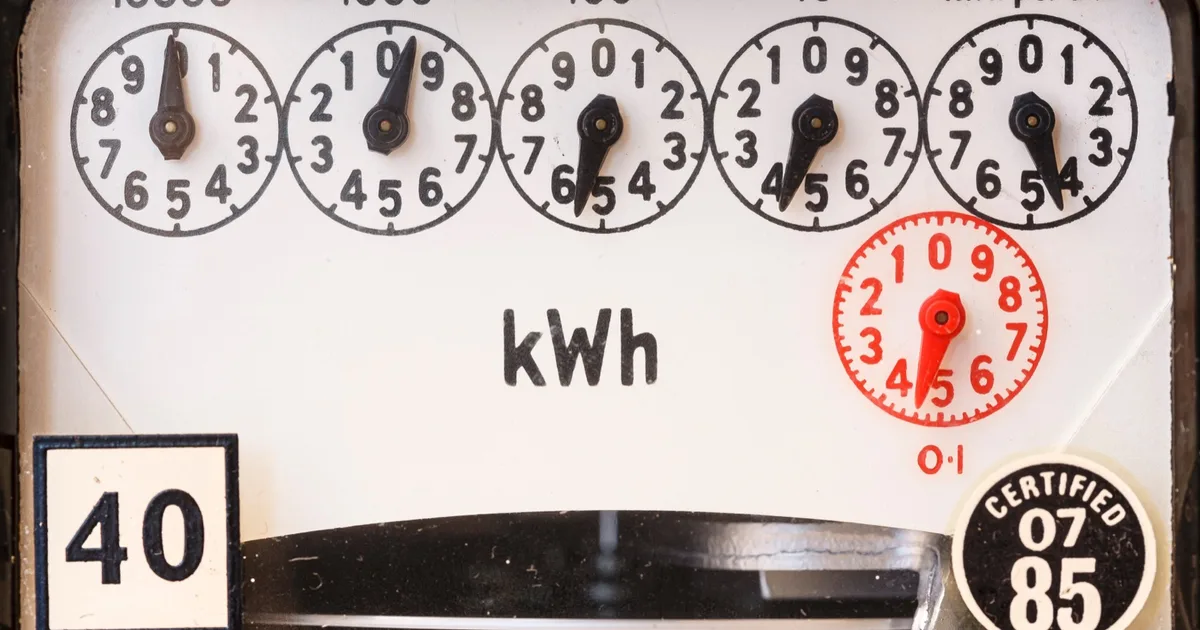
Your business energy meter records consumption in kWh. Your bill multiplies that consumption by the unit rate to produce the energy charge element of your invoice. A business consuming 100,000 kWh of electricity per year at a unit rate of 25p/kWh pays £25,000 in energy charges before standing charges, levies, and VAT are added.
What’s Included in the Unit Rate
On a fixed all-inclusive business energy contract — the most common contract type for UK SMEs — the unit rate bundles together several distinct cost components:
Wholesale energy cost: The cost of the electricity or gas itself, purchased by your supplier on the wholesale market and passed through to you. This is the element that moves with market conditions — gas prices, renewable generation levels, geopolitical events. It typically represents 35–45% of a business electricity unit rate and 60–70% of a business gas unit rate.
Network charges: The cost of transporting energy from where it is generated or imported to your premises — through the national transmission network and the local distribution network. For electricity, this includes TNUoS (transmission) and DUoS (distribution) charges. For gas, it includes transportation charges from the gas transporter. These are set by regulated network operators, not by your supplier.
Environmental and policy levies: Government-mandated charges that fund renewable energy development, capacity market payments, and energy efficiency schemes. On electricity bills, this includes the Renewables Obligation, Contracts for Difference, and Capacity Market Supplier Charge. These levies have grown significantly as a proportion of the total unit rate over the past decade.
Supplier margin: The supplier’s commercial margin — their operating costs and profit. This is the element most directly affected by competitive procurement. Suppliers with lower cost structures and higher volume can offer thinner margins.
Broker commission: If your contract was arranged through an energy broker, their commission is embedded as an uplift on the unit rate. The supplier adds a pence-per-kWh amount on top of their base rate and passes it to the broker over the duration of the contract. This commission is real, it comes from your unit rate, and you are entitled to know what it is.
All-Inclusive vs Pass-Through Unit Rates
Not all unit rates bundle these components in the same way. The distinction between all-inclusive and pass-through contracts determines what is fixed within the unit rate and what is variable:
All-inclusive fixed rate: All components — wholesale cost, network charges, levies, supplier margin — are bundled into a single unit rate that does not change for the duration of the contract. The supplier carries the risk that any component increases during the term.
Pass-through rate: The wholesale energy cost and supplier margin are fixed, but network charges and levies are passed through at actual rates as they change. Your unit rate can increase during a fixed contract period if network charges or levies are revised upward. On pass-through contracts, the headline unit rate at the time of signing may be lower than an all-inclusive equivalent — but it does not represent your full cost with the same certainty.
For most UK SMEs, understanding whether a quoted unit rate is all-inclusive or pass-through is the single most important clarification to make before accepting any contract offer.
What the Unit Rate Doesn’t Include
The unit rate covers your consumption charge but does not include everything on your energy bill. Separate from the unit rate:
- Standing charge: A fixed daily charge for maintaining the supply connection to your premises, regardless of how much energy you consume.
- Climate Change Levy (CCL): A government tax on business energy use, applied per kWh. May or may not be embedded in the unit rate depending on contract structure — always confirm.
- VAT: Applied at 20% standard rate, or 5% for qualifying premises (residential care, some charities, small consumption).
- Meter reading and data charges: Small but present on some contract structures, particularly half-hourly settled supplies.
When comparing business energy quotes, total annual cost — not unit rate alone — is the only meaningful comparison. A contract with a marginally lower unit rate but a significantly higher standing charge, or a pass-through structure that exposes you to levy increases, may cost more in total than a slightly higher all-inclusive rate.
How Telnergy Uses Unit Rates in Comparisons
When we compare contracts for clients, we present the unit rate alongside the standing charge, contract structure (all-inclusive vs pass-through), supplier credentials, and — explicitly — the broker commission embedded in the rate. The total annual cost model, not the unit rate in isolation, is what drives our recommendations.
If you’ve been quoted a unit rate and want to understand what’s inside it and how it compares to the current market, a conversation takes 15 minutes.
📱 WhatsApp Business: 07360 272168
📧 Email: hello@telnergy.com
📞 Direct line: 01202 028888
Telnergy Limited • Independent Energy Consultants since 2002 • Ofgem-Aligned Consultancy • Christchurch, Dorset
Telnergy Limited is an independent commercial energy consultancy established in 2002, based in Christchurch, Dorset. Ofgem-aligned consultancy · ADR Ref E3561 · CRN 04576876.