
What Is the Feed-in Tariff?
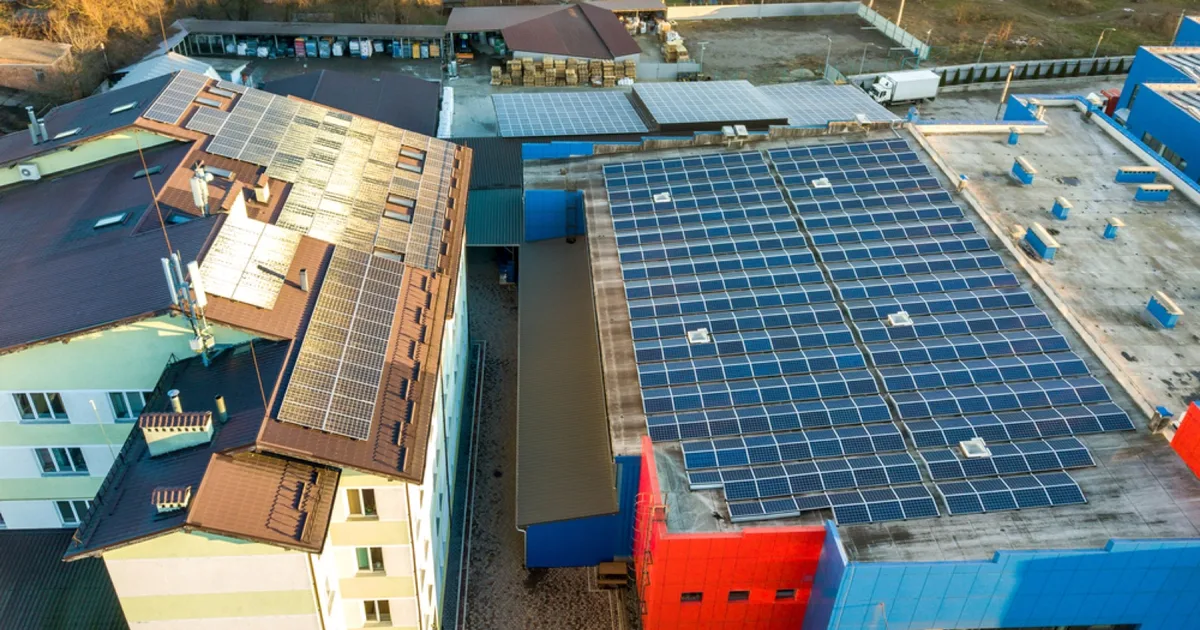
Around 900,000 UK installations are still receiving Feed-in Tariff payments — from solar panels, small wind turbines, and micro-hydro systems registered before the scheme closed to new applicants in April 2019. If your business is among them, the FiT represents a guaranteed income stream for up to 20 years from the installation date. Understanding how to maximise that stream — and how it intersects with your current energy procurement — is worth the time it takes to review it.
How the FiT scheme works for legacy recipients
The Feed-in Tariff paid eligible generators two separate amounts: a generation tariff for every kWh produced regardless of whether it was consumed on-site or exported; and an export tariff for electricity sent back to the grid. For the majority of small commercial installations registered before 2015, the export payment was made on a “deemed export” basis — the supplier assumed 50% of generation was exported and paid accordingly, without metering actual exports. Installations registered later typically have metered export arrangements.
Generation tariffs were set at the time of accreditation and are adjusted annually in line with the Retail Price Index. A solar installation accredited in 2012 at a generation tariff of 16p/kWh, uplifted by RPI since then, may now be receiving 22–25p/kWh on generation. That is, in many cases, a more favourable rate per unit generated than the rate at which the business currently imports electricity from the grid. The combination of avoided import cost and FiT income makes a mature FiT installation a genuinely valuable asset — one that is often managed less attentively than it deserves.
The Smart Export Guarantee: what replaced the FiT for new installations
For installations commissioned after 31 March 2019, the Smart Export Guarantee replaced the FiT for export payments. The SEG is fundamentally different in structure: it requires licensed suppliers with 150,000 or more domestic customers to offer an export tariff, but it sets no floor on the rate. SEG rates in the market have ranged from 1p/kWh to approximately 15p/kWh, compared to deemed export arrangements under FiT that effectively paid on 50% of generation at the accredited generation tariff. For businesses with post-2019 installations, actual metered export data matters, and the choice of SEG supplier can have a meaningful impact on annual export income.
What FiT recipients should be checking
The most common problem we see with legacy FiT installations is misalignment between the generation asset and the electricity procurement contract. A business that installed 50 kWp of solar in 2013 and has renewed its electricity contract several times since then may be procuring as though the solar doesn’t exist — buying the same volume from the grid without accounting for the reduction in net imports the generation creates. That mismatch produces two problems: the contract volume is too high, buying capacity the business no longer needs from the grid; and the supplier may have profiled the supply on a load shape that doesn’t reflect the daytime trough created by solar generation, leading to a less accurate and often less competitive quote.
Metering accuracy deserves attention too. FiT payment depends on accurate generation meter readings submitted to the FiT licensee quarterly. Meter drift, communication failures, or administrative errors in reading submissions can result in underpayments that go unnoticed for years. If you haven’t audited your FiT payment history against your generation meter data recently, it’s worth doing — the reclaim process for historical underpayment exists, but it requires evidence.
What happens at the end of the 20-year term
The earliest FiT installations — those accredited in 2010 and 2011 — are approaching or have passed the end of their 20-year generation tariff term. Generation tariff payments cease at term end, but the installation continues to produce electricity. At that point, the economics shift entirely to self-consumption value (avoided grid import cost at current market rates) and whatever SEG rate can be secured for exports. For a well-maintained solar installation, operational costs after the FiT term are minimal, and the electricity generated continues to offset grid imports — currently a more valuable benefit than the original FiT generation tariff in many cases, given where import rates now sit.
The procurement connection
Declaring your generation asset to your electricity supplier at contract renewal is not optional — it is required for accurate profiling, and in some cases affects the class of supply arrangement applicable to your meter. A site with significant solar generation has a consumption profile that differs materially from a non-generating site of equivalent total consumption, and a supplier that doesn’t know about it will price it incorrectly. Telnergy accounts for generation assets as a standard part of any procurement exercise, ensuring the contract volume, load shape, and structure reflect what the site actually takes from the grid rather than an estimated standard profile.
📱 WhatsApp: 07360 272168 | 📧 hello@telnergy.com | 📞 01202 028888 Telnergy Limited · Independent commercial energy consultancy since 2002 · Ofgem-aligned consultancy · ADR Ref E3561 · CRN 04576876 · Christchurch, Dorset
FAQ
My FiT installation is 12 years old. Should I replace the inverter to keep generation optimal? Inverters typically have a design life of 10–15 years, though many last longer with maintenance. If your generation data shows declining output not explained by soiling or shading, inverter performance may be a factor. A generation monitoring audit — comparing actual output against expected yield for your system specification and location — will identify whether inverter replacement is warranted. Given the value of self-consumption at current electricity prices, maintaining generation performance is more commercially important now than when FiT rates were the dominant value driver.
Can I add battery storage to a legacy FiT system without losing my payments? Yes, in most cases, though the rules depend on when your installation was accredited and the configuration of the storage system. Battery storage that charges from solar generation and discharges for self-consumption doesn’t affect FiT generation payments, which are calculated from the generation meter. However, if the battery can charge from the grid as well as from solar, the metering arrangement needs careful attention — get clarity from your FiT licensee before commissioning any storage system.
I’m planning to sell my business. What happens to the FiT payments? FiT payments are associated with the installation and the premises, not the business entity. On a change of ownership, the new owner must notify the FiT licensee to transfer the accreditation. In a share sale, the accreditation typically transfers automatically with the company. In either case, the remaining term and current generation tariff rate should be factored into the asset valuation — it represents a contracted income stream for the duration of the term and is frequently undervalued in business sale processes.
Telnergy Limited is an independent commercial energy consultancy established in 2002, based in Christchurch, Dorset. Ofgem-aligned consultancy · ADR Ref E3561 · CRN 04576876.