
What Is Triad Avoidance and Can It Save Your Business Money?
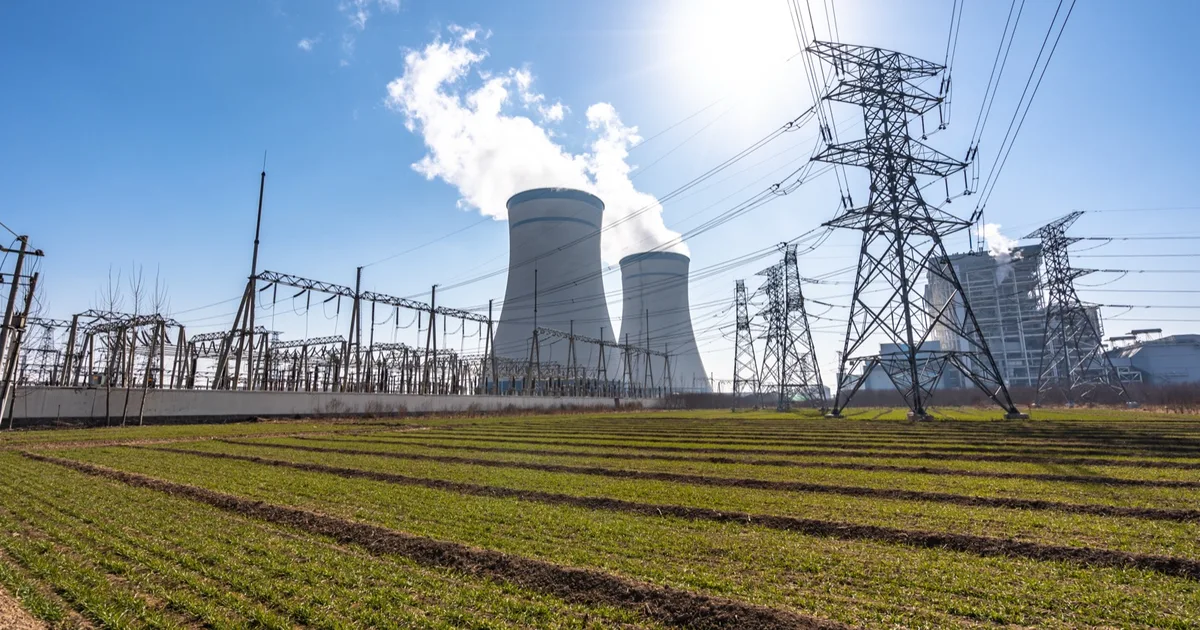
Triad Avoidance Is the Practice of Reducing Your Electricity Consumption During Three Specific Half-Hours Each Winter. For the Right Business, It Saves £5,000–£25,000 Per Year.
Triad avoidance is one of the most consistently underutilised energy management techniques available to UK commercial and industrial electricity users. It requires no capital investment, no new equipment, and no permanent operational change. It requires awareness of when the three Triad half-hours are likely to occur, and a willingness to reduce consumption during those windows — typically a 30–60 minute period on three cold, calm weekday evenings between November and February.
For businesses with the right profile — half-hourly metered, consuming above approximately 500 kW during peak periods, located in southern or eastern England — the annual saving from systematic Triad avoidance is substantial and recurring. For businesses below these thresholds, the saving may still exist but be smaller relative to the management effort involved.
What a Triad Is
A Triad is one of the three half-hour settlement periods that had the highest aggregate electricity demand across Great Britain during the winter period (November to February), with each of the three periods separated by at least 10 days from the others.
Triads are not identified until after the winter period ends (in February). They are retrospective — you cannot know with certainty which three half-hours were the Triads until the season is over. However, Triad events have strong predictable characteristics that make them forecastable with reasonable accuracy:
- Time: Triads almost always occur between 4pm and 7pm — the late afternoon/early evening period when both commercial demand (offices, factories still running) and residential demand (heating, cooking, lighting after dark) overlap at their maximum
- Day: Triads almost always occur on weekdays — weekend demand is lower and rarely reaches Triad-level
- Month: Triads most commonly occur in November, December, and January — the highest-demand winter months. February Triads occur but are less common
- Weather: Triads correlate strongly with cold temperatures — the colder the day, the higher the heating demand and the more likely a Triad event. Triads almost never occur on mild winter days
- Wind: Low wind generation increases the system stress on cold days, making Triad events more likely when wind generation is below seasonal average
How the Triad Charge Is Calculated
Your Triad charge for a given year is calculated as follows:
Step 1: After the winter period ends, NESO identifies the three Triad half-hours — the three settlement periods with the highest GB system demand, each separated by at least 10 days
Step 2: Your half-hourly meter data is used to identify your actual demand (in kW) during each of the three Triad half-hours
Step 3: Your average demand across the three Triads is calculated (in kW)
Step 4: Your average Triad demand is multiplied by the applicable TNUoS Triad tariff rate for your DNO zone (published by National Grid — rates vary by zone and change annually, typically £30–65/kW/year in high-demand southern zones)
Example: Business in South East England. Average Triad demand: 250 kW. TNUoS Triad rate: £48/kW/year. Annual Triad charge: 250 × £48 = £12,000.
If that same business reduces its demand from 250 kW to 80 kW during the three Triad windows: (250-80) × £48 = £8,160 annual saving. From demand reduction on three evenings per winter.
Triad Forecasting Services
Several commercial services provide Triad forecasting — typically as daily or intra-day alerts during the November–February window, indicating the probability that a Triad event will occur in the forthcoming peak period. These services use weather forecasts, wind generation data, system demand forecasts, and historical Triad patterns to produce a probability score for each weekday evening peak period during the winter.
Leading Triad notification services include those from energy data companies, demand-side response aggregators, and specialist Triad management platforms. Some consultancies, including Telnergy, provide Triad alert information to clients as part of their ongoing service.
The typical instruction is straightforward: when a high-probability Triad alert is issued (say, 75%+ probability), reduce electricity consumption during the 4:30pm–6:00pm window by as many kW as is operationally feasible. The reduction doesn’t need to be complete — even a partial demand reduction during a Triad period reduces the Triad charge proportionally.
What Demand Reduction Looks Like in Practice
The actions required for Triad avoidance depend on the type of business and the nature of its flexible loads. Common approaches:
- Offices: Reduce HVAC set-points by 1–2°C during the Triad window (thermal mass maintains comfort). Switch off non-essential lighting in low-occupancy areas. Delay any large equipment startups until after 6pm
- Manufacturing: Schedule non-time-critical production stages to avoid the Triad window. Delay shift changeover activities that involve high-demand startups. Pre-cool or pre-heat process equipment before 4pm to reduce active load during the window
- Retail/hospitality: Delay defrost cycles on refrigeration equipment. Reduce comfort HVAC temporarily. Postpone high-demand kitchen equipment cycles where service timing allows
- Sites with battery storage: Discharge stored battery capacity during the Triad window, reducing net grid demand
- Sites with backup generation: Run backup generators during Triad windows to reduce grid import — though this requires careful management of fuel cost vs. Triad saving economics
Is Triad Avoidance Right for Your Business?
The quick assessment: if your business is half-hourly metered, consuming above 500 kW during weekday peak hours, and located in England or Wales (where TNUoS Triad rates are highest), and if any of the demand reduction activities above are operationally feasible, the answer is almost certainly yes.
If you are half-hourly metered but don’t know your current Triad charge or haven’t been offered Triad forecasting by your energy adviser, that gap in your energy management is worth addressing.
📱 WhatsApp Business: 07360 272168
📧 Email: hello@telnergy.com
📞 Direct line: 01202 028888
Telnergy Limited • Independent Energy Consultants since 2002 • Ofgem-Aligned Consultancy • Christchurch, Dorset
Telnergy Limited is an independent commercial energy consultancy established in 2002, based in Christchurch, Dorset. Ofgem-aligned consultancy · ADR Ref E3561 · CRN 04576876.