
Energy Management Software for SMEs: What It Does and What to Look For
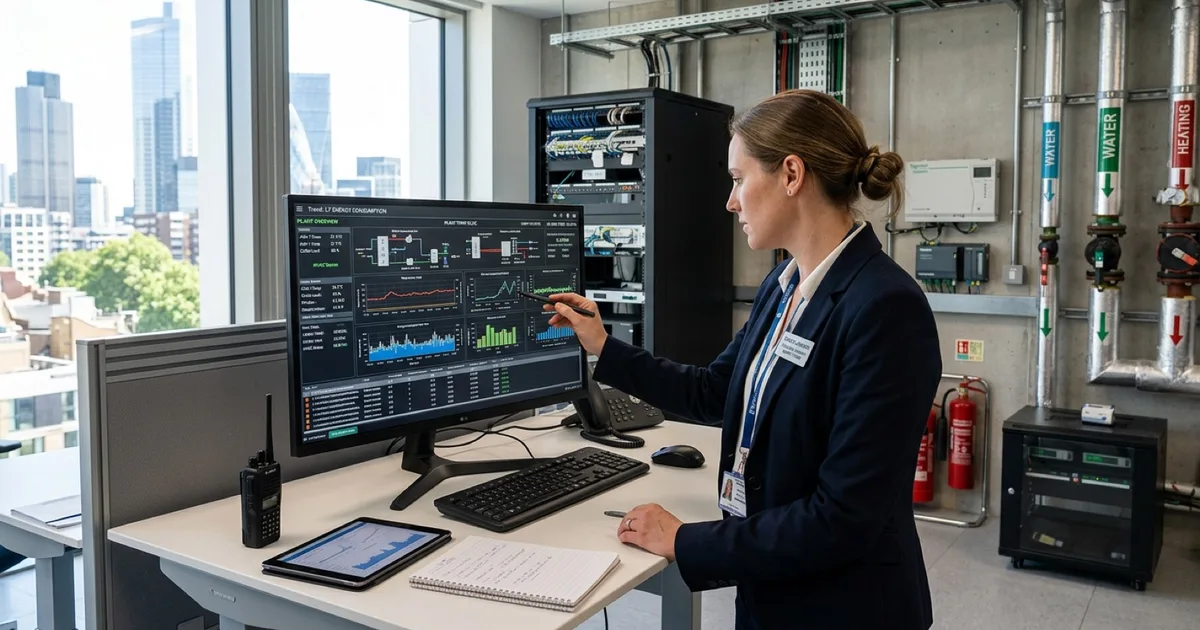
Energy management software sits between raw meter data and actionable decisions. It collects consumption data, presents it in formats that support analysis, tracks performance against targets, and increasingly incorporates automated alerts and reporting functionality. The market ranges from simple cloud dashboards costing a few hundred pounds a year through to enterprise platforms with multi-site portfolio management, ISO 50001 compliance frameworks, and AI-driven anomaly detection. For most UK SMEs, the right tool is considerably simpler and cheaper than the enterprise end of the market suggests.
What good energy management software does
Automatic data ingestion. The software connects to smart meters (via DCC or supplier APIs), or accepts manual data uploads, and assembles consumption data without manual transcription. This is the capability that makes ongoing monitoring practical — if data entry is manual and time-consuming, it won’t be done consistently.
Interval data visualisation. Half-hourly data displayed as charts, with the ability to compare periods, overlay weather data, and identify outliers. The visual representation of consumption patterns reveals what raw data tables obscure.
Alerting. Notifications when consumption exceeds a defined threshold — overnight, at weekends, or in comparison to a baseline. Alerts that fire when they should (and don’t fire when they shouldn’t) are the mechanism that translates monitoring into management action.
Reporting. Structured output for management review, ESG reporting, or ESOS/SECR compliance. The report format matters — a report that requires significant manual manipulation before it can be used adds cost back into the process.
Platforms worth evaluating for SMEs
The SME energy monitoring market includes established platforms such as Stark Software and Verco’s energy management tools, alongside a range of newer cloud-based products. Some utility suppliers provide basic consumption dashboards as part of their online account portal — these are often sufficient for simple single-site businesses with standard consumption profiles. For businesses with multiple sites, half-hourly metered supplies, or compliance reporting requirements, a dedicated platform with API connectivity to supplier data feeds is worth the incremental cost.
The integration question
Where energy management software delivers most value is when it connects to BMS, production systems, or weather data — allowing consumption to be correlated with the factors that drive it. A spike in electricity consumption on a Wednesday morning means nothing in isolation; the same spike correlated with a production run of a specific product on a specific machine provides an actionable insight. Start with data visibility. Add integration and automation once the data is reliable and the team understands what it’s looking at.
Telnergy uses consumption data — including platform exports where clients use monitoring software — as part of our procurement process. Half-hourly data in the right format is the foundation for getting the contract structure right as well as managing ongoing performance.
📱 WhatsApp: 07360 272168 | 📧 hello@telnergy.com | 📞 01202 028888 Telnergy Limited · Independent commercial energy consultancy since 2002 · Ofgem-aligned consultancy · ADR Ref E3561 · CRN 04576876 · Christchurch, Dorset
Telnergy Limited is an independent commercial energy consultancy established in 2002, based in Christchurch, Dorset. Ofgem-aligned consultancy · ADR Ref E3561 · CRN 04576876.