
European Gas Storage 2026: The Picture Heading Into Spring
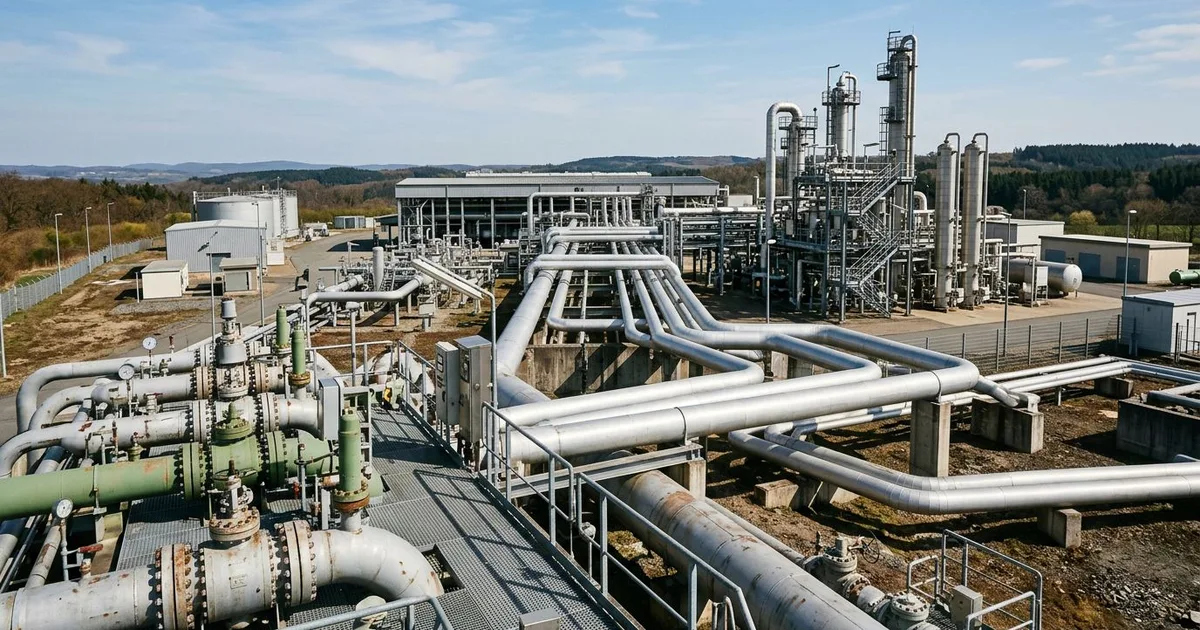
European underground gas storage sites held approximately 42% fill at the end of February 2026, below the five-year average for that date and at the lower end of the range heading into the 2026 spring injection season. The winter of 2025–26 drew down storage more heavily than forecast, driven by a cold December and a period of sustained high heating demand in January. Storage replenishment across April to October 2026 now needs to close a larger-than-average deficit to reach adequate winter readiness levels — and it will be doing so in competition with Asian LNG buyers simultaneously rebuilding their own post-winter inventories.
Why European storage matters for UK prices
The UK holds roughly 1% of its annual gas demand in storage — effectively nothing in terms of market buffering capacity. UK gas prices are therefore directly exposed to European storage dynamics through the Interconnector pipeline to Belgium. When European storage is low and demand for LNG cargoes and pipeline gas is elevated to replenish it, UK prices rise in competition with continental buyers. When storage is full and European demand is satisfied, the UK benefits from the relaxed market. The UK cannot decouple from this relationship as long as the Interconnector remains a significant flow path and domestic storage capacity is minimal.
The below-average storage position heading into spring 2026 creates a specific risk window: if the injection season runs below target — whether due to higher-than-expected summer demand, LNG supply constraints, or Norwegian maintenance outages — the market could enter the 2026–27 winter with storage fill below 80%, the EU’s target level. Previous winter-storage deficit periods — most notably autumn 2021 — have led to significant spikes in wholesale prices. The 2026 injection season is not currently in crisis, but the starting position is less comfortable than the market was pricing three months ago.
The LNG competition factor
Global LNG demand follows a seasonal pattern driven by northern hemisphere winters. As European storage replenishment begins in spring, it competes for cargoes with Asian buyers — Japanese and South Korean utilities rebuilding reserves after their own winter, and Chinese industrial buyers whose LNG demand has grown structurally since 2022. The competition intensifies when both European storage and Asian demand are elevated — exactly the condition that a below-average European winter draw-down combined with a normal Asian winter creates.
US LNG export capacity has grown since 2022 — new trains at Sabine Pass, Corpus Christi, and Freeport have added meaningful supply. This provides genuine relief to the global LNG balance and is the primary reason the 2023–25 period did not see a repeat of 2022 crisis prices despite the loss of Russian pipeline gas. But capacity additions are lumpy and deployment timelines are uncertain. The injection season global LNG balance in spring 2026 is tighter than the annual average figures suggest, because the demand for injection-season cargoes is concentrated into a shorter window than production.
The Ukrainian storage dimension
Ukraine’s underground storage system — nominally the largest in Europe at approximately 31 bcm working capacity — has been significantly affected by the ongoing conflict. Infrastructure attacks on compression stations and surface facilities have reduced operational capacity below nominal levels. Ukraine’s ability to contribute to the broader European storage buffer in 2026 is materially less than it was before the conflict. The Russian gas transit through Ukraine that ended on 1 January 2025 has removed the supply flow that historically supported efficient storage injection in Central and Eastern Europe, requiring replacement supply from more expensive western sources. The overall effect on the European storage picture for 2026 is a reduced buffer capacity that compounds the below-average fill rate entering spring.
The procurement connection
The storage picture heading into spring 2026 is the most direct current argument for acting on contract renewals now rather than waiting for potential summer price easing. If the injection season runs below target, wholesale forward prices for Q4 2026 and Q1 2027 will reflect a risk premium for winter supply adequacy. Businesses that fix contracts before the injection season story develops are locking in rates that don’t yet embed a potential winter tightness premium. Those that wait for summer could either benefit from easing — if injection targets are met — or face elevated rates if they are not. Telnergy is watching European storage data weekly and updating contract timing advice for clients accordingly. The current position warrants action rather than patience for businesses whose contracts are approaching renewal.
📱 WhatsApp: 07360 272168 | 📧 hello@telnergy.com | 📞 01202 028888 Telnergy Limited · Independent commercial energy consultancy since 2002 · Ofgem-aligned consultancy · ADR Ref E3561 · CRN 04576876 · Christchurch, Dorset
FAQ
Where can I track European gas storage levels myself? GIE (Gas Infrastructure Europe) publishes daily storage fill data for all EU member states and aggregated European totals at agsi.gie.eu. The key metric to watch is the fill percentage relative to the five-year average for the same date. When the fill is running 5+ percentage points below average heading into September, the winter risk premium in forward markets tends to rise. When fill is at or above average, the premium moderates. This single data point, tracked monthly during the injection season, provides useful context for procurement timing decisions.
Our contracts aren’t up for renewal until Q4 2026. Should we still be watching the storage picture? Yes. Forward market prices for Q4 2026 and Q1 2027 are already trading and will reflect the outcome of the injection season as it develops through the summer. If you’re tendering contracts for Q4 2026 start, the optimal window to execute depends on how the storage picture unfolds. A strong injection season — if it emerges — would be a good execution window. A tightening storage picture would argue for earlier action before winter risk premiums build in. Telnergy monitors this in real time; if you have a Q4 2026 renewal, we should have a conversation in April or May about timing strategy.
Is the 2025–26 winter storage drawdown a one-off or part of a trend? The below-average 2025–26 winter draw-down reflects colder-than-forecast December and January, not a systemic increase in demand. It is not a trend in the sense of persistent structural consumption growth — UK gas demand has been broadly flat to declining as efficiency measures and electrification reduce the domestic and commercial heating load. What it represents is the irreducible volatility of weather-driven demand: even in a market with adequate average supply, a cold winter creates tightness that a mild one doesn’t. This is precisely why storage buffers matter, and precisely why the UK’s minimal storage capacity leaves it more exposed to demand volatility than most of its European neighbours.
Telnergy Limited is an independent commercial energy consultancy established in 2002, based in Christchurch, Dorset. Ofgem-aligned consultancy · ADR Ref E3561 · CRN 04576876.