
How Norwegian Gas Production Affects UK Energy Prices
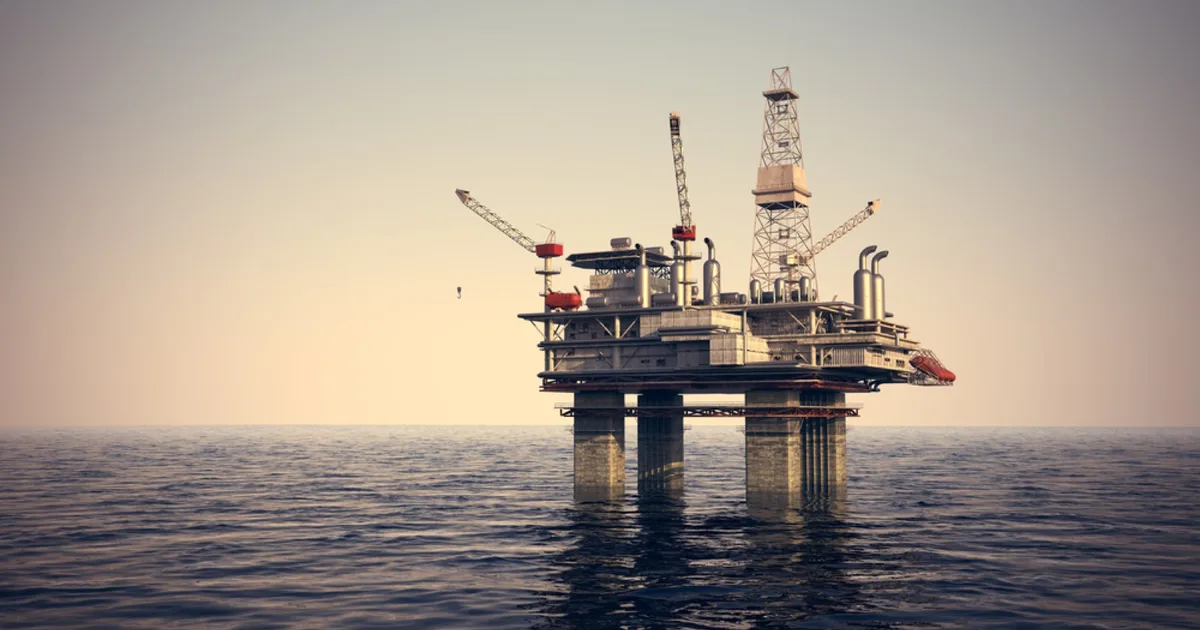
Norway is the UK’s largest single source of imported gas. More than 20% of UK gas supply in recent years has arrived via subsea pipelines from Norwegian fields in the North Sea and Norwegian Sea — and in winter months, when domestic demand peaks and storage draw-down accelerates, Norway’s contribution rises further. What happens on a Norwegian gas platform has a direct, measurable effect on what UK businesses pay for heating and electricity.
How Norwegian gas reaches the UK
Norwegian gas arrives via two main pipeline routes. The Langeled pipeline — one of the longest subsea pipelines in the world at approximately 1,200 km — connects the Ormen Lange field off mid-Norway to the Easington terminal in East Yorkshire. The FLAGS (Far North Liquids and Associated Gas System) and Vesterled pipelines carry gas from the northern North Sea to St Fergus in Scotland. A third route, the Interconnector pipeline between Bacton in Norfolk and Zeebrugge in Belgium, can carry Norwegian gas that has transited the European network — flows in either direction depending on price differentials.
Together these routes give Norway the ability to supply the UK with significant volumes at short notice. Unlike LNG, which requires shipping time from distant export terminals, Norwegian pipeline gas can increase its flow to the UK within hours in response to price signals — making Norway the UK’s most responsive marginal supply source.
Production variability and its effects
Norwegian production is not constant. Planned maintenance — typically scheduled for summer when European gas demand is lower — takes platforms and pipelines offline for weeks at a time. Unplanned outages, whether from equipment failure, weather events, or safety shutdowns, can remove significant volumes from the market at short notice.
The UK energy market’s sensitivity to Norwegian output announcements is well established. When Equinor or another Norwegian operator announces reduced output from a major field, TTF and NBP prices typically move within minutes. The September 2022 Åsgard and Kvitebjørn field maintenance extensions — occurring when European storage was still recovering — contributed to a price spike that directly affected forward contracts being priced at that time.
For UK businesses fixing energy contracts, Norwegian maintenance calendars are material information. A contract fixed during a period of reduced Norwegian output is likely to capture a higher price than the same contract fixed during a period of full production flow. Equinor publishes maintenance schedules in advance; monitoring them is part of timing a procurement decision well.
Norway’s long-term production trajectory
Norwegian gas production has been broadly stable over the past decade, supported by continued development investment in the Norwegian continental shelf. The Johan Castberg and Wisting fields represent significant future production capacity, though the timeline for full production ramp-up extends into the late 2020s and beyond. Norway has explicitly committed to maintaining gas production levels for the foreseeable future, partly as a deliberate geopolitical response to the loss of Russian supply to European markets.
The longer-term question is whether Norwegian production can sustain current levels through the 2030s as existing fields mature. Norwegian Petroleum Directorate projections suggest declining production from around 2030 onwards as existing fields deplete faster than new developments can replace them. For businesses planning energy strategy over a five-to-ten year horizon, the structural reduction in Norwegian supply is one of several factors pointing towards a tightening supply environment.
The political dimension
Norway is not an EU member, but it participates in the internal energy market through the EEA. Post-Brexit, UK-Norway gas trade continues under bilateral arrangements and market-based commercial contracts — the Langeled pipeline doesn’t care about political frameworks, and the commercial relationships between Norwegian producers and UK buyers have continued uninterrupted. However, the UK’s energy security relationship with Norway is now managed bilaterally rather than through EU energy policy frameworks, which matters for how future disputes or regulatory changes would be handled.
Norway’s role as a trusted, stable supplier — a democratic NATO ally with transparent production reporting — is a genuine differentiator from the geopolitical risks associated with other supply sources. The contrast with Russian pipeline dependency is stark: Norwegian supply has never been weaponised as a political instrument.
What this means for your energy contract
Norwegian output data, maintenance schedules, and production forecasts are part of the market intelligence Telnergy monitors when advising on contract timing. Fixing a contract the week a major Norwegian platform comes offline for unexpected maintenance is avoidable — if you’re watching the right signals. We track the wholesale indicators that matter for UK business procurement and advise on timing accordingly.
📱 WhatsApp: 07360 272168 | 📧 hello@telnergy.com | 📞 01202 028888 Telnergy Limited · Independent commercial energy consultancy since 2002 · Ofgem-aligned consultancy · ADR Ref E3561 · CRN 04576876 · Christchurch, Dorset
FAQ
How quickly does a Norwegian production cut affect UK gas prices?
For planned maintenance announcements, the market typically prices in the supply reduction weeks or months in advance as the scheduled period approaches. For unplanned outages, forward prices can move within hours of the announcement — particularly in winter months when demand is high and the market has little buffer. The effect on spot prices is faster than on longer-dated forward contracts, but a sustained outage will pull forward prices higher over days.
Is the Langeled pipeline at risk of the same sabotage seen with Nord Stream?
The Nord Stream sabotage in September 2022 raised awareness of subsea infrastructure vulnerability. Norwegian authorities and NATO have increased surveillance of Norwegian continental shelf infrastructure since then. No credible threat to Langeled has been publicly disclosed. The pipeline is monitored continuously, and Norway has invested in infrastructure protection since 2022. The risk is not zero, but it is assessed as low by Norwegian and UK security services.
Where can I find Norwegian gas production and maintenance data?
The Norwegian Petroleum Directorate (npd.no) publishes production statistics. Equinor and other operators publish planned maintenance notifications as part of their stock exchange obligations. Gas flow data into the UK from Norwegian pipelines is published daily by National Gas Transmission (nationalgrid.com/gas-transmission). These sources are free to access and provide the raw data behind the market signals.
Telnergy Limited is an independent commercial energy consultancy established in 2002, based in Christchurch, Dorset. Ofgem-aligned consultancy · ADR Ref E3561 · CRN 04576876.