
North Sea 2026: Where We Are and What It Means for Gas Prices
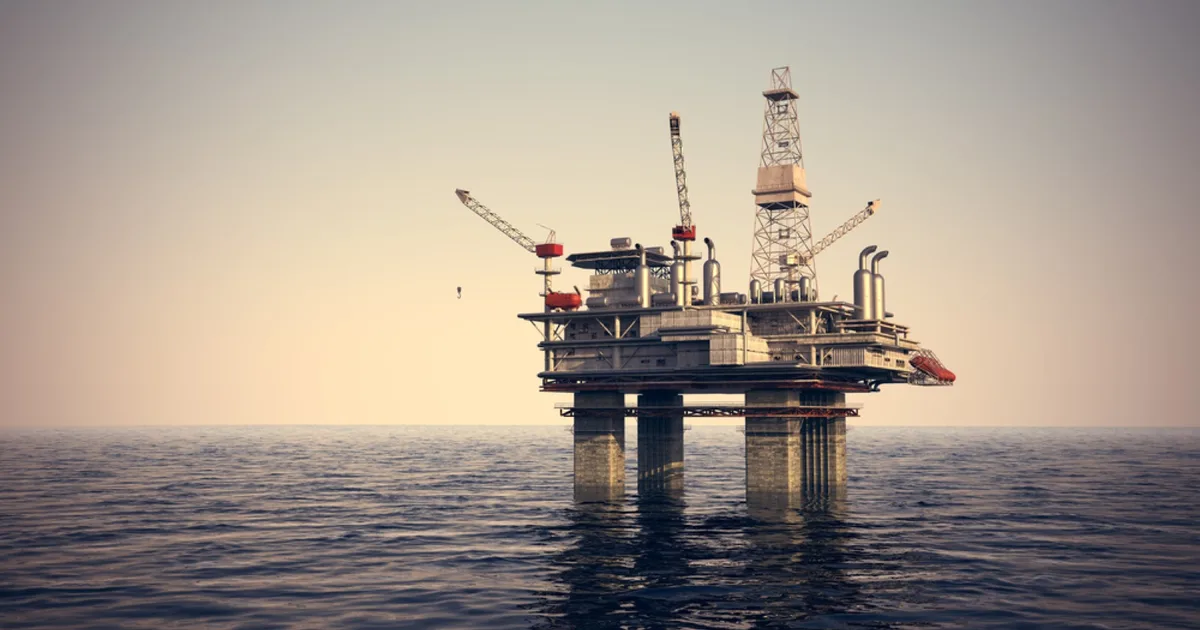
UK continental shelf gas production has fallen from a peak of approximately 108 billion cubic metres per year in 1999 to under 35 billion cubic metres in 2025 — a decline of more than 67% in 25 years. The trajectory is downward and has been for two decades. North Sea gas is not running out; what is declining is the economic productivity of the remaining reserves relative to extraction costs, the rate of new field development, and the reservoir pressure in legacy fields that were producing at peak capacity a generation ago. For UK businesses, understanding where North Sea production sits in 2026 — and what its continued decline means for domestic gas prices — is the supply-side context that every long-term procurement decision is made against.
The investment picture: what the windfall tax did and didn’t do
The Energy Profits Levy — introduced in May 2022, raised to 35% in November 2022, and raised again to 38% in late 2024 — raised approximately £9 billion over its first two years and created an investment signal that the industry acted on in the predictable direction. Major operators redirected capital. Harbour Energy, at the time the largest independent North Sea producer, reduced its UK workforce and shifted investment toward Norwegian, German, and South-East Asian assets. OEUK data indicated North Sea upstream capital expenditure fell by an estimated 30% relative to pre-EPL projections in the two years following the levy’s introduction.
The consequence in 2026 is not yet a production cliff — there is typically a 3–5 year lag between investment decisions and their impact on production volumes. The reckoning is coming through the late 2020s. Fields that would have been developed with 2022–24 investment capital will not be producing in 2027–30. The North Sea output decline that was already well-established will steepen from the late 2020s as the investment gap becomes a production gap. The government’s subsequent signals of fiscal stability have partially rehabilitated the investment environment, but reputational effects in capital markets take years to reverse.
What North Sea gas still provides in 2026
Despite the decline, the North Sea remains a meaningful supply contributor. Approximately 30–35 bcm of domestic production still flows through the UK’s gas processing and transmission system in 2025–26. The Clair Ridge development in the West of Shetland, the Rosebank field currently in development, and ongoing production from legacy Forties and Brent system fields maintain a domestic production base that moderates — even if it cannot eliminate — import dependency. Fields closer to depletion are being maintained by compression and EOR (Enhanced Oil Recovery) techniques, extending their productive lives at additional operating cost.
Domestic gas that flows from the North Sea to UK consumers via onshore processing terminals at St Fergus, Bacton, Easington, and Theddlethorpe carries lower geopolitical and logistics risk than any import source. Every bcm of domestic production maintained is a bcm of LNG that doesn’t need to transit the Strait of Hormuz or arrive on a tanker from the Gulf Coast. The value of domestic production is not just its commodity price — it is the supply security premium it contributes by reducing import dependency.
The transition context
The political context around North Sea development has hardened since 2022. The previous government’s licensing round for new fields generated significant opposition and legal challenge. The current government’s energy policy position — accelerating the clean power transition while managing the pace of North Sea decline — reflects a genuine tension between energy security and decarbonisation commitments that has no simple resolution. In practice, the most likely outcome for the late 2020s is a managed decline that is somewhat faster than would have occurred under a purely market-driven investment environment, supplemented by accelerated renewables build and increasing storage and demand flexibility investment to manage the consequent supply tightening.
The procurement connection
The North Sea trajectory is one of the clearest long-term structural arguments for the fixed contract position and against assumptions of significant price reduction over the coming decade. As domestic production declines and LNG import dependency grows, the UK’s exposure to global market pricing and geopolitical risk premiums increases. A business making a capital investment in on-site generation, heat pumps, or process electrification in 2026 is making a multi-year bet on the energy cost environment. The North Sea picture argues that the structural cost floor will rise through the late 2020s, not fall — making the economics of efficiency and generation investment progressively stronger as the decade progresses.
📱 WhatsApp: 07360 272168 | 📧 hello@telnergy.com | 📞 01202 028888 Telnergy Limited · Independent commercial energy consultancy since 2002 · Ofgem-aligned consultancy · ADR Ref E3561 · CRN 04576876 · Christchurch, Dorset
FAQ
If the North Sea is declining anyway, does opposing new licences actually make a difference to UK emissions? This is a genuinely contested question. The argument against new licensing is that burning North Sea gas contributes to UK carbon emissions and delays the transition. The counter-argument is that if UK consumers will use gas regardless, domestically produced gas has lower supply chain emissions than imported LNG (which requires liquefaction, ocean transport, and regasification) and supports UK energy security and employment. The debate sits outside Telnergy’s advisory remit, but the supply security implications of the licensing position are relevant to every business that will be buying gas in 2028–35.
Is it worth installing gas-fired plant now given the North Sea trajectory? Capital investment in gas-fired plant — boilers, CHP, process heat — should be evaluated against its asset life relative to the plausible gas price trajectory. An investment with a 15-year asset life will operate into the late 2030s, by which time gas prices may be materially higher and the decarbonisation pressure to switch fuel sources more acute. For investments with shorter payback periods (under 5 years), the current cost environment still supports gas in many applications. For longer-payback investments in new gas plant, the fuel-switching risk over the asset life is a genuine consideration that heat pump and electrification alternatives should be assessed against.
Does declining North Sea production affect electricity prices as well as gas? Yes, directly. UK electricity prices are set at the margin by the most expensive generator dispatched in any given half-hour, which remains gas-fired generation in most non-peak-renewable periods. Higher structural gas prices feed directly into higher electricity price-setting events, and the frequency of those events increases as domestic gas becomes scarcer and more expensive to produce. The long-term electricity price impact of North Sea decline is therefore an additional argument for the renewable energy investment — solar, battery, heat pumps — that reduces gas price exposure for electricity consumers over a 10–15 year horizon.
Telnergy Limited is an independent commercial energy consultancy established in 2002, based in Christchurch, Dorset. Ofgem-aligned consultancy · ADR Ref E3561 · CRN 04576876.