
What the North Sea Windfall Tax Actually Did to UK Energy Investment
The Energy Profits Levy raised £9 billion in two years. North Sea investment fell by an estimated 30%. Both facts are true.
In May 2022, the UK government introduced the Energy Profits Levy (EPL) — widely referred to as the North Sea windfall tax — in response to record oil and gas company profits during the post-Ukraine energy crisis. The initial rate was 25%, applied on top of existing Ring Fence Corporation Tax and Supplementary Charge, taking the total headline tax rate on North Sea production profits to 65%. In November 2022 it was raised to 35%, taking the total to 75%. In late 2024 it was raised again to 38%, reaching a total effective rate of 78%.
By the government’s own estimates, the EPL raised approximately £9 billion over its first two years. The investment narrative was less prominent, less understood, and considerably more consequential for UK businesses with long-term energy cost exposure.
What happened to North Sea investment
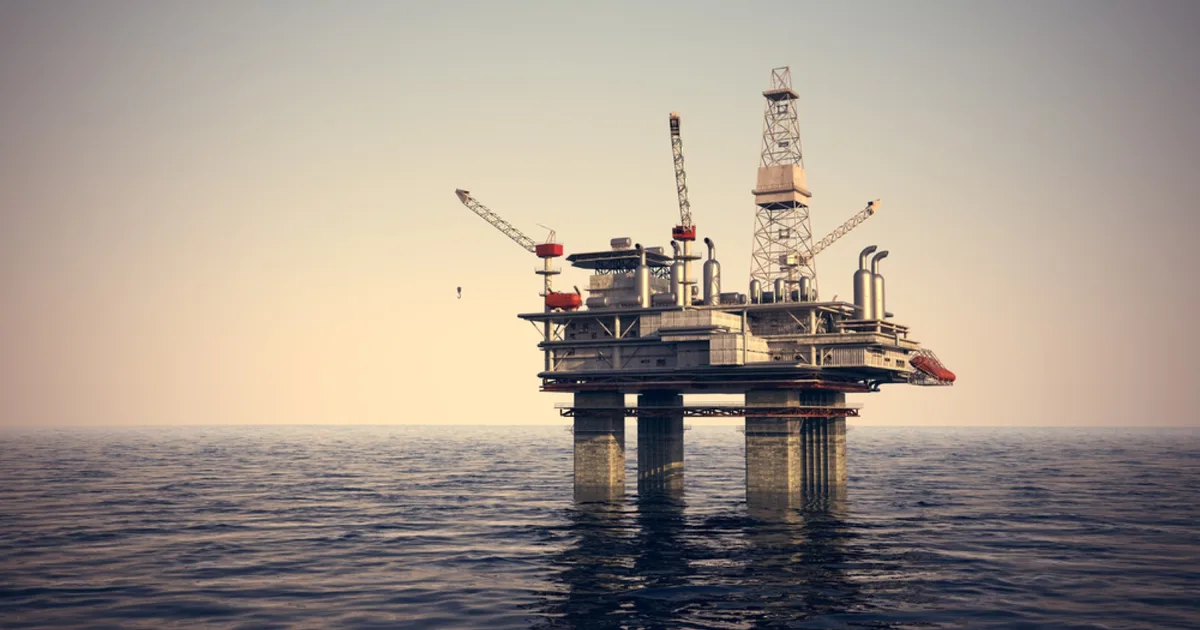
North Sea oil and gas operators responded to the EPL in a predictable manner: they reassessed the economics of marginal North Sea projects against alternative investment destinations. Harbour Energy, the largest independent North Sea producer at the time, reduced its UK workforce by approximately 350 positions in 2023 and redirected capital investment toward assets in Norway, Germany, and South-East Asia. OEUK (Offshore Energies UK) published data indicating North Sea investment declined by an estimated 30% in the two years following the EPL’s introduction, relative to pre-EPL projections. The directional signal — reduced UK investment, redirected international capital — was consistent across multiple operators.
The long-term supply implication for UK energy prices
The UK North Sea is a mature basin. Domestic gas output has fallen by more than 60% from its 2000 peak. Every billion pounds of North Sea investment redirected abroad translates to future production that won’t flow through St Fergus, Bacton, or the CATS terminal — gas that the UK will need to import at global market prices, rather than produce domestically. The IEA and OEUK have both modelled scenarios in which sustained North Sea underinvestment results in meaningful additional UK gas import dependency by the late 2020s and into the 2030s. Less domestic production means more import exposure, which means more structural exposure to the global LNG price dynamics, shipping disruptions, and storage differentials discussed elsewhere in this series.
The investor confidence problem
Beyond the direct investment impact, the EPL created a precedent affecting perception of the UK as a stable investment destination for long-cycle energy capital. North Sea projects require investment decisions made 5–10 years before production begins. Companies committing capital at that horizon need confidence in the fiscal regime over the life of the asset. The EPL was introduced with limited industry consultation, applied retrospectively to existing production, and its rates were changed twice in 18 months. This is not the fiscal predictability that long-cycle energy investment requires. The UK North Sea will carry an elevated political risk premium in investors’ models for years following the EPL episode.
What this means for UK SME energy costs
Less North Sea gas production means a higher proportion of UK supply comes from imports priced at global market rates, carrying geopolitical and logistics risk premiums not present in domestic production. Domestic production is the UK’s most supply-chain-secure gas source — less of it means greater concentration in Norwegian pipeline gas and global LNG, both subject to disruptions and competing demand. The price your business pays for energy in 2030 will reflect, in part, investment decisions that were or weren’t made in the North Sea between 2022 and 2025.
Telnergy has operated in UK commercial energy markets since 2002. Policy decisions with 5–10 year investment consequences are rarely evaluated on that timescale at the point of decision. The EPL was a short-term revenue measure with long-term structural implications for domestic supply — implications that argue, consistently, for energy procurement decisions that account for structural tightening of UK gas supply rather than assuming the market will trend toward lower prices over the medium term.
📱 WhatsApp: 07360 272168 | 📧 hello@telnergy.com | 📞 01202 028888 Telnergy Limited · Independent commercial energy consultancy since 2002 · Ofgem-aligned consultancy · ADR Ref E3561 · CRN 04576876 · Christchurch, Dorset
Telnergy Limited is an independent commercial energy consultancy established in 2002, based in Christchurch, Dorset. Ofgem-aligned consultancy · ADR Ref E3561 · CRN 04576876.