
UK Energy Supply Security in 2026: The Honest Assessment
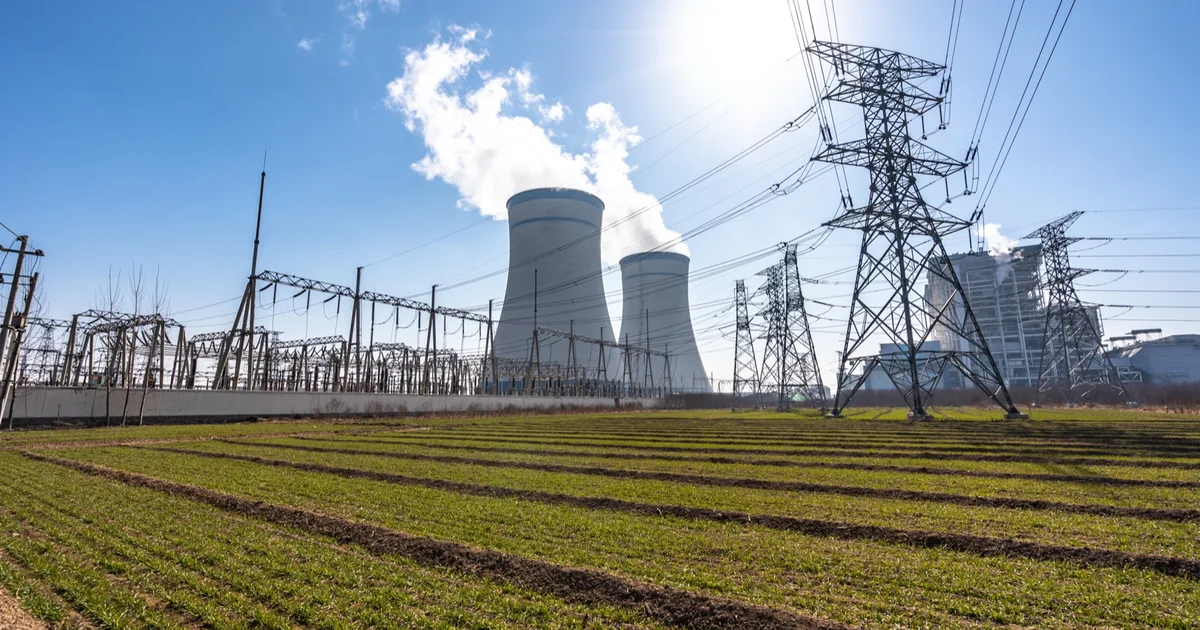
The UK currently imports approximately 50–55% of its gas. Domestic North Sea production, which supplied the majority of UK demand as recently as 2005, has declined by more than 60% from its 2000 peak and continues to fall. Norwegian pipeline gas via the Langeled and Vesterled pipelines now provides the largest single supply component, supplemented by LNG from Qatar, the United States, and other Atlantic Basin sources. The honest assessment of UK energy supply security in 2026 is this: it is adequate, it is more expensive than it needs to be, and it is more vulnerable to external disruption than any government supply security framework would ideally choose.
The Norwegian dependency
Norway has become the single most important gas supplier to the UK. Pipeline imports via Langeled into Easington and the FLAGS and CATS systems into St Fergus provide a reliable, pipeline-quality supply that doesn’t carry the LNG logistics risk of tanker-based imports. Norwegian production capacity is running at near its practical ceiling — the country produces close to the maximum its fields and infrastructure can sustain. This reliability is genuinely valuable. Its limitation is that it cannot easily be scaled further. If UK demand rises, if European competition for Norwegian gas intensifies, or if Norwegian field production faces an unplanned outage, there is no Norwegian upside available to compensate.
The 2024 Sleipner partial outage — a relatively minor infrastructure maintenance issue — briefly spiked UK NBP gas prices by 8–12% within 48 hours before the market priced in the resumption timeline. That is the sensitivity of the current supply position to disruption on a source that represents a significant fraction of total supply. A more serious Norwegian infrastructure event would produce a proportionally larger market reaction.
LNG: the structural import and its risks
The UK’s three LNG import terminals — South Hook, Dragon LNG, and Isle of Grain — have moved from supplementary capacity to essential infrastructure. The cargoes arriving at these terminals originate primarily from Qatar (via the Strait of Hormuz), the United States Gulf Coast (via the Atlantic, sometimes through the Suez and sometimes around the Cape following Red Sea disruption), and a range of smaller Atlantic Basin producers. Each source carries a distinct risk profile.
Qatari LNG — the single largest import source — requires unobstructed transit through the Strait of Hormuz. UK dependence on Qatari supply has increased since 2022 as European buyers replaced Russian pipeline gas with Qatari LNG. This has simultaneously increased UK import volume and increased the proportion of that volume that transits one of the world’s most geopolitically sensitive shipping lanes. The market has priced this in; it has not resolved it.
US LNG supply has grown substantially since 2022 as American export terminals have expanded. This provides genuine diversification — US Gulf Coast LNG does not transit Hormuz. It does face its own logistics constraints: Red Sea disruption has extended voyage times, compressed fleet capacity, and added cost to Atlantic Basin LNG deliveries into Europe. And US export policy, while broadly supportive of European supply security, is subject to the same political variability as any national energy export regime.
Storage: the UK’s structural weakness
The UK holds approximately 1% of its annual gas demand in storage, compared to 25% in Germany and comparable levels across most of mainland Europe. The closure of the Rough storage facility in 2017 removed the UK’s largest buffer asset, and while Rough has been partially returned to service as a seasonal storage facility, its operational capacity remains well below its historic peak. The UK is operationally a just-in-time gas market: supply must flow to match demand within narrow tolerance, with minimal buffer capacity to absorb short-term supply disruptions or demand spikes.
This structural weakness means the UK is more sensitive to supply disruption than its European neighbours with more storage capacity. A Norwegian outage or an LNG cargo delay that a German operator could absorb by drawing on storage becomes an immediate price signal in the UK market. The Interconnector pipeline to Belgium provides some relief — in periods of European supply adequacy, UK can draw on European storage via interconnection — but this is a conditional backstop, not a guaranteed buffer.
The procurement connection
Supply security analysis is not academic context for procurement decisions — it is the risk framework within which those decisions are made. A business renewing an energy contract in Q1 2026 is implicitly taking a position on supply security: a fixed contract says the risk of a supply-driven price spike during the contract term outweighs the risk of prices falling; an unhedged position says the opposite. The supply security picture in 2026 — Norwegian capacity at ceiling, Qatari LNG carrying Hormuz risk, US LNG carrying Red Sea and logistics risk, minimal UK storage buffer — argues clearly for the fixed contract position for most businesses. The geopolitical risk premium embedded in forward market prices is not expensive insurance relative to the downside of being unhedged through a supply disruption event.
📱 WhatsApp: 07360 272168 | 📧 hello@telnergy.com | 📞 01202 028888 Telnergy Limited · Independent commercial energy consultancy since 2002 · Ofgem-aligned consultancy · ADR Ref E3561 · CRN 04576876 · Christchurch, Dorset
FAQ
Is the UK at risk of energy shortages in 2026? Shortage in the sense of physical supply interruption is a low-probability scenario. National Grid ESO maintains system security through the Capacity Market, interconnectors, and demand-side tools. The more realistic risk is price disruption — supply tightness that doesn’t cut the lights but drives wholesale prices to levels that make new contracts significantly more expensive. For a business renewing at those elevated prices, the outcome is an avoidable cost increase, not a supply failure. The distinction matters, but the financial consequence is real either way.
Should I be worried about the Strait of Hormuz specifically? It deserves to be in your risk framework, yes. It is not an imminent crisis but a persistent structural exposure. Twenty percent of global LNG transits a 33-kilometre waterway in a geopolitically volatile region. That exposure is priced into UK forward gas contracts as a risk premium — you are paying for it whether you think about it or not. The question is whether your contract structure means you’re exposed to a spike if the risk materialises, or protected. Businesses on fixed contracts are protected; those unhedged at renewal are not.
The government says the UK has robust energy supply security. Is that accurate? It is accurate in the sense that physical supply interruption is unlikely under most foreseeable scenarios. It is incomplete in the sense that price volatility — driven by the supply dependencies described above — is a real and recurring risk that the government’s energy security framing often underemphasises. Supply security is not just about whether gas flows; it is about whether UK businesses can procure energy at prices that allow them to remain competitive. The structural import dependencies created since 2022 make price volatility a more persistent feature than pre-crisis supply security assessments assumed.
Telnergy Limited is an independent commercial energy consultancy established in 2002, based in Christchurch, Dorset. Ofgem-aligned consultancy · ADR Ref E3561 · CRN 04576876.