
Why UK Gas Prices Are Still Hostage to European Storage Levels
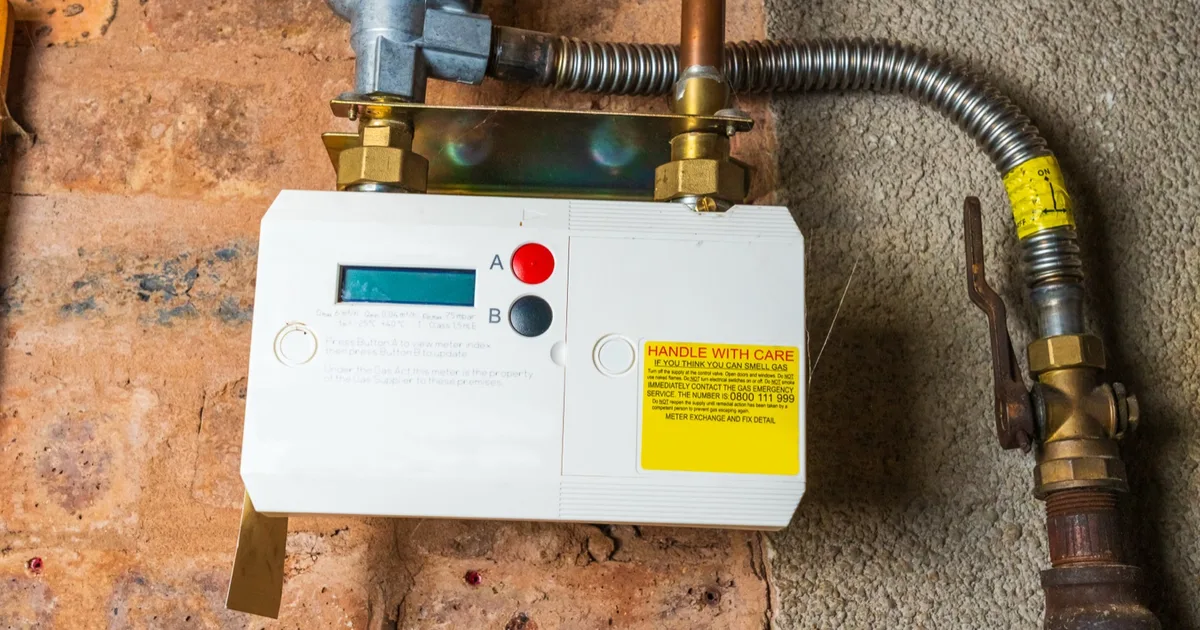
The UK has almost no gas storage. European storage sets your price anyway.
The UK holds roughly 1% of its annual gas demand in storage. Germany holds around 25%. Yet UK wholesale gas prices move in near-perfect correlation with European storage cycles. If you find that counterintuitive, you’re not alone — and understanding why it works this way is directly relevant to when you should be fixing your next energy contract.
The short version: the UK gas market is physically connected to the European market via the Interconnector pipeline between Bacton in Norfolk and Zeebrugge in Belgium. When European storage is low, demand for LNG cargoes and pipeline gas across the continent rises. That demand competes with UK supply. Prices equalise upward. When European storage is full, the pressure releases — and UK prices ease.
This dynamic means that a German cold snap, a French nuclear outage, or a Polish demand surge can move the price you’ll pay to heat your premises or run your manufacturing processes. Your bill is not set locally. It is set regionally, and increasingly globally.
How European storage actually works
European gas storage operates on a seasonal cycle. Gas is injected during summer months — typically April to October — when demand is lower and prices are cheaper. It is withdrawn during winter — October to March — when heating demand peaks and the market requires the buffer to meet shortfalls.
Storage sites across the EU, predominantly in Germany, Austria, Italy, France, and the Netherlands, have a combined capacity of approximately 1,100 TWh. By November each year, the EU target (under the EU Gas Storage Regulation introduced after 2021) is 80% fill — rising to 90% by November 2023 onwards.
When storage fill levels heading into winter are low relative to historical averages, wholesale prices rise because the market prices in the risk of a supply squeeze if winter temperatures come in colder than forecast. When storage is full, the market relaxes — there is buffer capacity to absorb demand spikes without immediate spot price reaction.
The UK, with its minimal domestic storage after the closure of Rough (the UK’s largest gas storage facility, mothballed in 2017 and partially returned to service in 2022–23), has almost no ability to self-buffer. It is essentially a pass-through market — what arrives must be consumed or exported, with virtually no meaningful storage cushion.
The post-Ukraine distortion
Before 2022, European storage was replenished partly by Russian pipeline gas — cheap, abundant, and flowing year-round. The Nord Stream pipelines, the Yamal route, and flows through Ukraine provided approximately 40% of European gas supply. That supply is now effectively gone. The replacement has come from three sources: Norwegian pipeline gas (running at near-capacity), US LNG (significantly expanded since 2022), and Qatari LNG.
The consequence for storage economics is significant. Replenishing storage now costs more, takes longer, and is subject to global LNG market competition — particularly from Asian buyers, who compete for the same cargoes that European storage operators need. European storage fill levels are more volatile post-2022 than they were pre-2022. The cheap, reliable Russian baseline is gone. What remains is a market that is tighter, more globally connected, and more sensitive to demand shocks in Asia, supply disruptions in Norway, or LNG shipping constraints anywhere in the world.
What storage levels tell you about UK contract timing
European storage data is publicly available in real time via GIE (Gas Infrastructure Europe). UK energy professionals watch this data closely because it’s one of the most reliable leading indicators of wholesale price direction over the following 3–6 months.
- Storage significantly below 5-year average heading into October: Winter pricing risk is elevated. The market will price in a risk premium. Contracts being negotiated in Q3 and Q4 will reflect this. If you’re renewing in this window, you’re paying for the European supply anxiety in your unit rates.
- Storage at or above average heading into winter: The winter risk premium is lower. Prices may soften slightly. If your contract allows flexibility, this can be a better window to fix.
- Mid-winter storage draw-down rate exceeds forecast: Spot prices spike. If you’re on any form of pass-through or unhedged contract, you feel this immediately.
The 2021–22 storage crisis: a case study in what can go wrong
In summer 2021, European storage entered the injection season at unusually low levels following a cold 2020–21 winter. Russian pipeline flows were below historic averages. Storage hit the November target but with less headroom than the market wanted. Then winter came in cold. Storage draw-down accelerated. By January 2022 — before the Ukraine invasion — European storage was already at 5-year lows. Wholesale gas prices had risen from approximately 50p/therm in early 2021 to over 300p/therm by late 2021.
UK business energy contracts being renewed in late 2021 and early 2022 were priced at 3–5x the rates of 18 months earlier. Businesses that had fixed contracts in 2020 or early 2021 were protected. Those renewing at peak were locked into prices that in some cases doubled or tripled their annual energy spend. The storage signal was visible. The risk was priceable. Businesses with advisers watching the market avoided the worst of it.
What you should be watching right now
Storage levels across Europe at the start of 2026 are sitting below the 5-year average following a colder-than-forecast 2025–26 winter. The injection season beginning in April 2026 will need to replenish significant draw-down — competing with Asian LNG demand that continues to grow as Japanese and South Korean buyers rebuild post-winter stocks simultaneously. This is not a crisis forecast. It is a market condition that warrants attention. If storage replenishment runs below target through summer 2026 — which is a realistic scenario given competing LNG demand globally — the pricing environment for Q4 2026 and Q1 2027 contracts will be tighter than the current forward curve suggests. Businesses with contracts expiring in that window should be reviewing the market now, not in September.
Telnergy monitors European storage data, LNG import flows, and forward market curves as part of our standard contract review process. If your energy contract is up for renewal in the next 12 months, understanding the storage picture is part of the advice we give — not an afterthought.
📱 WhatsApp: 07360 272168 | 📧 hello@telnergy.com | 📞 01202 028888 Telnergy Limited · Independent commercial energy consultancy since 2002 · Ofgem-aligned consultancy · ADR Ref E3561 · CRN 04576876 · Christchurch, Dorset
Telnergy Limited is an independent commercial energy consultancy established in 2002, based in Christchurch, Dorset. Ofgem-aligned consultancy · ADR Ref E3561 · CRN 04576876.