
Ukraine’s Energy Infrastructure and European Gas Storage: The 2026 Picture
Ukraine holds the largest gas storage capacity in Europe. It has been under active attack since 2022. The 2026 storage picture is consequential for every UK business energy contract.
The intersection of Ukraine’s energy infrastructure and European gas storage is the most direct connection between an ongoing war and UK business energy bills. This article, the fifth in Telnergy’s geopolitical energy series, sets out the current picture as of 2026: what Ukraine’s storage infrastructure is, how it has been affected by the conflict, and what UK businesses should understand when managing their energy contracts in this environment.
Ukraine’s gas storage: the scale of what’s at stake
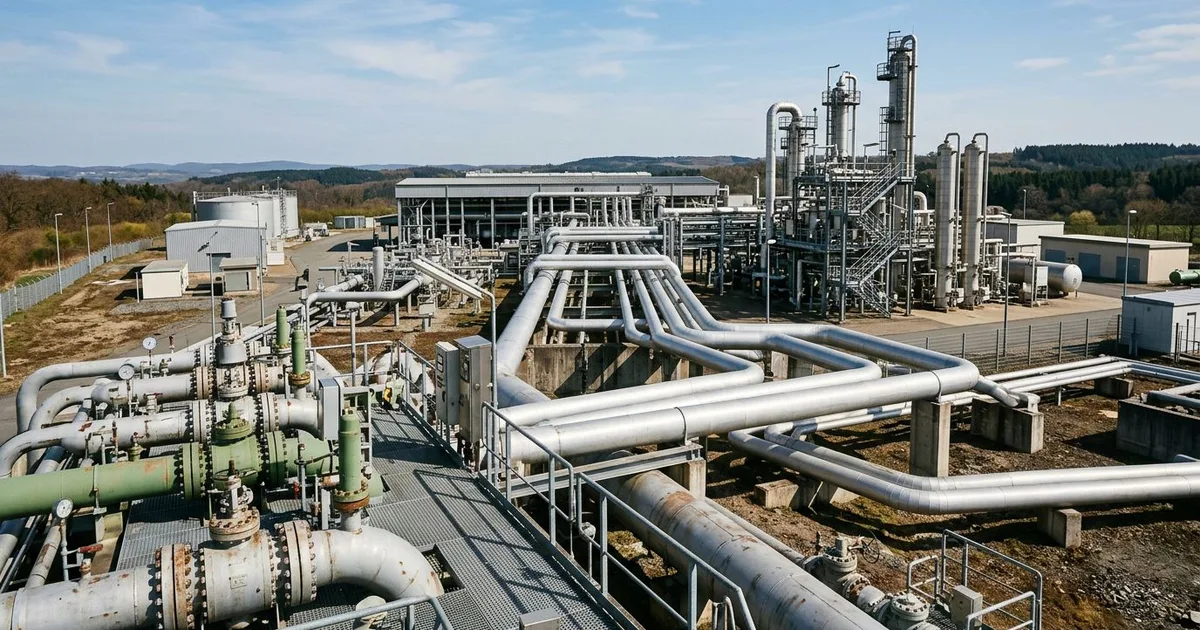
Ukraine possesses the largest underground gas storage (UGS) system in Europe and the third largest in the world, with a total working gas capacity of approximately 31 billion cubic metres (bcm) — roughly 40% of the UK’s annual gas demand. Before the 2022 invasion, Ukrainian underground storage performed a critical function in the European gas supply system, operating as a buffer for European buyers who would inject gas during summer months and withdraw during winter when demand peaked. When Gazprom’s gas flowed westward through Ukraine, Ukrainian storage was the system’s primary buffer against demand spikes and supply variability.
The infrastructure war: what has been damaged
Russia’s strategic targeting of Ukrainian energy infrastructure — electricity generation, gas compression stations, storage facilities, and grid interconnections — has been a consistent feature of the conflict since late 2022. Several of Ukraine’s underground storage facilities are in the western regions of the country, which have been increasingly targeted. Damage has affected compression infrastructure, surface facilities, and in some cases the integrity of storage caverns. As of 2026, Ukrainian gas storage is operating at reduced capacity relative to its pre-war specifications, with available working capacity meaningfully below the nominal 31 bcm.
The transit function: ended but not without consequences
The five-year transit agreement between Russia and Ukraine expired on 1 January 2025 and was not renewed. Pipeline transit of Russian gas through Ukraine to Central and Western Europe ceased. This had its most significant impact on Slovakia, Austria, and Hungary, which needed to source alternative supply from Western European interconnectors, LNG, and Norwegian pipeline gas. The second-order effect for the UK is through European market tightening: when Central European demand for alternative supply increases, it competes with UK demand for Norwegian gas and global LNG, putting upward pressure on the NBP/TTF price from which UK contracts are priced.
The 2026 storage picture and its implications
Entering 2026, European gas storage — including the reduced Ukrainian contribution — is the critical variable for winter 2026–27 supply security. The 2026 injection season must replenish storage drawn down through winter 2025–26. European storage injection competes for LNG cargoes with Asian buyers replenishing their own post-winter stocks simultaneously. Any Norwegian production outages immediately tighten the European supply picture. Ukrainian storage remains a meaningful system component at reduced but still substantial capacity — any further infrastructure damage degrades it further.
What this means for UK business energy contracts in 2026
The risk environment favours certainty over optionality for most SMEs. Businesses approaching renewal in a period of elevated geopolitical risk should not assume that waiting will produce better rates. Fixed-price contracts provide genuine value in this environment — the premium is payment for the Hormuz risk, the Ukrainian infrastructure risk, and the European storage risk described across this series. Contract timing matters: periods when European storage fill is strong, geopolitical risk signals are subdued, and LNG supply is adequate produce lower forward prices and lower embedded risk premiums. Businesses with adequate renewal lead time can target these windows. Businesses that leave renewal to the last minute cannot.
Telnergy monitors wholesale market conditions — including European storage data, LNG flows, and geopolitical risk signals — as a standard part of procurement timing advice. If your contract is up for renewal in the next 12 months, the current picture is part of the conversation we need to have.
📱 WhatsApp: 07360 272168 | 📧 hello@telnergy.com | 📞 01202 028888 Telnergy Limited · Independent commercial energy consultancy since 2002 · Ofgem-aligned consultancy · ADR Ref E3561 · CRN 04576876 · Christchurch, Dorset
Telnergy Limited is an independent commercial energy consultancy established in 2002, based in Christchurch, Dorset. Ofgem-aligned consultancy · ADR Ref E3561 · CRN 04576876.