
What Is the National Balancing Point (NBP)?
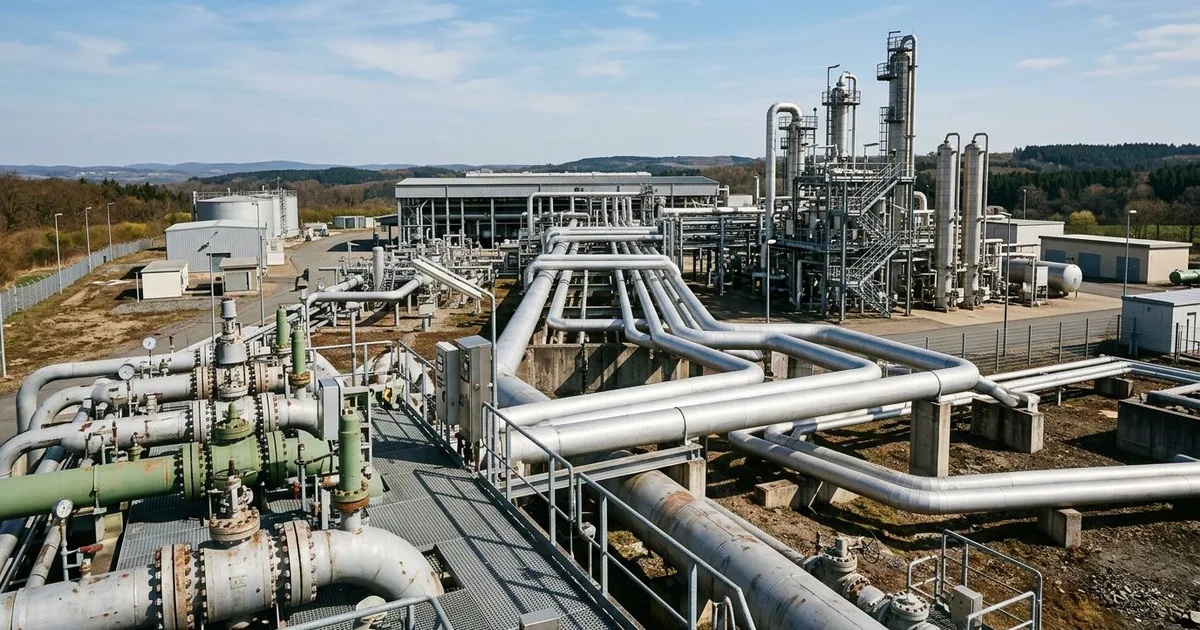
The National Balancing Point Is Where UK Gas Is Priced. Every Unit Rate on Your Business Gas Contract Starts Here.
The National Balancing Point — universally abbreviated to NBP — is the virtual trading hub through which wholesale natural gas is bought and sold in Great Britain. It is not a physical location. There are no pipes labelled “NBP” and no single facility where transactions occur. It is a notional point on the National Transmission System at which gas is deemed to change hands between buyers and sellers, and through which the wholesale price of gas for delivery into the GB network is established.
Every business gas contract in the UK is priced — directly or indirectly — against the NBP. The unit rate on your contract reflects the NBP forward price at the time your contract was negotiated, adjusted for transportation costs, supplier margin, and broker commission. Understanding what the NBP is and what moves it is the most direct route to understanding why your gas bill costs what it does.
How the NBP Works as a Trading Hub
Gas market participants — energy suppliers, large industrial consumers, trading companies, and financial institutions — transact on the NBP through bilateral over-the-counter (OTC) deals and through the Intercontinental Exchange (ICE), the regulated exchange where standardised gas contracts are listed and traded.
The NBP price is quoted in pence per therm (p/th). One therm equals approximately 29.3 kWh of energy. So when you see an NBP price quoted as, say, 80p/therm, that translates to approximately 2.7p/kWh of wholesale gas cost — before network charges, supplier margin, and taxes are added.
Contracts are traded for delivery in various time periods:
- Spot/day-ahead: Gas for delivery the following day — the most volatile pricing, reflecting immediate supply-demand conditions
- Within-day: Gas for delivery during the current gas day — used for system balancing
- Monthly/quarterly: Forward contracts for delivery in the next month or quarter
- Seasonal: Summer (April–September) and Winter (October–March) contracts
- Annual: Full calendar year or gas year (October–September) contracts
When your energy supplier quotes you a fixed-rate gas contract, they purchase forward NBP contracts to hedge their price commitment. If they quote you a 12-month contract starting in October, they buy the October-to-September seasonal contract (or a series of monthly contracts) at the prevailing NBP forward price. Your unit rate is built primarily from this forward price plus their cost stack.
What Moves the NBP Price
The NBP price responds to supply and demand fundamentals in the GB gas market, which is itself closely linked to the broader European market through the Interconnector pipeline between Bacton and Zeebrugge:
European storage levels: The single most consistently reliable indicator of near-term NBP direction. When European storage is low relative to seasonal averages heading into winter, NBP rises as the market prices winter supply risk. When storage is full, NBP relaxes. Storage data is published daily by GIE (Gas Infrastructure Europe) and monitored by every market participant.
Norwegian supply: Norway is the UK’s largest pipeline gas supplier, delivering through the Langeled, FLAGS, and FUKA pipelines. Any Norwegian production outage — planned maintenance or unplanned — immediately tightens the GB market and pushes NBP higher. Norwegian supply updates are tracked in real time.
LNG imports: The UK’s three LNG import terminals (South Hook, Dragon, Isle of Grain) provide an increasingly significant share of GB gas supply, particularly since the reduction in Russian pipeline gas to Europe from 2022. Global LNG prices and cargo availability influence NBP — when LNG is expensive or scarce globally, NBP is pulled upward by competition from European buyers.
Temperature and demand forecasts: Cold weather increases heating demand and draws down storage faster than forecast. Short-range weather forecasts directly affect within-day and day-ahead NBP prices. A colder-than-expected winter week will show in the spot NBP price within hours.
Geopolitical events: Supply disruption risks — Middle Eastern tensions affecting LNG routing, Ukrainian infrastructure damage affecting transit flows, Norwegian industrial action — are priced into NBP forward contracts as risk premiums. Events that increase supply uncertainty push NBP higher; resolutions or de-escalations allow it to ease.
NBP vs TTF: The Relationship
The TTF (Title Transfer Facility) is the equivalent virtual trading hub for the Netherlands and serves as the dominant European gas pricing benchmark — the gas equivalent of Brent crude for oil. NBP and TTF prices track each other closely through Interconnector arbitrage: if TTF rises significantly above NBP, traders ship gas from GB to continental Europe via the Interconnector until the price differential closes, and vice versa.
The two prices are rarely identical — transportation costs and flow constraints create a persistent differential — but they move in the same direction on the same drivers. When you see European gas price headlines in financial news, they typically reference TTF. The NBP equivalent moves in near-lockstep.
How to Read the NBP in the Context of Your Contract
The NBP forward price at the time your contract was negotiated is the single most important determinant of your unit rate — more important than the supplier you chose, more important than the broker you used (assuming the commission was reasonable), and more important than the contract length. A well-run tender in a high NBP environment produces a higher rate than a poorly run tender in a low NBP environment.
This is the structural reason why contract timing matters more than most businesses realise. Renewing in October 2021 — when NBP forward prices had already risen sharply — produced rates 3–5 times higher than renewing in April 2021. Same supplier. Same consumption. Same broker. Different NBP forward price.
Watching the NBP forward curve — specifically the price for delivery during your next contract period — gives you the most direct available insight into what your next contract will cost and whether the current moment is a good or poor time to fix.
Where to Track the NBP
NBP prices are available through several sources: the ICE exchange website publishes end-of-day settlement prices for all listed contracts. Ofgem’s energy market publications include NBP data. Specialist energy data providers — ICIS, Argus, S&P Global Commodity Insights — provide real-time and historical NBP data, though most require subscriptions for full access. Free daily NBP settlement prices are available from the ICE website and from various financial data aggregators.
📱 WhatsApp Business: 07360 272168
📧 Email: hello@telnergy.com
📞 Direct line: 01202 028888
Telnergy Limited • Independent Energy Consultants since 2002 • Ofgem-Aligned Consultancy • Christchurch, Dorset
Telnergy Limited is an independent commercial energy consultancy established in 2002, based in Christchurch, Dorset. Ofgem-aligned consultancy · ADR Ref E3561 · CRN 04576876.