
What Is the TTF Gas Price and Why Does It Affect UK Bills?
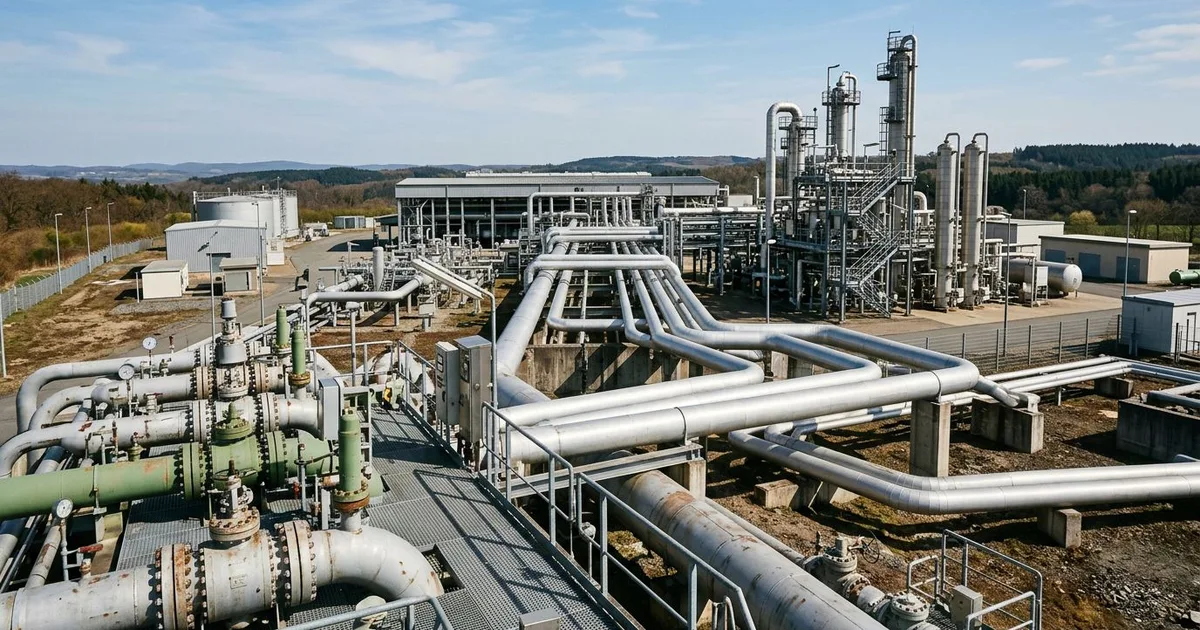
The TTF Is the European Gas Benchmark. When You See “European Gas Prices” in the News, It’s the TTF They’re Talking About — and It Directly Affects Your UK Bill.
The Title Transfer Facility — TTF — is the virtual gas trading hub operated by Gasunie Transport Services in the Netherlands. It is the dominant pricing benchmark for natural gas across Europe, in the same way that Brent crude is the dominant benchmark for oil. When financial media report that “European gas prices have risen 15%”, the figure they are quoting is the TTF.
For UK business owners, the TTF matters because the GB gas market — priced at the National Balancing Point (NBP) — is physically connected to the European gas market via the Interconnector pipeline between Bacton in Norfolk and Zeebrugge in Belgium. The two prices track each other closely. When TTF moves, NBP follows — and when NBP moves, your next gas contract quote moves with it.
TTF vs NBP: Same Drivers, Similar Prices
The TTF and NBP are separate trading hubs in separate countries with separate regulatory frameworks. But they are connected by physical gas flows and by arbitrage. When the TTF price is significantly higher than NBP, it is profitable to ship gas from GB to the continent via the Interconnector. That flow tightens the GB supply and pushes NBP up toward TTF. When NBP is higher than TTF, the reverse occurs.
The result is that TTF and NBP prices remain within a relatively small differential under normal market conditions — typically 1–3p/therm — reflecting the transportation cost and flow constraints of the Interconnector. When that differential widens significantly, it signals a market dislocation — either an infrastructure constraint, an unusual flow pattern, or a supply event affecting one market but not the other.
For practical purposes, UK businesses can treat TTF as the European proxy for NBP. When you see TTF in a financial headline, the implication for UK gas prices is direct.
Why TTF Became the Dominant European Benchmark
Before the 2010s, European gas markets were less liquid and more regional. Pipeline contracts were often indexed to oil prices rather than traded on a hub. TTF emerged as the leading European hub through a combination of factors: the Netherlands’ position at the heart of the Northwest European gas network, the quality and accessibility of Gasunie’s trading infrastructure, and the rapid development of liquidity as more buyers and sellers adopted TTF as their reference price.
By the mid-2010s, TTF had become the standard pricing reference for European gas contracts, LNG import deals, and financial instruments. When European energy companies hedge their gas supply commitments, they predominantly use TTF-referenced contracts. When LNG importers price spot cargoes for European delivery, TTF is the benchmark against which they negotiate.
This dominance means that global gas market developments — US LNG export capacity, Qatar’s production plans, Asian demand levels — are reflected in TTF prices, which in turn transmit through to NBP and therefore to UK business gas costs.
The 2021–22 TTF Spike: A Reference Point
The TTF price movement of 2021–22 was the most dramatic in the European gas market’s history. TTF averaged approximately €20/MWh in early 2021. By December 2021, it had risen to over €180/MWh. In August 2022, at the peak of the crisis following the Russian supply reduction, TTF briefly touched €350/MWh — approximately 17 times the early-2021 price.
This movement was transmitted directly to NBP, which tracked TTF throughout. UK business gas contracts renewing during 2021–22 reflected these prices — producing the 3–5x rate increases that defined the energy crisis for commercial customers.
The subsequent normalisation — TTF falling from its 2022 peak to the €30–50/MWh range by 2023–24 — also transmitted to NBP and to UK contract renewal rates. The businesses that navigated the crisis best were those whose contracts did not expire during the peak period.
How the TTF Is Traded
TTF is traded on the ICE (Intercontinental Exchange) and through bilateral OTC transactions. Standardised contracts exist for day-ahead, month-ahead, quarterly, seasonal, and annual delivery. TTF prices are quoted in €/MWh, in contrast to NBP which is quoted in p/therm — a minor practical distinction that requires conversion when comparing the two directly.
Daily TTF settlement prices are publicly available from ICE and from financial data providers. Energy procurement professionals monitor TTF alongside NBP as the two-hub view of European and British gas market conditions.
What the TTF Tells You About Your Next Contract
The TTF forward curve — the prices at which TTF gas is trading for delivery in future months and seasons — gives a direct indication of what European gas is expected to cost over those periods. Because NBP tracks TTF, the TTF forward curve is also an approximate indicator of what NBP-priced GB gas contracts will cost for equivalent delivery periods.
When the TTF forward curve is steep and high — reflecting market expectations of elevated prices ahead — the timing argument for fixing your gas contract sooner rather than later strengthens. When the forward curve is flat or declining — reflecting expectations of lower future prices — the timing argument for waiting becomes more relevant.
This is not a precise science. Markets can be wrong, and forward curves do not predict the future. But the TTF forward curve is the best available summary of current market expectations — and understanding it is more useful than ignoring it when making a contract timing decision.
📱 WhatsApp Business: 07360 272168
📧 Email: hello@telnergy.com
📞 Direct line: 01202 028888
Telnergy Limited • Independent Energy Consultants since 2002 • Ofgem-Aligned Consultancy • Christchurch, Dorset
Telnergy Limited is an independent commercial energy consultancy established in 2002, based in Christchurch, Dorset. Ofgem-aligned consultancy · ADR Ref E3561 · CRN 04576876.