
Leisure Centre Energy Efficiency: A Practical Checklist for Heating, Ventilation, Lighting and Pools
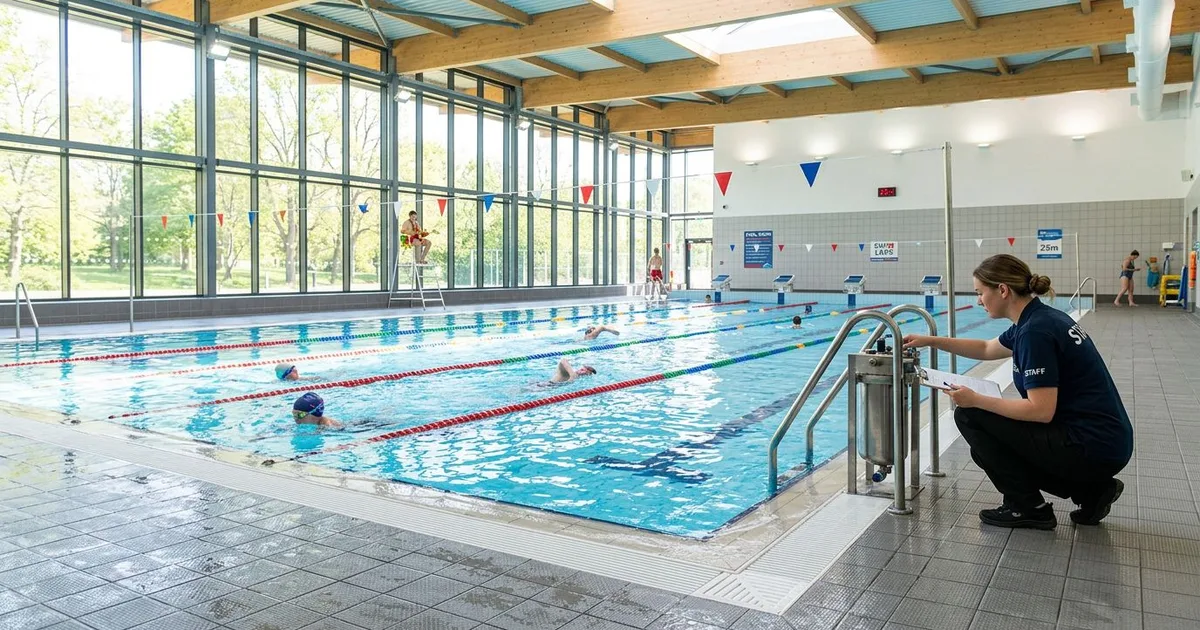
Energy is usually the second-largest cost of running a leisure centre, behind staffing, and in facilities with a pool it regularly accounts for a quarter or more of total running costs. Most of the reduction available doesn’t come from one big investment — it comes from a dozen smaller ones, several of which cost nothing beyond the time it takes to check a setting. This is a practical, area-by-area checklist of where that reduction typically sits.
Heating and controls
- Match temperature to activity, not habit. A multi-purpose sports hall needs 12–18°C during activity; changing rooms need 20–25°C; a pool hall should sit roughly 1°C above the water temperature. Set each area against a proper guide rather than a single building-wide thermostat setting.
- Make sure controls match occupancy. Heating left running to match the longest opening hours in the building, rather than each area’s actual pattern of use, is the single most common source of waste. Time switches should be checked monthly — settings drift as staff make short-term adjustments and forget to revert them.
- Service boilers on schedule. Gas boilers should be serviced annually, oil boilers twice yearly. A neglected boiler can lose a meaningful share of its efficiency well before it visibly breaks down.
- Insulate pipework, valves and hot water tanks. This is one of the few measures that reliably pays for itself within months rather than years.
- Consider weather compensation and optimum start controls for larger or more complex systems — these adjust heating automatically against outside temperature and building response time, rather than relying on a fixed schedule.
- If you’ve got a genuine round-the-clock heat and power load — typically a pool running 14-plus hours a day — combined heat and power is worth a proper look. The economics still stack up for the right building, but the financing structure most CHP deals now use carries risk that rarely gets the same scrutiny as the headline saving. We’ve covered that in detail separately.
Ventilation and air conditioning
- Use natural ventilation before mechanical. Windows, vents and door placement can handle a surprising amount of a building’s cooling and fresh-air need before fans or air conditioning are required at all — subject to the obvious security considerations.
- Set a temperature “dead band.” Heating and cooling should never be fighting each other — a gap of several degrees between the point heating switches off and cooling switches on prevents both systems running at once.
- Keep doors and windows shut when air conditioning is running, otherwise the system spends its energy fighting incoming warm air.
- Fit variable speed drives on ventilation fans. Few fans need to run at full speed continuously, and VSDs on pool hall ventilation in particular can meaningfully cut consumption.
- Maintain the system properly. Dirty fans, ducts and filters make a ventilation system work harder for the same result — and increase breakdown risk.
- Never leave air conditioning running overnight “to save restart energy.” It doesn’t. A building needs only a fraction of overnight energy to reach a comfortable temperature by opening time.
Lighting
- Set the right light level for the activity, not a single standard across the whole building. Reception and spectator areas need to be bright; corridors, storerooms and plant rooms don’t.
- Move to LED wherever lighting still runs on older technology. Older fluorescent and sodium fittings still found in many pool halls and sports halls are now comfortably beaten on running cost, lamp life and maintenance by LED equivalents — this is the single highest-value lighting upgrade available to most centres today.
- Install occupancy sensors in areas used intermittently — offices, storerooms, staff toilets.
- Use daylight sensors where natural light is genuinely sufficient, particularly for external and car park lighting.
- Keep a maintenance schedule. Dirty fittings, skylights and windows quietly reduce usable light output over time, pushing staff to compensate by leaving more fittings on.
- Pool hall lighting has its own rules: minimise glare reflected off the water surface, use fittings that resist a chlorinated, humid atmosphere, and get the colour rendering right for the space rather than defaulting to whatever’s cheapest.
Swimming pools
- Water heating is the dominant cost. For a centre with a pool, heating and treating the water typically accounts for 60–70% of total energy consumption — this is where effort is best directed first.
- Every degree matters. PWTAG guidance recommends 28–30°C for general swimming; each degree of reduction saves a meaningful share of the pool’s heating energy, so the difference between running at 28°C and 30°C is not trivial.
- Fit a pool cover. A well-fitted cover typically cuts total pool energy use by 10–30% and usually pays for itself within eighteen months to three years — one of the most reliable paybacks available in the sector.
- Schedule backwashing properly rather than on a fixed interval regardless of usage — over-backwashing wastes both water and the energy used to heat it.
- Solar thermal is worth a look for supplementary heating, particularly for outdoor pools or as a spring/summer/autumn contributor to indoor pool heating — typical payback of five to ten years.
- Check your VAT position. Charitable leisure providers may qualify for the reduced 5% rate on energy rather than the standard 20%, depending on the proportion of genuinely charitable versus commercial use. This is worth reviewing properly rather than assuming — many organisations are on the wrong rate.
- CHP is usually the strongest single option for a pool-heavy centre, on the numbers — see the note on heating above.
Electrical equipment and catering
- Switch off gym equipment during quiet periods rather than leaving a full floor powered around the clock.
- Fit programmable timers to communal and catering equipment — printers, vending machines, water coolers — where usage follows a predictable weekly pattern.
- Use standby modes properly on equipment that has them, and make sure customers know how to wake equipment rather than assuming it’s out of order.
- Specify high-efficiency motors for pool circulation pumps and major fans. A pool circulation motor runs for most of its life at a fraction of its purchase cost in electricity — the efficiency difference between a standard and high-efficiency motor compounds significantly over a fifteen-year lifespan.
- In catering areas, switch off grills and fryers immediately after use, match pan size to the hob, and check pre-heat times rather than switching equipment on well before it’s needed.
Building fabric
- Most heat loss happens through the building itself, not the doors. Roof, walls, windows and floor together typically account for around two-thirds of total heat loss, with air infiltration and ventilation making up the rest.
- Fix the obvious gaps first — damaged seals, ill-fitting windows and doors, and joints in the building fabric are usually the cheapest wins.
- Check for damp at least annually, ideally before winter — damp both damages the structure and reduces its insulating value.
- Use refurbishment cycles properly. Whenever windows, doors or roofing are being replaced anyway, upgrading the insulation specification at the same time is far cheaper than doing it as a standalone project later.
Monitoring, housekeeping and benchmarking
- Get proper metered data before making decisions. Half-hourly electricity data, where available, tells you far more than a year of quarterly bills — and is essential before sizing any significant investment, CHP included.
- Run regular walk-rounds at different times of day. Energy waste patterns often only show up outside standard office hours.
- Give someone clear ownership of energy performance in the building. Facilities with a named responsible person consistently outperform those where it’s everyone’s job and therefore nobody’s.
- Benchmark your consumption against your building type. As a rough industry reference point, a centre with a 25-metre pool typically uses in the range of 1,500–2,500 kWh per square metre per year including the pool, against 300–500 kWh/m² for dry-side-only facilities — with well-run centres sitting meaningfully below the sector median. Where you sit against that range is usually the fastest way to work out whether the issue is fabric, plant, or simply how the building is being operated.
- Consider a Building Energy Management System for larger or multi-facility operations — closer real-time control over heating, ventilation and cooling typically pays for the investment through reduced total energy costs alone.
None of this replaces a proper look at your actual consumption data and contract structure — the ranges above are a starting point, not a diagnosis. If you want a second opinion on where your centre sits against them, we’re happy to review a year of your data.
📱 WhatsApp: 07360 272168 | 📧 hello@telnergy.com | 📞 01202 028888
Telnergy Limited is an independent commercial energy consultancy established in 2002, based in Christchurch, Dorset. Ofgem-aligned consultancy · ADR Ref E3561 · CRN 04576876.